Noticing the Broken Fence
टूटी हुई बाड़ पर ध्यान देना
Jack notices that the fence between his yard and his neighbor Mia’s has started leaning. They take a closer look and talk about what needs fixing.
जैक देखता है कि उसके आँगन और उसकी पड़ोसी मिया के आँगन के बीच की बाड़ झुकने लगी है। वे उसे करीब से देखते हैं और बात करते हैं कि क्या ठीक करने की ज़रूरत है।
संवाद8
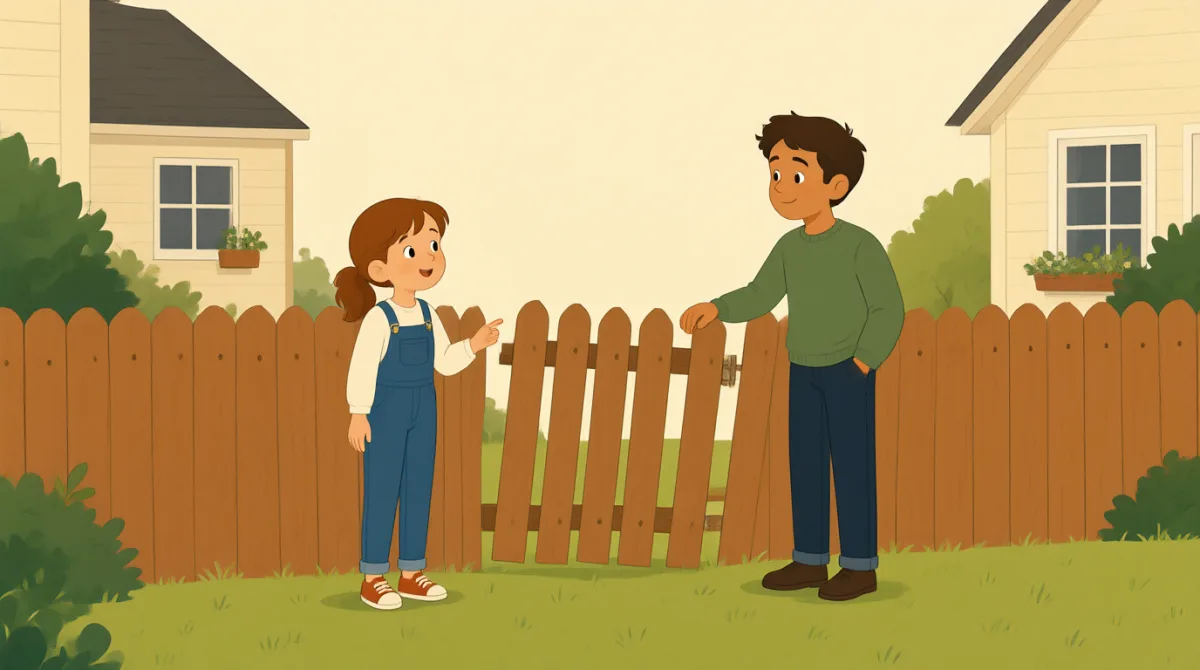

Hey, Mia, have you noticed the fence between our yards? It’s started leaning pretty badly near the back.
अरे, मिया, क्या तुमने हमारे आँगनों के बीच की बाड़ पर ध्यान दिया है? पीछे की तरफ़ यह काफ़ी ज़्यादा झुकने लगी है।

Oh, I hadn’t seen that. Is it leaning toward your yard or mine?
ओह, मैंने यह नहीं देखा था। यह तुम्हारे आँगन की तरफ़ झुक रही है या मेरे आँगन की तरफ़?
Toward mine, mostly. I spotted it this morning when I was taking out the trash.
ज़्यादातर मेरी तरफ़। आज सुबह कूड़ा बाहर निकालते समय मेरी नज़र इस पर पड़ी।
Let’s take a closer look. The boards look a little loose from here, too.
चलो, इसे थोड़ा करीब से देखते हैं। यहाँ से तख्ते भी थोड़े ढीले लग रहे हैं।
Yeah, this post is wobbly, and there’s a gap at the bottom. I think the ground shifted after all that rain.
हाँ, यह खंभा हिल रहा है और नीचे एक खाली जगह भी है। मुझे लगता है कि इतनी बारिश के बाद ज़मीन खिसक गई।
That makes sense. Do you think we can fix just this section, or does the whole fence need work?
यह बात समझ में आती है। तुम्हें क्या लगता है, क्या हम सिर्फ़ इस हिस्से को ठीक कर सकते हैं, या पूरी बाड़ की मरम्मत करनी पड़ेगी?
Hard to tell yet. A couple of boards might need replacing, but we should check the posts before it gets worse.
अभी कहना मुश्किल है। हो सकता है कि कुछ तख्तों को बदलना पड़े, लेकिन हालत और बिगड़ने से पहले हमें खंभों को जाँच लेना चाहिए।
Agreed. Let’s figure out what needs fixing first. Then we can look into the cost and decide what to do.
सही बात है। पहले यह पता लगाते हैं कि क्या ठीक करने की ज़रूरत है। फिर हम खर्च का पता लगाकर तय कर सकते हैं कि क्या करना है।
शब्दावली8
- started leaningझुकने लगी
Began to tilt to one side. Use this to describe something that is no longer standing straight.
एक तरफ़ झुकना शुरू होना। इसका इस्तेमाल ऐसी चीज़ का वर्णन करने के लिए करें जो अब सीधी खड़ी नहीं है।
- take a closer lookकरीब से देखना
Look at something more carefully. You can use this when you want to inspect a problem together.
किसी चीज़ को अधिक ध्यान से देखना। जब आप किसी समस्या की मिलकर जाँच करना चाहते हों, तब इस वाक्यांश का इस्तेमाल कर सकते हैं।
- wobblyहिलने वाला
Unsteady and moving from side to side. Here, it describes a fence post that may need repair.
अस्थिर और इधर-उधर हिलने वाला। यहाँ यह ऐसे बाड़ के खंभे का वर्णन करता है जिसे मरम्मत की ज़रूरत हो सकती है।
- a gap at the bottomनीचे एक खाली जगह
An open space near the lower edge of something. Use this phrase to point out a space that should not be there.
किसी चीज़ के निचले किनारे के पास बनी खुली जगह। इस वाक्यांश का इस्तेमाल ऐसी जगह की ओर ध्यान दिलाने के लिए करें जो वहाँ नहीं होनी चाहिए।
- the ground shiftedज़मीन खिसक गई
The earth moved or changed position. This phrase can explain why a fence or other structure has become unstable.
धरती हिल गई या अपनी जगह से बदल गई। इस वाक्यांश से समझाया जा सकता है कि बाड़ या कोई दूसरी संरचना अस्थिर क्यों हो गई।
- Hard to tell yet.अभी कहना मुश्किल है।
It is not possible to know for sure at this time. Use this short response when you need more information before deciding.
इस समय पक्के तौर पर जानना संभव नहीं है। जब फैसला लेने से पहले आपको अधिक जानकारी चाहिए, तब इस छोटे जवाब का इस्तेमाल करें।
- need replacingबदलना पड़ेगा
Need to be removed and replaced with new ones. Use this phrase when something is too damaged to keep using.
पुरानी चीज़ों को हटाकर उनकी जगह नई चीज़ें लगानी पड़ेंगी। जब कोई चीज़ इतनी खराब हो जाए कि उसका इस्तेमाल जारी न रखा जा सके, तब इस वाक्यांश का इस्तेमाल करें।
- look into the costखर्च का पता लगाना
Find out how much something will cost. You can use this phrase when you are considering a repair or purchase.
यह पता लगाना कि किसी चीज़ पर कितना खर्च आएगा। मरम्मत या खरीदारी पर विचार करते समय आप इस वाक्यांश का इस्तेमाल कर सकते हैं।
मुख्य वाक्य8
- 1
It’s started leaning pretty badly near the back.
पीछे की तरफ़ यह काफ़ी ज़्यादा झुकने लगी है।
This sentence clearly describes a problem and says where it is. Reuse “It’s started [doing something]” to report a recent change.
यह वाक्य समस्या का साफ़ वर्णन करता है और बताता है कि वह कहाँ है। हाल में हुए बदलाव की जानकारी देने के लिए “It’s started [doing something]” का दोबारा इस्तेमाल करें।
- 2
Let’s take a closer look.
चलो, इसे थोड़ा करीब से देखते हैं।
This is a natural way to suggest examining something more carefully together. You can use it when checking a problem or detail.
किसी चीज़ की मिलकर अधिक ध्यान से जाँच करने का सुझाव देने का यह एक स्वाभाविक तरीका है। किसी समस्या या बारीकी की जाँच करते समय आप इसका इस्तेमाल कर सकते हैं।
- 3
I think the ground shifted after all that rain.
मुझे लगता है कि इतनी बारिश के बाद ज़मीन खिसक गई।
This sentence gives a possible reason for what happened. Reuse “I think [something happened] after [event]” to explain a likely cause.
यह वाक्य जो हुआ उसका एक संभावित कारण बताता है। संभावित कारण समझाने के लिए “I think [something happened] after [event]” का दोबारा इस्तेमाल करें।
- 4
Do you think we can fix just this section, or does the whole fence need work?
तुम्हें क्या लगता है, क्या हम सिर्फ़ इस हिस्से को ठीक कर सकते हैं, या पूरी बाड़ की मरम्मत करनी पड़ेगी?
This is a useful way to ask whether a repair can be limited or needs to be larger. Reuse the “just this …, or the whole …?” structure when comparing options.
यह पूछने का उपयोगी तरीका है कि मरम्मत को किसी छोटे हिस्से तक सीमित रखा जा सकता है या बड़े स्तर पर काम करना पड़ेगा। विकल्पों की तुलना करते समय “just this …, or the whole …?” संरचना का दोबारा इस्तेमाल करें।
- 5
Hard to tell yet.
अभी कहना मुश्किल है।
This short, conversational response says you do not have enough information to decide. You can use it before checking something more carefully.
यह छोटा और बातचीत में आम जवाब बताता है कि फैसला लेने के लिए आपके पास पर्याप्त जानकारी नहीं है। किसी चीज़ को अधिक ध्यान से जाँचने से पहले आप इसका इस्तेमाल कर सकते हैं।
- 6
A couple of boards might need replacing, but we should check the posts before it gets worse.
हो सकता है कि कुछ तख्तों को बदलना पड़े, लेकिन हालत और बिगड़ने से पहले हमें खंभों को जाँच लेना चाहिए।
This sentence identifies a possible repair and suggests a sensible next step. Reuse “might need [action], but we should [next step]” to discuss uncertain problems.
यह वाक्य संभावित मरम्मत की पहचान करता है और अगला समझदारी भरा कदम सुझाता है। अनिश्चित समस्याओं पर चर्चा करते समय “might need [action], but we should [next step]” का दोबारा इस्तेमाल करें।
- 7
Let’s figure out what needs fixing first.
पहले यह पता लगाते हैं कि क्या ठीक करने की ज़रूरत है।
This is a practical way to suggest identifying the problem before making a plan. You can use “Let’s figure out…” to propose solving something together.
योजना बनाने से पहले समस्या की पहचान करने का सुझाव देने का यह व्यावहारिक तरीका है। किसी समस्या को मिलकर हल करने का प्रस्ताव देने के लिए “Let’s figure out…” का इस्तेमाल कर सकते हैं।
- 8
Then we can look into the cost and decide what to do.
फिर हम खर्च का पता लगाकर तय कर सकते हैं कि क्या करना है।
This sentence lays out a clear next step after assessing a problem. Reuse “look into the cost” when you need to find out the price before deciding.
यह वाक्य समस्या का आकलन करने के बाद उठाए जाने वाले अगले कदम को स्पष्ट रूप से बताता है। फैसला लेने से पहले कीमत पता करने की ज़रूरत हो, तो “look into the cost” का दोबारा इस्तेमाल करें।