Noticing the Broken Fence
發現圍欄損壞
Jack notices that the fence between his yard and his neighbor Mia’s has started leaning. They take a closer look and talk about what needs fixing.
傑克發現自家和鄰居米婭之間的圍欄開始傾斜。他們仔細檢視,並討論需要修理的地方。
對話8
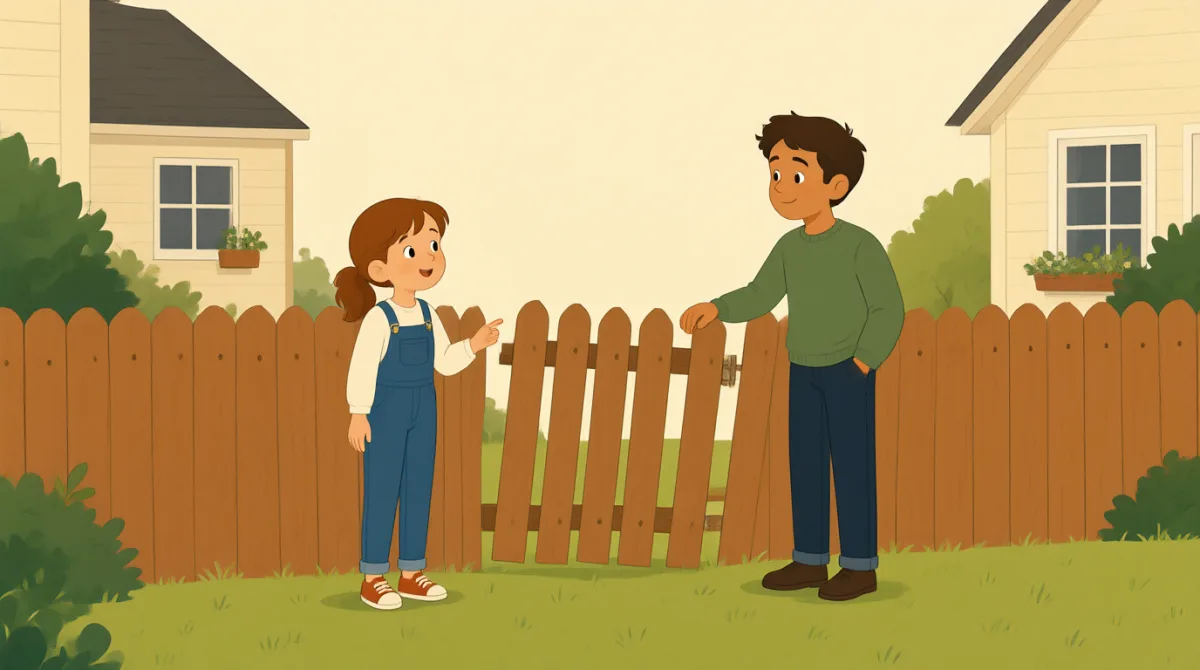

Hey, Mia, have you noticed the fence between our yards? It’s started leaning pretty badly near the back.
嗨,米婭,你注意到咱們兩家院子之間的圍欄了嗎?靠後面的那段已經歪得挺厲害了。

Oh, I hadn’t seen that. Is it leaning toward your yard or mine?
哦,我之前沒注意到。它是朝你家院子歪,還是朝我家院子歪?
Toward mine, mostly. I spotted it this morning when I was taking out the trash.
主要是朝我家這邊歪。我今天早上倒垃圾的時候發現的。
Let’s take a closer look. The boards look a little loose from here, too.
咱們走近看看吧。從這兒看,那些木板好像也有點鬆了。
Yeah, this post is wobbly, and there’s a gap at the bottom. I think the ground shifted after all that rain.
是啊,這根立柱晃得厲害,底下還有一道縫。我覺得是前陣子下了那麼多雨,地面移位了。
That makes sense. Do you think we can fix just this section, or does the whole fence need work?
有道理。你覺得只修這一段就行,還是整道圍欄都得修?
Hard to tell yet. A couple of boards might need replacing, but we should check the posts before it gets worse.
現在還不好說。可能有幾塊木板得換,不過咱們最好趁情況還沒變糟,先檢查一下立柱。
Agreed. Let’s figure out what needs fixing first. Then we can look into the cost and decide what to do.
同意。咱們先弄清楚需要修什麼,然後再瞭解一下費用,決定該怎麼處理。
詞彙8
- started leaning開始傾斜
Began to tilt to one side. Use this to describe something that is no longer standing straight.
開始向一側傾斜。用這個說法來描述不再筆直豎立的東西。
- take a closer look仔細看看
Look at something more carefully. You can use this when you want to inspect a problem together.
更仔細地檢視某樣東西。想和別人一起檢查問題時,可以用這個說法。
- wobbly搖搖晃晃的
Unsteady and moving from side to side. Here, it describes a fence post that may need repair.
不穩,左右晃動。這裡用來形容可能需要修理的圍欄立柱。
- a gap at the bottom底下有道縫
An open space near the lower edge of something. Use this phrase to point out a space that should not be there.
某樣東西底邊附近的空隙。用這個說法指出不該出現的空隙。
- the ground shifted地面移位了
The earth moved or changed position. This phrase can explain why a fence or other structure has become unstable.
地面移動或改變了位置。可以用這個說法解釋圍欄或其他結構為什麼變得不穩。
- Hard to tell yet.現在還不好說。
It is not possible to know for sure at this time. Use this short response when you need more information before deciding.
目前還無法確定。需要更多資訊才能做決定時,可以用這句簡短的回答。
- need replacing需要更換
Need to be removed and replaced with new ones. Use this phrase when something is too damaged to keep using.
需要拆下來換成新的。東西損壞嚴重、不能繼續用時,可以用這個說法。
- look into the cost瞭解一下費用
Find out how much something will cost. You can use this phrase when you are considering a repair or purchase.
弄清楚某件事要花多少錢。考慮維修或購買時,可以用這個說法。
關鍵句8
- 1
It’s started leaning pretty badly near the back.
後面的那段已經歪得挺厲害了。
This sentence clearly describes a problem and says where it is. Reuse “It’s started [doing something]” to report a recent change.
這句話清楚地描述了問題,也說明了問題所在的位置。可以套用 “It’s started [doing something]” 來說最近出現的變化。
- 2
Let’s take a closer look.
咱們仔細看看吧。
This is a natural way to suggest examining something more carefully together. You can use it when checking a problem or detail.
這是提議一起更仔細地檢查某樣東西的一種自然說法。檢查問題或細節時可以用這句話。
- 3
I think the ground shifted after all that rain.
我覺得前陣子下了那麼多雨,地面移位了。
This sentence gives a possible reason for what happened. Reuse “I think [something happened] after [event]” to explain a likely cause.
這句話提出了事情發生的一種可能原因。可以套用 “I think [something happened] after [event]” 來解釋可能的原因。
- 4
Do you think we can fix just this section, or does the whole fence need work?
你覺得只修這一段就行,還是整道圍欄都得修?
This is a useful way to ask whether a repair can be limited or needs to be larger. Reuse the “just this …, or the whole …?” structure when comparing options.
這是一種實用的問法,用來確認維修能否只限於一部分,還是需要修得更多。比較不同方案時,可以套用 “just this …, or the whole …?” 這個結構。
- 5
Hard to tell yet.
現在還不好說。
This short, conversational response says you do not have enough information to decide. You can use it before checking something more carefully.
這句簡短、口語化的回答表示你掌握的資訊還不夠,暫時無法做決定。想先仔細檢查一下再下結論時,可以用這句話。
- 6
A couple of boards might need replacing, but we should check the posts before it gets worse.
可能有幾塊木板得換,不過咱們最好趁情況還沒變糟,先檢查一下立柱。
This sentence identifies a possible repair and suggests a sensible next step. Reuse “might need [action], but we should [next step]” to discuss uncertain problems.
這句話指出了可能需要維修的地方,並提出了合理的下一步做法。討論還不確定的問題時,可以套用 “might need [action], but we should [next step]”。
- 7
Let’s figure out what needs fixing first.
咱們先弄清楚需要修什麼。
This is a practical way to suggest identifying the problem before making a plan. You can use “Let’s figure out…” to propose solving something together.
這是提議先找出問題所在,再製定計劃的一種實用說法。可以用 “Let’s figure out…” 來提議一起解決某件事。
- 8
Then we can look into the cost and decide what to do.
然後咱們可以瞭解一下費用,再決定該怎麼做。
This sentence lays out a clear next step after assessing a problem. Reuse “look into the cost” when you need to find out the price before deciding.
這句話清楚地說明了檢查問題之後該做什麼。需要先了解價格再做決定時,可以用 “look into the cost”。