Noticing the Broken Fence
สังเกตเห็นรั้วที่ชำรุด
Jack notices that the fence between his yard and his neighbor Mia’s has started leaning. They take a closer look and talk about what needs fixing.
แจ็กสังเกตเห็นว่ารั้วระหว่างสวนของเขากับสวนของมีอาเพื่อนบ้านเริ่มเอียง ทั้งคู่เข้าไปดูใกล้ ๆ และคุยกันว่าต้องซ่อมอะไรบ้าง
บทสนทนา8
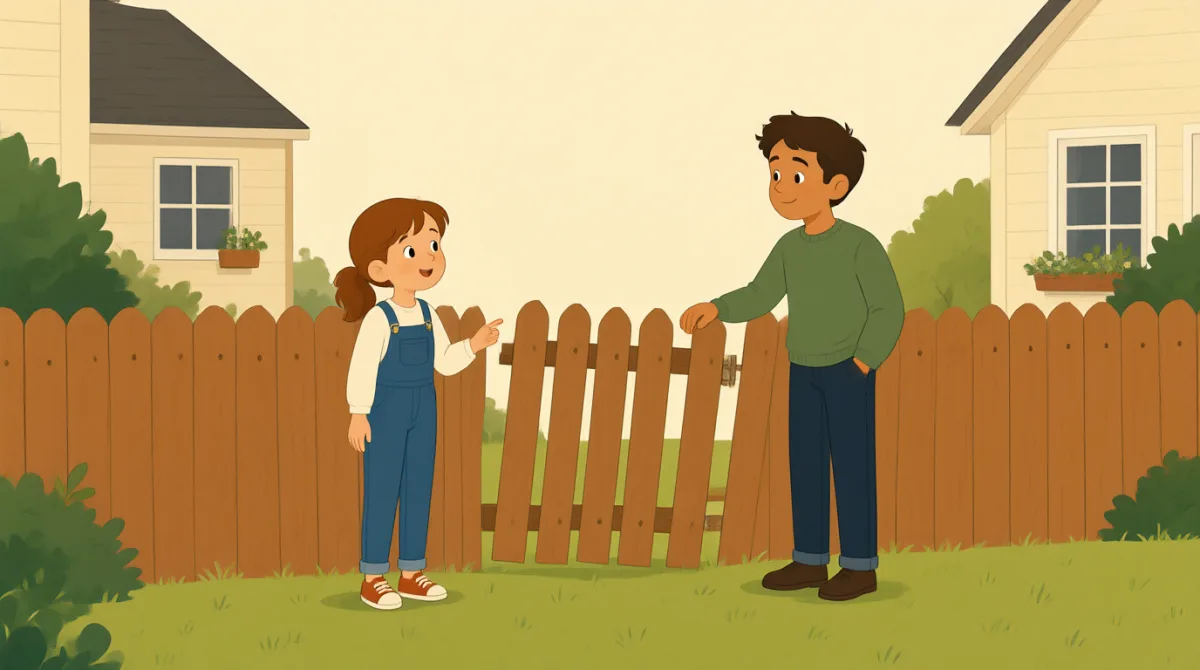

Hey, Mia, have you noticed the fence between our yards? It’s started leaning pretty badly near the back.
เฮ้ มีอา สังเกตเห็นรั้วระหว่างสวนของเราหรือเปล่า? ตรงด้านหลังเริ่มเอียงมากเลย

Oh, I hadn’t seen that. Is it leaning toward your yard or mine?
อ้าว ฉันไม่ทันสังเกตเลย มันเอียงไปทางสวนเธอหรือสวนฉันล่ะ?
Toward mine, mostly. I spotted it this morning when I was taking out the trash.
เอียงมาทางสวนฉันเป็นส่วนใหญ่ ฉันเห็นตอนเช้านี้ ตอนเอาขยะไปทิ้งน่ะ
Let’s take a closer look. The boards look a little loose from here, too.
เราเข้าไปดูใกล้ ๆ กันเถอะ จากตรงนี้แผ่นไม้ก็ดูหลวม ๆ เหมือนกันนะ
Yeah, this post is wobbly, and there’s a gap at the bottom. I think the ground shifted after all that rain.
ใช่ เสารั้วนี่โยกได้ด้วย แล้วก็มีช่องโหว่ตรงด้านล่าง ฉันว่าพื้นดินคงทรุดหลังจากฝนตกหนักนั่นแหละ
That makes sense. Do you think we can fix just this section, or does the whole fence need work?
ก็เป็นไปได้นะ คิดว่าเราซ่อมแค่ช่วงนี้ได้ไหม หรือต้องซ่อมทั้งแนวเลย?
Hard to tell yet. A couple of boards might need replacing, but we should check the posts before it gets worse.
ตอนนี้ยังบอกยากนะ อาจต้องเปลี่ยนแผ่นไม้สักสองแผ่น แต่เราควรตรวจดูเสาก่อนที่จะแย่ไปกว่านี้
Agreed. Let’s figure out what needs fixing first. Then we can look into the cost and decide what to do.
เห็นด้วย เรามาดูกันก่อนว่าต้องซ่อมอะไรบ้าง แล้วค่อยเช็กราคากันและตัดสินใจว่าจะทำยังไง
คำศัพท์8
- started leaningเริ่มเอียง
Began to tilt to one side. Use this to describe something that is no longer standing straight.
เริ่มเอนเอียงไปด้านใดด้านหนึ่ง ใช้บรรยายสิ่งที่ตั้งตรงไม่อยู่แล้ว
- take a closer lookเข้าไปดูใกล้ ๆ
Look at something more carefully. You can use this when you want to inspect a problem together.
มองสิ่งใดสิ่งหนึ่งอย่างละเอียดขึ้น ใช้เมื่ออยากช่วยกันตรวจดูปัญหา
- wobblyโยกได้
Unsteady and moving from side to side. Here, it describes a fence post that may need repair.
ไม่มั่นคงและขยับไปมา ในที่นี้ใช้บรรยายเสารั้วที่อาจต้องซ่อม
- a gap at the bottomช่องโหว่ตรงด้านล่าง
An open space near the lower edge of something. Use this phrase to point out a space that should not be there.
ช่องว่างบริเวณขอบล่างของสิ่งใดสิ่งหนึ่ง ใช้วลีนี้เพื่อชี้ให้เห็นช่องว่างที่ไม่ควรมี
- the ground shiftedพื้นดินทรุด
The earth moved or changed position. This phrase can explain why a fence or other structure has become unstable.
พื้นดินเคลื่อนตัวหรือเปลี่ยนตำแหน่ง วลีนี้ใช้อธิบายได้ว่าทำไมรั้วหรือสิ่งปลูกสร้างอื่นจึงไม่มั่นคง
- Hard to tell yet.ยังบอกยาก
It is not possible to know for sure at this time. Use this short response when you need more information before deciding.
ตอนนี้ยังตอบให้แน่ชัดไม่ได้ ใช้คำตอบสั้น ๆ นี้เมื่อต้องการข้อมูลเพิ่มเติมก่อนตัดสินใจ
- need replacingอาจต้องเปลี่ยน
Need to be removed and replaced with new ones. Use this phrase when something is too damaged to keep using.
ต้องถอดของเดิมออกแล้วเปลี่ยนเป็นของใหม่ ใช้วลีนี้เมื่อสิ่งของเสียหายเกินกว่าจะใช้ต่อได้
- look into the costเช็กราคา
Find out how much something will cost. You can use this phrase when you are considering a repair or purchase.
หาคำตอบว่าสิ่งใดสิ่งหนึ่งมีค่าใช้จ่ายเท่าไร ใช้วลีนี้เมื่อกำลังพิจารณาการซ่อมหรือการซื้อ
ประโยคสำคัญ8
- 1
It’s started leaning pretty badly near the back.
ตรงด้านหลังเริ่มเอียงมากเลย
This sentence clearly describes a problem and says where it is. Reuse “It’s started [doing something]” to report a recent change.
ประโยคนี้บอกปัญหาและระบุตำแหน่งได้ชัดเจน ลองใช้รูปแบบ “It’s started [doing something]” เพื่อบอกว่าสิ่งใดเพิ่งเริ่มเปลี่ยนไป
- 2
Let’s take a closer look.
เราเข้าไปดูใกล้ ๆ กันเถอะ
This is a natural way to suggest examining something more carefully together. You can use it when checking a problem or detail.
เป็นวิธีชวนให้ช่วยกันตรวจดูบางสิ่งอย่างละเอียดขึ้นอย่างเป็นธรรมชาติ ใช้ได้เมื่อต้องการตรวจปัญหาหรือดูรายละเอียด
- 3
I think the ground shifted after all that rain.
ฉันว่าพื้นดินทรุดหลังจากฝนตกหนักนั่นแหละ
This sentence gives a possible reason for what happened. Reuse “I think [something happened] after [event]” to explain a likely cause.
ประโยคนี้เสนอเหตุผลที่เป็นไปได้ของสิ่งที่เกิดขึ้น ลองใช้รูปแบบ “I think [something happened] after [event]” เพื่ออธิบายสาเหตุที่น่าจะเป็นไปได้
- 4
Do you think we can fix just this section, or does the whole fence need work?
คิดว่าเราซ่อมแค่ช่วงนี้ได้ไหม หรือต้องซ่อมทั้งแนวเลย?
This is a useful way to ask whether a repair can be limited or needs to be larger. Reuse the “just this …, or the whole …?” structure when comparing options.
เป็นวิธีถามที่มีประโยชน์ว่าซ่อมแค่จุดเดียวได้หรือจำเป็นต้องซ่อมส่วนที่ใหญ่กว่านั้น ลองใช้โครงสร้าง “just this …, or the whole …?” เมื่อต้องการเปรียบเทียบทางเลือก
- 5
Hard to tell yet.
ยังบอกยากนะ
This short, conversational response says you do not have enough information to decide. You can use it before checking something more carefully.
คำตอบสั้น ๆ แบบเป็นกันเองนี้สื่อว่ายังมีข้อมูลไม่พอที่จะตัดสินใจ ใช้ได้ก่อนจะตรวจดูบางสิ่งให้ละเอียดขึ้น
- 6
A couple of boards might need replacing, but we should check the posts before it gets worse.
อาจต้องเปลี่ยนแผ่นไม้สักสองแผ่น แต่เราควรตรวจดูเสาก่อนที่จะแย่ไปกว่านี้
This sentence identifies a possible repair and suggests a sensible next step. Reuse “might need [action], but we should [next step]” to discuss uncertain problems.
ประโยคนี้ระบุสิ่งที่อาจต้องซ่อมและเสนอขั้นตอนต่อไปที่เหมาะสม ลองใช้รูปแบบ “might need [action], but we should [next step]” เพื่อพูดถึงปัญหาที่ยังไม่แน่ชัด
- 7
Let’s figure out what needs fixing first.
เรามาดูกันก่อนว่าต้องซ่อมอะไรบ้าง
This is a practical way to suggest identifying the problem before making a plan. You can use “Let’s figure out…” to propose solving something together.
เป็นวิธีเสนออย่างเป็นกันเองให้ช่วยกันหาปัญหาก่อนวางแผน ใช้ “Let’s figure out…” เพื่อชวนกันหาทางแก้ไขบางอย่าง
- 8
Then we can look into the cost and decide what to do.
จากนั้นเราค่อยเช็กราคาแล้วตัดสินใจว่าจะทำยังไง
This sentence lays out a clear next step after assessing a problem. Reuse “look into the cost” when you need to find out the price before deciding.
ประโยคนี้บอกขั้นตอนต่อไปอย่างชัดเจนหลังจากประเมินปัญหาแล้ว ลองใช้ “look into the cost” เมื่อต้องการหาราคาก่อนตัดสินใจ