Noticing the Broken Fence
Zauważenie uszkodzonego płotu
Jack notices that the fence between his yard and his neighbor Mia’s has started leaning. They take a closer look and talk about what needs fixing.
Jack zauważa, że płot między jego podwórkiem a podwórkiem sąsiadki Mii zaczął się przechylać. Przyglądają mu się z bliska i rozmawiają o tym, co trzeba naprawić.
Dialog8
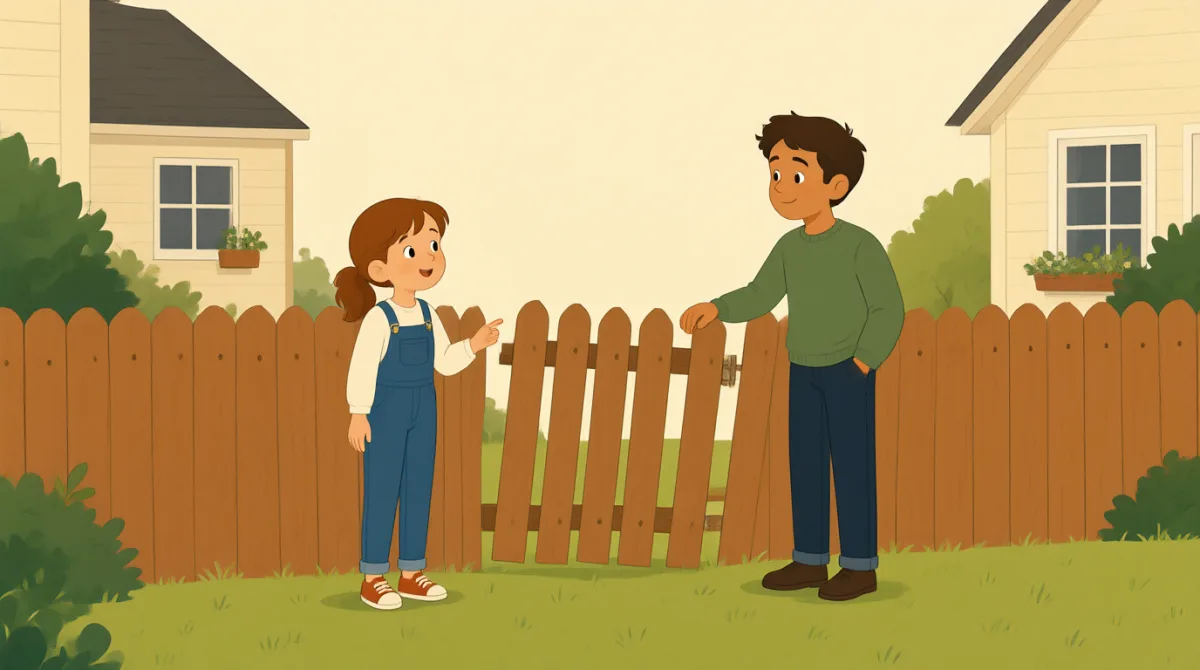

Hey, Mia, have you noticed the fence between our yards? It’s started leaning pretty badly near the back.
Hej, Mia, zauważyłaś, że płot między naszymi podwórkami zaczął się mocno przechylać z tyłu?

Oh, I hadn’t seen that. Is it leaning toward your yard or mine?
O, nie zauważyłam. Przechyla się w stronę twojego czy mojego podwórka?
Toward mine, mostly. I spotted it this morning when I was taking out the trash.
Głównie w moją stronę. Zauważyłem to dziś rano, kiedy wynosiłem śmieci.
Let’s take a closer look. The boards look a little loose from here, too.
Przyjrzyjmy mu się z bliska. Stąd też widać, że deski są trochę obluzowane.
Yeah, this post is wobbly, and there’s a gap at the bottom. I think the ground shifted after all that rain.
No, ten słupek się chwieje, a na dole jest szpara. Myślę, że ziemia się przesunęła po tych wszystkich deszczach.
That makes sense. Do you think we can fix just this section, or does the whole fence need work?
To ma sens. Myślisz, że możemy naprawić tylko ten fragment, czy trzeba zająć się całym płotem?
Hard to tell yet. A couple of boards might need replacing, but we should check the posts before it gets worse.
Trudno na razie powiedzieć. Może trzeba będzie wymienić kilka desek, ale powinniśmy sprawdzić słupki, zanim będzie gorzej.
Agreed. Let’s figure out what needs fixing first. Then we can look into the cost and decide what to do.
Zgadzam się. Najpierw ustalmy, co trzeba naprawić. Potem sprawdzimy, ile to będzie kosztować, i zdecydujemy, co zrobić.
Słownictwo8
- started leaningzaczął się przechylać
Began to tilt to one side. Use this to describe something that is no longer standing straight.
Zaczął odchylać się na jedną stronę. Użyj tego wyrażenia, by opisać coś, co przestało stać prosto.
- take a closer lookprzyjrzeć się z bliska
Look at something more carefully. You can use this when you want to inspect a problem together.
Obejrzeć coś dokładniej. Możesz użyć tego wyrażenia, gdy chcecie wspólnie sprawdzić jakiś problem.
- wobblychwiejący się
Unsteady and moving from side to side. Here, it describes a fence post that may need repair.
Niestabilny, kołyszący się na boki. W tej sytuacji opisuje słupek płotu, który może wymagać naprawy.
- a gap at the bottomszpara na dole
An open space near the lower edge of something. Use this phrase to point out a space that should not be there.
Otwarta przestrzeń przy dolnej krawędzi czegoś. Użyj tego wyrażenia, by wskazać miejsce, w którym nie powinno być żadnej szczeliny.
- the ground shiftedziemia się przesunęła
The earth moved or changed position. This phrase can explain why a fence or other structure has become unstable.
Grunt poruszył się lub zmienił położenie. To wyrażenie może wyjaśniać, dlaczego płot lub inna konstrukcja stała się niestabilna.
- Hard to tell yet.Trudno na razie powiedzieć.
It is not possible to know for sure at this time. Use this short response when you need more information before deciding.
W tej chwili nie da się tego stwierdzić na pewno. Użyj tej krótkiej odpowiedzi, gdy potrzebujesz więcej informacji, zanim podejmiesz decyzję.
- need replacingwymagać wymiany
Need to be removed and replaced with new ones. Use this phrase when something is too damaged to keep using.
Trzeba coś usunąć i zastąpić nowym. Użyj tego wyrażenia, gdy coś jest zbyt zniszczone, by dalej z tego korzystać.
- look into the costsprawdzić koszt
Find out how much something will cost. You can use this phrase when you are considering a repair or purchase.
Dowiedzieć się, ile coś będzie kosztować. Możesz użyć tego wyrażenia, gdy rozważasz naprawę lub zakup.
Kluczowe zdania8
- 1
It’s started leaning pretty badly near the back.
Z tyłu zaczął się mocno przechylać.
This sentence clearly describes a problem and says where it is. Reuse “It’s started [doing something]” to report a recent change.
To zdanie jasno opisuje problem i wskazuje, gdzie występuje. Użyj ponownie “It’s started [doing something]” (Zaczęło się [dziać coś]), by opisać niedawną zmianę.
- 2
Let’s take a closer look.
Przyjrzyjmy mu się z bliska.
This is a natural way to suggest examining something more carefully together. You can use it when checking a problem or detail.
To naturalny sposób, by zaproponować wspólne dokładniejsze obejrzenie czegoś. Możesz go użyć, gdy sprawdzacie problem lub jakiś szczegół.
- 3
I think the ground shifted after all that rain.
Myślę, że ziemia się przesunęła po tych wszystkich deszczach.
This sentence gives a possible reason for what happened. Reuse “I think [something happened] after [event]” to explain a likely cause.
To zdanie podaje możliwy powód tego, co się stało. Użyj ponownie “I think [something happened] after [event]” (Myślę, że [coś się stało] po [jakimś wydarzeniu]), by wyjaśnić prawdopodobną przyczynę.
- 4
Do you think we can fix just this section, or does the whole fence need work?
Myślisz, że możemy naprawić tylko ten fragment, czy trzeba zająć się całym płotem?
This is a useful way to ask whether a repair can be limited or needs to be larger. Reuse the “just this …, or the whole …?” structure when comparing options.
To przydatny sposób, by zapytać, czy naprawa może ograniczyć się do jednego miejsca, czy musi być większa. Użyj konstrukcji “just this …, or the whole …?” (tylko ten … czy cały …?), by porównać możliwości.
- 5
Hard to tell yet.
Trudno na razie powiedzieć.
This short, conversational response says you do not have enough information to decide. You can use it before checking something more carefully.
Ta krótka, potoczna odpowiedź oznacza, że nie masz dość informacji, by podjąć decyzję. Możesz jej użyć, zanim coś dokładniej sprawdzisz.
- 6
A couple of boards might need replacing, but we should check the posts before it gets worse.
Może trzeba będzie wymienić kilka desek, ale powinniśmy sprawdzić słupki, zanim będzie gorzej.
This sentence identifies a possible repair and suggests a sensible next step. Reuse “might need [action], but we should [next step]” to discuss uncertain problems.
To zdanie wskazuje, co być może trzeba naprawić, i proponuje rozsądny następny krok. Użyj ponownie “might need [action], but we should [next step]” (być może trzeba [coś zrobić], ale powinniśmy [następny krok]), by rozmawiać o problemach, co do których nie ma pewności.
- 7
Let’s figure out what needs fixing first.
Najpierw ustalmy, co trzeba naprawić.
This is a practical way to suggest identifying the problem before making a plan. You can use “Let’s figure out…” to propose solving something together.
To praktyczny sposób, by zaproponować ustalenie problemu przed opracowaniem planu. Możesz użyć “Let’s figure out…” (Ustalmy…), by zaproponować wspólne rozwiązanie czegoś.
- 8
Then we can look into the cost and decide what to do.
Potem sprawdzimy, ile to będzie kosztować, i zdecydujemy, co zrobić.
This sentence lays out a clear next step after assessing a problem. Reuse “look into the cost” when you need to find out the price before deciding.
To zdanie przedstawia jasny następny krok po ocenie problemu. Użyj “look into the cost” (sprawdzić koszt), gdy chcesz poznać cenę przed podjęciem decyzji.