Noticing the Broken Fence
ملاحظة تلف السياج
Jack notices that the fence between his yard and his neighbor Mia’s has started leaning. They take a closer look and talk about what needs fixing.
يلاحظ جاك أن السياج الفاصل بين فناء منزله وفناء جارته ميا بدأ يميل. ويتفقدانه عن قرب ويتحدثان عما يحتاج إلى إصلاح.
حوار8
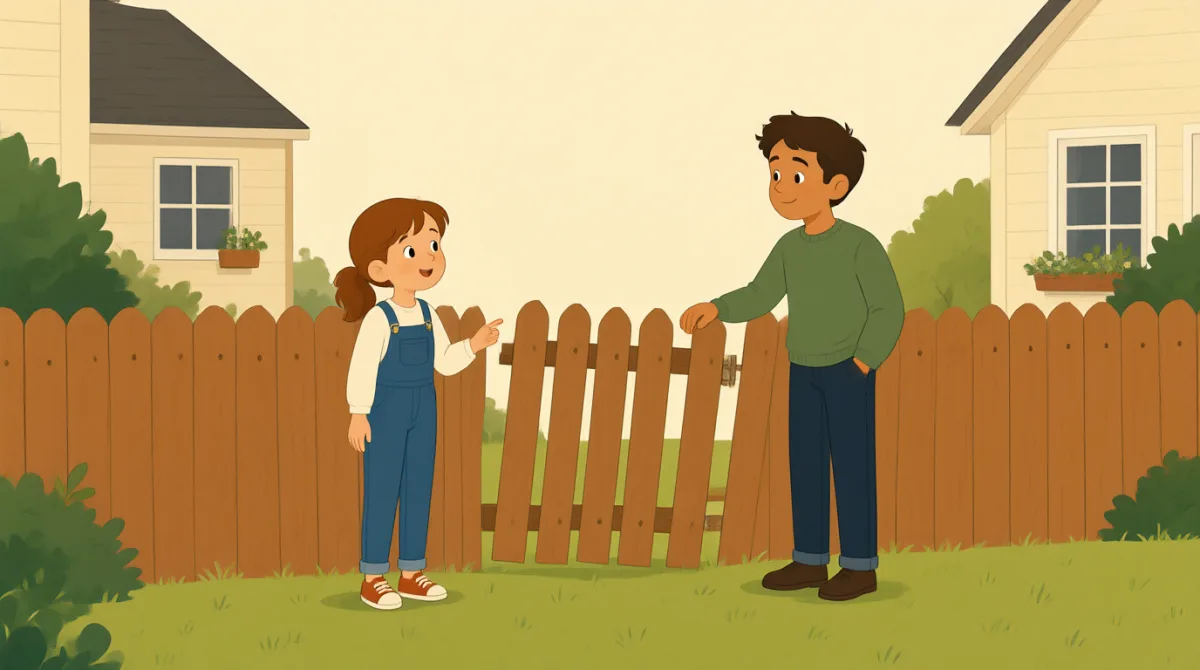

Hey, Mia, have you noticed the fence between our yards? It’s started leaning pretty badly near the back.
مرحبًا يا ميا، هل لاحظتِ السياج بين فنائنا؟ بدأ يميل كثيرًا عند الجزء الخلفي.

Oh, I hadn’t seen that. Is it leaning toward your yard or mine?
أوه، لم ألاحظ ذلك. هل يميل نحو فنائك أم فنائي؟
Toward mine, mostly. I spotted it this morning when I was taking out the trash.
نحو فنائي في الغالب. لاحظت ذلك هذا الصباح عندما أخرجت القمامة.
Let’s take a closer look. The boards look a little loose from here, too.
لنلقِ نظرة عن قرب. تبدو الألواح مرتخية قليلًا من هنا أيضًا.
Yeah, this post is wobbly, and there’s a gap at the bottom. I think the ground shifted after all that rain.
نعم، هذا العمود غير ثابت، وهناك فجوة في الأسفل. أظن أن الأرض تحركت بعد كل ذلك المطر.
That makes sense. Do you think we can fix just this section, or does the whole fence need work?
هذا معقول. هل تظن أننا نستطيع إصلاح هذا الجزء فقط، أم أن السياج كله يحتاج إلى إصلاح؟
Hard to tell yet. A couple of boards might need replacing, but we should check the posts before it gets worse.
من الصعب معرفة ذلك الآن. قد نحتاج إلى استبدال لوحين، لكن علينا فحص الأعمدة قبل أن يزداد الأمر سوءًا.
Agreed. Let’s figure out what needs fixing first. Then we can look into the cost and decide what to do.
أتفق معك. لنعرف أولًا ما الذي يحتاج إلى إصلاح. بعد ذلك يمكننا الاستعلام عن التكلفة ونقرر ما سنفعله.
المفردات8
- started leaningبدأ يميل
Began to tilt to one side. Use this to describe something that is no longer standing straight.
أي بدأ ينحرف إلى أحد الجانبين. تُستخدم هذه العبارة لوصف شيء لم يعد قائمًا باستقامة.
- take a closer lookيلقي نظرة عن قرب
Look at something more carefully. You can use this when you want to inspect a problem together.
يفحص شيئًا بعناية أكبر. يمكنك استخدام هذه العبارة عندما تريدان تفقد مشكلة معًا.
- wobblyغير ثابت
Unsteady and moving from side to side. Here, it describes a fence post that may need repair.
يتمايل ولا يستقر في مكانه. تصف هذه الكلمة هنا عمود سياج قد يحتاج إلى إصلاح.
- a gap at the bottomفجوة في الأسفل
An open space near the lower edge of something. Use this phrase to point out a space that should not be there.
مساحة مفتوحة قرب الحافة السفلية لشيء ما. استخدم هذه العبارة للإشارة إلى فراغ لا يُفترض أن يكون موجودًا.
- the ground shiftedتحركت الأرض
The earth moved or changed position. This phrase can explain why a fence or other structure has become unstable.
تحركت التربة أو تغير موضعها. قد تفسر هذه العبارة سبب عدم استقرار سياج أو أي بنية أخرى.
- Hard to tell yet.من الصعب معرفة ذلك الآن.
It is not possible to know for sure at this time. Use this short response when you need more information before deciding.
لا يمكن التأكد من الأمر في الوقت الحالي. استخدم هذا الرد الموجز عندما تحتاج إلى مزيد من المعلومات قبل أن تقرر.
- need replacingيحتاج إلى استبدال
Need to be removed and replaced with new ones. Use this phrase when something is too damaged to keep using.
يجب إزالة شيء ووضع شيء جديد مكانه. استخدم هذه العبارة عندما يكون الشيء متضررًا جدًا ولا يعود صالحًا للاستعمال.
- look into the costيستعلم عن التكلفة
Find out how much something will cost. You can use this phrase when you are considering a repair or purchase.
يعرف كم سيكلف شيء ما. يمكنك استخدام هذه العبارة عند التفكير في إصلاح أو شراء.
الجمل الأساسية8
- 1
It’s started leaning pretty badly near the back.
بدأ يميل كثيرًا عند الجزء الخلفي.
This sentence clearly describes a problem and says where it is. Reuse “It’s started [doing something]” to report a recent change.
تصف هذه الجملة المشكلة بوضوح وتحدد مكانها. أعد استخدام “It’s started [doing something]” (بدأ [يفعل شيئًا]) للإخبار عن تغير حدث مؤخرًا.
- 2
Let’s take a closer look.
لنلقِ نظرة عن قرب.
This is a natural way to suggest examining something more carefully together. You can use it when checking a problem or detail.
هذه طريقة طبيعية لاقتراح فحص شيء بعناية أكبر مع شخص آخر. يمكنك استخدامها عند تفقد مشكلة أو تفصيل ما.
- 3
I think the ground shifted after all that rain.
أظن أن الأرض تحركت بعد كل ذلك المطر.
This sentence gives a possible reason for what happened. Reuse “I think [something happened] after [event]” to explain a likely cause.
تذكر هذه الجملة سببًا محتملًا لما حدث. أعد استخدام “I think [something happened] after [event]” (أظن أن [شيئًا ما حدث] بعد [حدث ما]) لتوضيح سبب مرجح.
- 4
Do you think we can fix just this section, or does the whole fence need work?
هل تظن أننا نستطيع إصلاح هذا الجزء فقط، أم أن السياج كله يحتاج إلى إصلاح؟
This is a useful way to ask whether a repair can be limited or needs to be larger. Reuse the “just this …, or the whole …?” structure when comparing options.
هذه طريقة مفيدة للسؤال عما إذا كان الإصلاح سيقتصر على جزء صغير أم سيشمل نطاقًا أكبر. أعد استخدام تركيب “just this …, or the whole …?” (هذا الجزء فقط… أم كله…؟) عند المقارنة بين الخيارات.
- 5
Hard to tell yet.
من الصعب معرفة ذلك الآن.
This short, conversational response says you do not have enough information to decide. You can use it before checking something more carefully.
يوضح هذا الرد القصير والمألوف أنك لا تملك معلومات كافية لاتخاذ قرار. يمكنك استخدامه قبل أن تفحص الأمر بعناية أكبر.
- 6
A couple of boards might need replacing, but we should check the posts before it gets worse.
قد نحتاج إلى استبدال لوحين، لكن علينا فحص الأعمدة قبل أن يزداد الأمر سوءًا.
This sentence identifies a possible repair and suggests a sensible next step. Reuse “might need [action], but we should [next step]” to discuss uncertain problems.
تحدد هذه الجملة إصلاحًا محتملًا وتقترح خطوة تالية معقولة. أعد استخدام “might need [action], but we should [next step]” (قد نحتاج إلى [إجراء]، لكن علينا [الخطوة التالية]) لمناقشة مشكلات غير مؤكدة.
- 7
Let’s figure out what needs fixing first.
لنعرف أولًا ما الذي يحتاج إلى إصلاح.
This is a practical way to suggest identifying the problem before making a plan. You can use “Let’s figure out…” to propose solving something together.
هذه طريقة عملية لاقتراح تحديد المشكلة قبل وضع خطة. يمكنك استخدام “Let’s figure out…” (لنعرف…) لاقتراح حل شيء ما معًا.
- 8
Then we can look into the cost and decide what to do.
بعد ذلك يمكننا الاستعلام عن التكلفة ونقرر ما سنفعله.
This sentence lays out a clear next step after assessing a problem. Reuse “look into the cost” when you need to find out the price before deciding.
توضح هذه الجملة خطوة تالية محددة بعد تقييم المشكلة. أعد استخدام “look into the cost” (استعلم عن التكلفة) عندما تحتاج إلى معرفة السعر قبل اتخاذ القرار.