Discussing Who Pays
گفتوگو دربارهٔ اینکه هزینه را چه کسی میپردازد
Mia and Jack discuss how to split the repair costs, considering that the fence serves both yards. They agree to share the expense fairly and get a few quotes before deciding.
میا و جک دربارهٔ نحوهٔ تقسیم هزینهٔ تعمیر نرده صحبت میکنند و در نظر میگیرند که این نرده به درد هر دو حیاط میخورد. آنها توافق میکنند هزینه را منصفانه تقسیم کنند و پیش از تصمیمگیری چند قیمت بگیرند.
گفتوگو9
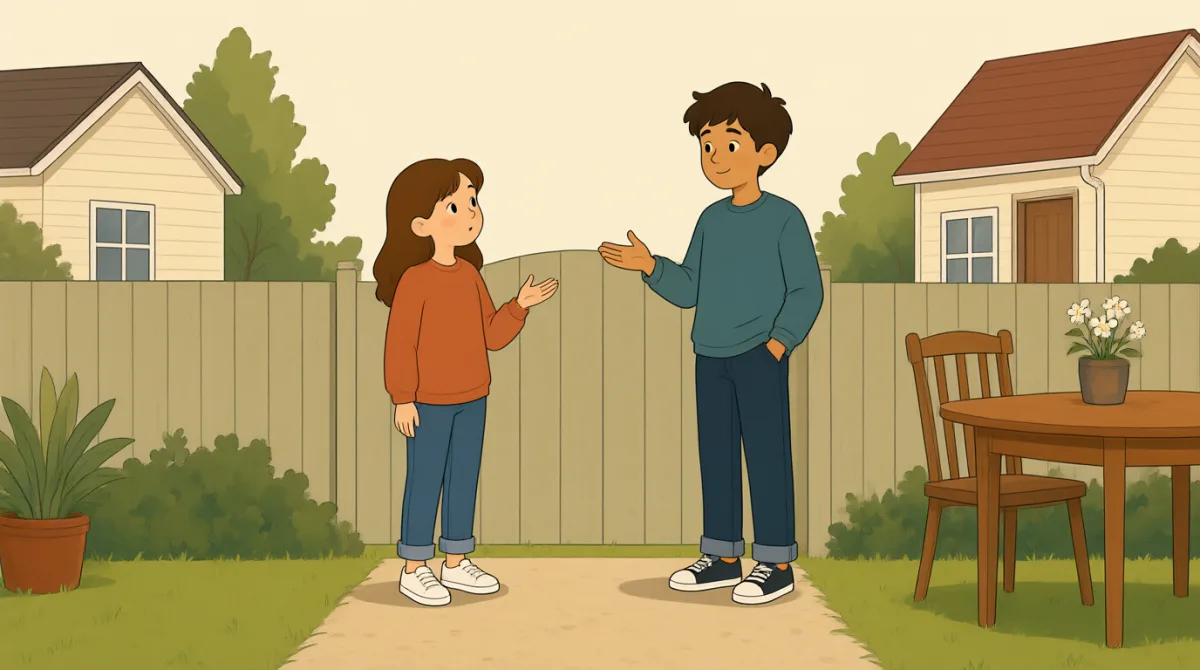

I got an estimate for the fence repair. It’s more than I expected, so we should talk about how to split the cost.
برای تعمیر نرده قیمت گرفتم. بیشتر از چیزی شده که فکر میکردم، برای همین باید دربارهٔ تقسیم هزینه صحبت کنیم.

Definitely. Since the fence sits between our yards and we both use it, splitting the bill seems fair to me.
حتماً. چون نرده بین حیاطهامون قرار داره و هر دومون ازش استفاده میکنیم، بهنظرم منصفانهست که هزینه رو تقسیم کنیم.
I agree, though one section on my side looks worse. Would it make sense for each of us to pay for that side?
موافقم، هرچند یه قسمت از سمت حیاط من بدتر به نظر میرسه. بهنظرت منطقیه که هرکدوم هزینهٔ همون سمت رو بدیم؟
Maybe, but the whole fence needs support. If we only fix one section, the rest could start leaning before long.
شاید، ولی کل نرده به تعمیر و تقویت نیاز داره. اگه فقط یه قسمت رو درست کنیم، ممکنه بقیهش هم خیلی زود کج بشه.
That’s a good point. I don’t want us to patch it up now and end up paying more for another repair later.
نکتهٔ خوبیه. نمیخوام الان یه تعمیر سرهمبندیشده انجام بدیم و بعداً مجبور بشیم برای یه تعمیر دیگه پول بیشتری بدیم.
How about we share the cost of the main repair fifty-fifty? If any extra work is only for one side, we can discuss that separately.
نظرت چیه هزینهٔ تعمیر اصلی رو نصفنصف بدیم؟ اگه کار اضافهای فقط برای یه سمت لازم بود، جداگانه دربارهش صحبت میکنیم.
That sounds fair. Before we decide, let’s get a couple more quotes so we know we’re not paying over the odds.
منصفانه به نظر میرسه. قبل از اینکه تصمیم بگیریم، بیایم از یکی دو جای دیگه هم قیمت بگیریم تا مطمئن بشیم بیشتر از حد لازم پول نمیدیم.
Agreed. I’ll contact two local companies, and you can check whether the estimate includes materials and cleanup.
موافقم. من با دو شرکت محلی تماس میگیرم، تو هم بررسی کن ببین هزینهٔ مصالح و تمیزکاری توی قیمت حساب شده یا نه.
Great. Once we compare the quotes, we can choose a reasonable option and split the final bill evenly.
عالیه. وقتی قیمتها رو با هم مقایسه کردیم، میتونیم یه گزینهٔ معقول انتخاب کنیم و صورتحساب نهایی رو مساوی تقسیم کنیم.
واژگان8
- estimateبرآورد قیمت
An estimate is an approximate price for a job. Here, it tells Mia how much the fence repair may cost.
estimate یعنی قیمت تقریبی یک کار. اینجا به میا میگوید تعمیر نرده ممکن است چقدر هزینه داشته باشد.
- split the costتقسیم کردن هزینه
To split the cost is to divide the expense between people. You can use this phrase when discussing how to share a bill.
split the cost یعنی هزینه را بین چند نفر تقسیم کردن. وقتی دربارهٔ تقسیم صورتحساب صحبت میکنید، میتوانید از این عبارت استفاده کنید.
- seems fair to meبهنظر من منصفانه میآید
This means that something feels reasonable or just in your opinion. Use it to express agreement with a suggestion.
seems fair to me یعنی از نظر شما چیزی منطقی یا عادلانه به نظر میرسد. برای موافقت با یک پیشنهاد از این عبارت استفاده کنید.
- before longبهزودی
This means soon or after a short time. Jack uses it to explain that the rest of the fence may start leaning soon.
before long یعنی بهزودی یا پس از مدت کوتاهی. جک از این عبارت استفاده میکند تا بگوید ممکن است بقیهٔ نرده هم بهزودی کج شود.
- patch it upسرهمبندی کردن، موقتاً تعمیر کردن
To patch something up is to make a quick, limited repair. The phrase can also describe fixing a problem temporarily.
patch it up یعنی چیزی را سریع و بهطور محدود تعمیر کردن. این عبارت میتواند به برطرف کردن موقت یک مشکل هم اشاره کند.
- fifty-fiftyنصفنصف
This means divided equally, with each person paying half. It is a casual way to talk about sharing costs.
fifty-fifty یعنی چیزی را بهطور مساوی تقسیم کردن، طوری که هر نفر نصف هزینه را بدهد. این روش خودمانیای برای صحبت دربارهٔ تقسیم هزینههاست.
- over the oddsبیشتر از قیمت منصفانه
If you pay over the odds, you pay more than something is worth or more than a reasonable price. It is a useful phrase when comparing prices.
اگر pay over the odds کنید، بیشتر از ارزش چیزی یا بیشتر از قیمت معقول آن پول میدهید. این عبارت هنگام مقایسهٔ قیمتها به کار میآید.
- evenlyبهطور مساوی
Evenly means in equal amounts. Here, Mia uses it to describe how they will divide the final bill.
evenly یعنی به مقدارهای برابر. اینجا میا از آن برای توضیح نحوهٔ تقسیم صورتحساب نهایی استفاده میکند.
جملات کلیدی8
- 1
Since the fence sits between our yards and we both use it, splitting the bill seems fair to me.
چون نرده بین حیاطهامون قرار داره و هر دومون ازش استفاده میکنیم، بهنظرم منصفانهست که هزینه رو تقسیم کنیم.
This sentence gives a reason for sharing a cost and then states an opinion. Reuse the pattern “Since [reason], [suggestion] seems fair to me” in discussions about shared expenses.
این جمله اول دلیلی برای تقسیم هزینه میآورد و بعد نظر گوینده را بیان میکند. در گفتوگو دربارهٔ هزینههای مشترک، از الگوی “Since [reason], [suggestion] seems fair to me” استفاده کنید.
- 2
Would it make sense for each of us to pay for that side?
بهنظرت منطقیه که هرکدوم هزینهٔ همون سمت رو بدیم؟
This is a polite way to ask whether a suggestion is reasonable. You can reuse “Would it make sense for [person] to [action]?” when proposing a plan.
این روش مؤدبانهای برای پرسیدن این است که آیا پیشنهادی منطقی است یا نه. وقتی میخواهید برنامهای پیشنهاد کنید، میتوانید از الگوی “Would it make sense for [person] to [action]?” استفاده کنید.
- 3
If we only fix one section, the rest could start leaning before long.
اگه فقط یه قسمت رو درست کنیم، ممکنه بقیهش هم خیلی زود کج بشه.
This sentence explains a possible result of doing only part of a job. Use “If we only [action], [result] could…” to point out a risk.
این جمله پیامد احتمالی انجام دادن فقط بخشی از یک کار را توضیح میدهد. برای اشاره به یک خطر از الگوی “If we only [action], [result] could…” استفاده کنید.
- 4
I don’t want us to patch it up now and end up paying more for another repair later.
نمیخوام الان یه تعمیر سرهمبندیشده انجام بدیم و بعداً مجبور بشیم برای یه تعمیر دیگه پول بیشتری بدیم.
This sentence explains a concern about a quick fix leading to a bigger expense. “End up + -ing” is useful for describing an unexpected final result.
این جمله نگرانی دربارهٔ این را بیان میکند که یک تعمیر فوری باعث هزینهٔ بیشتری شود. از “End up + -ing” برای توصیف نتیجهٔ نهایی و غیرمنتظرهٔ یک کار استفاده میکنیم.
- 5
How about we share the cost of the main repair fifty-fifty?
نظرت چیه هزینهٔ تعمیر اصلی رو نصفنصف بدیم؟
This is a friendly way to suggest an equal split. Use “How about we…?” to offer a plan or solution.
این روش دوستانهای برای پیشنهاد تقسیم مساوی هزینه است. برای پیشنهاد دادن یک برنامه یا راهحل از “How about we…?” استفاده کنید.
- 6
If any extra work is only for one side, we can discuss that separately.
اگه کار اضافهای فقط برای یه سمت لازم بود، میتونیم جداگانه دربارهش صحبت کنیم.
This sentence separates a shared expense from a cost that affects only one person. Reuse “If [condition], we can discuss that separately” when agreeing on how to handle exceptions.
این جمله هزینهٔ مشترک را از هزینهای که فقط روی یک نفر اثر میگذارد جدا میکند. برای توافق دربارهٔ نحوهٔ رسیدگی به موارد استثنا، از الگوی “If [condition], we can discuss that separately” استفاده کنید.
- 7
Before we decide, let’s get a couple more quotes so we know we’re not paying over the odds.
قبل از اینکه تصمیم بگیریم، بیایم از یکی دو جای دیگه هم قیمت بگیریم تا مطمئن بشیم بیشتر از حد لازم پول نمیدیم.
This sentence suggests comparing prices before making a decision. “Let’s get a couple more quotes” is useful when arranging repairs or other services.
این جمله پیشنهاد میکند پیش از تصمیمگیری قیمتها را مقایسه کنیم. عبارت “Let’s get a couple more quotes” هنگام هماهنگی برای تعمیرات یا گرفتن خدمات دیگر کاربرد دارد.
- 8
Once we compare the quotes, we can choose a reasonable option and split the final bill evenly.
وقتی قیمتها رو با هم مقایسه کردیم، میتونیم یه گزینهٔ معقول انتخاب کنیم و صورتحساب نهایی رو مساوی تقسیم کنیم.
This sentence lays out the next steps in a clear order. Use “Once we [action], we can [next action]” to explain a plan.
این جمله مراحل بعدی را بهترتیب و روشن بیان میکند. برای توضیح یک برنامه از الگوی “Once we [action], we can [next action]” استفاده کنید.