Packing the Car
بار زدن ماشین
Before leaving, Emma, Mia, and Jack pack the car and check that they have the essentials. They rearrange their bags to make room and keep important items easy to reach.
قبل از حرکت، اما، میا و جک وسایل را داخل ماشین میگذارند و مطمئن میشوند که همهٔ چیزهای ضروری را برداشتهاند. آنها کیفهایشان را جابهجا میکنند تا جا باز شود و وسایل مهم را در دسترس نگه دارند.
گفتوگو9
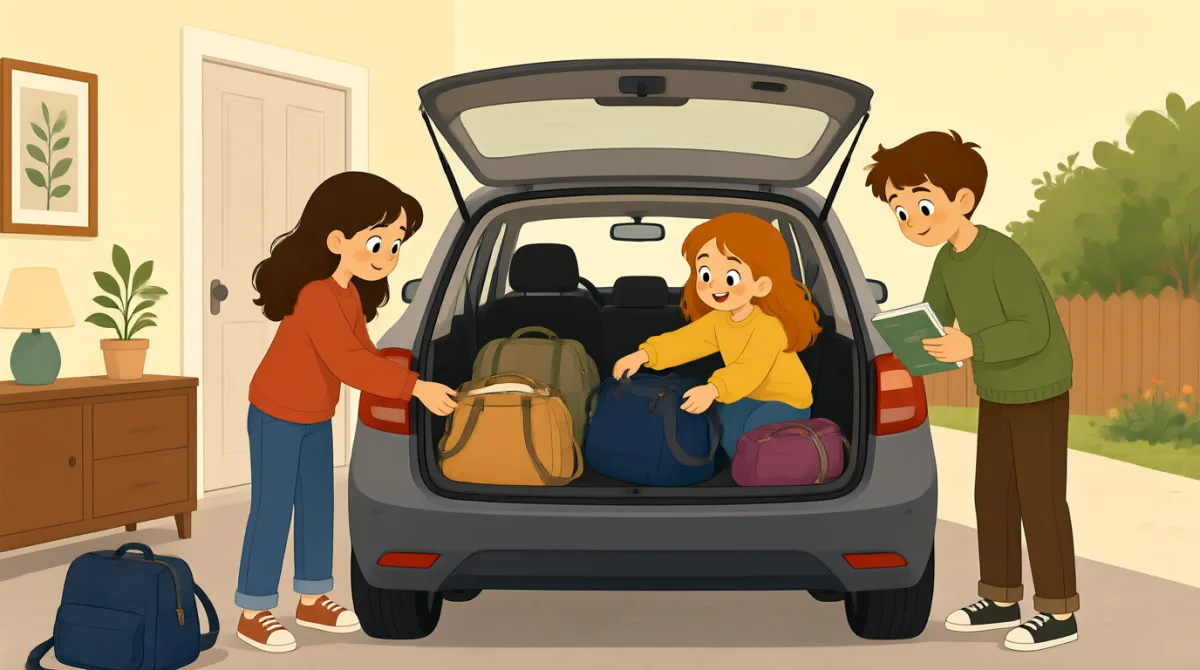

Okay, the trunk’s almost full already. Should we put the cooler in the back seat instead?
خب، صندوق عقب همین الان هم تقریباً پر شده. کولر رو بذاریم روی صندلی عقب؟

Maybe, but let’s keep the back seat clear if we can. We’ll need room for our jackets and snacks.
شاید، ولی اگه بشه صندلی عقب رو خالی نگه داریم بهتره. برای کاپشنها و خوراکیهامون جا لازم داریم.

I can move my suitcase. It’s soft, so we could fit it beside the spare tire.
میتونم چمدونم رو جابهجا کنم. جنسش نرمه، پس شاید بشه گذاشتش کنار لاستیک زاپاس.
Good idea. I’ll put the first-aid kit and water bottles up front, where we can reach them easily.
فکر خوبیه. جعبهٔ کمکهای اولیه و بطریهای آب رو جلو میذارم که راحت بهشون دسترسی داشته باشیم.
Let’s not block the rear window, though. I want to be able to see clearly when I’m driving.
فقط شیشهٔ عقب رو نپوشونیم. وقتی رانندگی میکنم باید بتونم خوب ببینم.
Right. And the phone chargers and road map should stay in the glove box, not buried under bags.
درسته. شارژرهای گوشی و نقشهٔ جاده هم باید توی داشبورد بمونن، نه اینکه زیر کیفها گموگور بشن.
There’s still a loose bag rolling around. Can we tuck it between the cooler and the seat?
هنوز یه کیف همینطوری اینور و اونور میره. میتونیم بذاریمش بین کولر و صندلی؟
Sure, but let’s check that everything’s secure before we go. I don’t want anything flying forward if I brake.
حتماً، ولی قبل از رفتن چک کنیم که همهچیز محکم سر جاش باشه. نمیخوام اگه ترمز گرفتم چیزی به سمت جلو پرت بشه.
Essentials are easy to reach, and the window’s clear. I think we’re all set.
چیزهای ضروری دم دستن و شیشه هم بازه. فکر کنم دیگه آمادهایم.
واژگان8
- the trunk’s almost fullصندوق عقب تقریباً پره
The trunk is the storage space at the back of a car. This phrase means there is very little room left in it.
صندوق عقب فضای نگهداری وسایل در قسمت پشتی ماشینه. این عبارت یعنی تقریباً هیچ جای خالیای توی صندوق باقی نمونده.
- keep the back seat clearصندلی عقب رو خالی نگه داشتن
This means not putting things on the back seat so it remains open and available. You can use “keep [a space] clear” when you want an area to stay free of objects.
یعنی چیزی روی صندلی عقب نذاریم تا خالی و قابلاستفاده بمونه. وقتی میخوایم فضایی بدون وسیله باقی بمونه، میتونیم از عبارت “keep [a space] clear” استفاده کنیم.
- fit it beside the spare tireجاش دادن کنار لاستیک زاپاس
“Fit” means to put something into a space where it can be accommodated. “Beside” tells us the suitcase will go next to the spare tire.
“Fit” یعنی چیزی رو جوری در فضایی گذاشتن که جا بشه. “Beside” هم نشون میده که چمدون کنار لاستیک زاپاس قرار میگیره.
- reach them easilyراحت بهشون دسترسی داشتن
This means being able to get or touch the items without difficulty. Use “easy to reach” for things you want to keep accessible.
یعنی بتونیم بدون دردسر به وسایل دسترسی پیدا کنیم یا بهشون دست بزنیم. برای چیزهایی که میخوایم دم دست باشن، از “easy to reach” استفاده میکنیم.
- block the rear windowشیشهٔ عقب رو پوشوندن
To block the rear window means to cover or obstruct it so the driver cannot see through it clearly. The rear window is the back window of a car.
“Block the rear window” یعنی شیشهٔ عقب رو پوشوندن یا جلوی دید از اون رو گرفتن، طوری که راننده نتونه واضح ازش بیرون رو ببینه. شیشهٔ عقب، پنجرهٔ پشت ماشینه.
- buried under bagsزیر کیفها مدفون شدن
Here, “buried” means hidden beneath other things, so the items are difficult to find or get to. It can also describe something covered by a large amount of other objects.
اینجا “buried” یعنی زیر وسایل دیگه پنهان شده، طوری که پیدا کردن یا برداشتنش سخت باشه. این واژه برای چیزی هم به کار میره که زیر مقدار زیادی وسیله پوشیده شده.
- tuck it between the cooler and the seatگذاشتنش بین کولر و صندلی
“Tuck” means to put something neatly into a small or available space. Use “between” to describe a place in the space separating two things.
“Tuck” یعنی چیزی رو مرتب توی فضای کوچیک یا خالیای جا دادن. از “between” برای اشاره به فضایی استفاده میکنیم که بین دو چیز قرار داره.
- flying forward if I brakeاگه ترمز بگیرم به سمت جلو پرت شدن
This describes loose items moving toward the front of the car when the driver stops suddenly. “Brake” means to slow down or stop a vehicle.
این عبارت حرکت وسایلِ مهارنشده به سمت جلوی ماشین رو وقتی راننده ناگهان توقف میکنه توصیف میکنه. “Brake” یعنی سرعت وسیلهٔ نقلیه رو کم کردن یا متوقف کردن.
جملات کلیدی8
- 1
Should we put the cooler in the back seat instead?
کولر رو بذاریم روی صندلی عقب؟
This is a natural way to suggest a different place for something. Use “Should we… instead?” to ask whether another option would be better.
این روش طبیعیای برای پیشنهاد دادن جای دیگری برای یک وسیله است. از “Should we… instead?” استفاده کن تا بپرسی آیا گزینهٔ دیگری بهتره یا نه.
- 2
We’ll need room for our jackets and snacks.
برای کاپشنها و خوراکیهامون جا لازم داریم.
This sentence gives a reason for keeping space available. Use “We’ll need room for…” when explaining what space is required for.
این جمله دلیلی برای خالی نگه داشتن فضا میاره. وقتی میخوای توضیح بدی جا برای چه چیزی لازمه، از “We’ll need room for…” استفاده کن.
- 3
I can move my suitcase.
میتونم چمدونم رو جابهجا کنم.
This is a simple, helpful offer to change where something is. Use “I can…” to offer to do a task or solve a small problem.
این پیشنهاد ساده و دوستانهایه برای عوض کردن جای یک وسیله. با “I can…” میتونی پیشنهاد بدی کاری رو انجام بدی یا مشکل کوچیکی رو حل کنی.
- 4
I’ll put the first-aid kit and water bottles up front, where we can reach them easily.
جعبهٔ کمکهای اولیه و بطریهای آب رو جلو میذارم که راحت بهشون دسترسی داشته باشیم.
This explains both where items will go and why they will be placed there. You can use “I’ll put [items] [place], where…” to describe a plan and its purpose.
این جمله هم میگه وسایل کجا قرار میگیرن و هم توضیح میده چرا اونجا گذاشته میشن. برای گفتن برنامه و هدفش میتونی از “I’ll put [items] [place], where…” استفاده کنی.
- 5
Let’s not block the rear window, though.
فقط شیشهٔ عقب رو نپوشونیم.
This politely warns the group not to do something, while “though” adds a contrasting point. Use “Let’s not…” to suggest avoiding an action.
این جمله مؤدبانه به گروه هشدار میده کاری رو انجام ندن و “though” هم نکتهای متضاد رو اضافه میکنه. برای پیشنهاد دادن اینکه کاری رو انجام ندیم، از “Let’s not…” استفاده کن.
- 6
The phone chargers and road map should stay in the glove box, not buried under bags.
شارژرهای گوشی و نقشهٔ جاده باید توی داشبورد بمونن، نه اینکه زیر کیفها گموگور بشن.
This sentence states where important items should be kept and where they should not be. Use “should stay in…” to suggest a suitable place for something.
این جمله میگه وسایل مهم کجا باید نگه داشته بشن و کجا نباید باشن. برای پیشنهاد جای مناسبی برای چیزی، از “should stay in…” استفاده کن.
- 7
Let’s check that everything’s secure before we go.
قبل از رفتن چک کنیم که همهچیز محکم سر جاش باشه.
This is a useful way to suggest a final safety check. Use “Let’s check that…” before leaving or starting an activity.
این روش کاربردیای برای پیشنهاد یک بررسی نهاییِ ایمنی است. پیش از حرکت یا شروع یک کار از “Let’s check that…” استفاده کن.
- 8
I don’t want anything flying forward if I brake.
نمیخوام اگه ترمز گرفتم چیزی به سمت جلو پرت بشه.
This explains a safety concern and gives a reason for securing loose items. Use “I don’t want [something] happening if…” to describe an outcome you want to prevent.
این جمله نگرانیای دربارهٔ ایمنی رو توضیح میده و میگه چرا باید وسایلِ بدون مهار رو محکم کرد. برای گفتن اینکه میخوای جلوی نتیجهای رو بگیری، از “I don’t want [something] happening if…” استفاده کن.