Packing the Car
कार पैक करना
Before leaving, Emma, Mia, and Jack pack the car and check that they have the essentials. They rearrange their bags to make room and keep important items easy to reach.
रवाना होने से पहले, एमा, मिया और जैक कार में सामान रखते हैं और जाँचते हैं कि उनके पास ज़रूरी चीज़ें हैं। वे जगह बनाने के लिए अपने बैग इधर-उधर रखते हैं और ज़रूरी सामान ऐसी जगह रखते हैं जहाँ वह आसानी से हाथ आ सके।
संवाद9
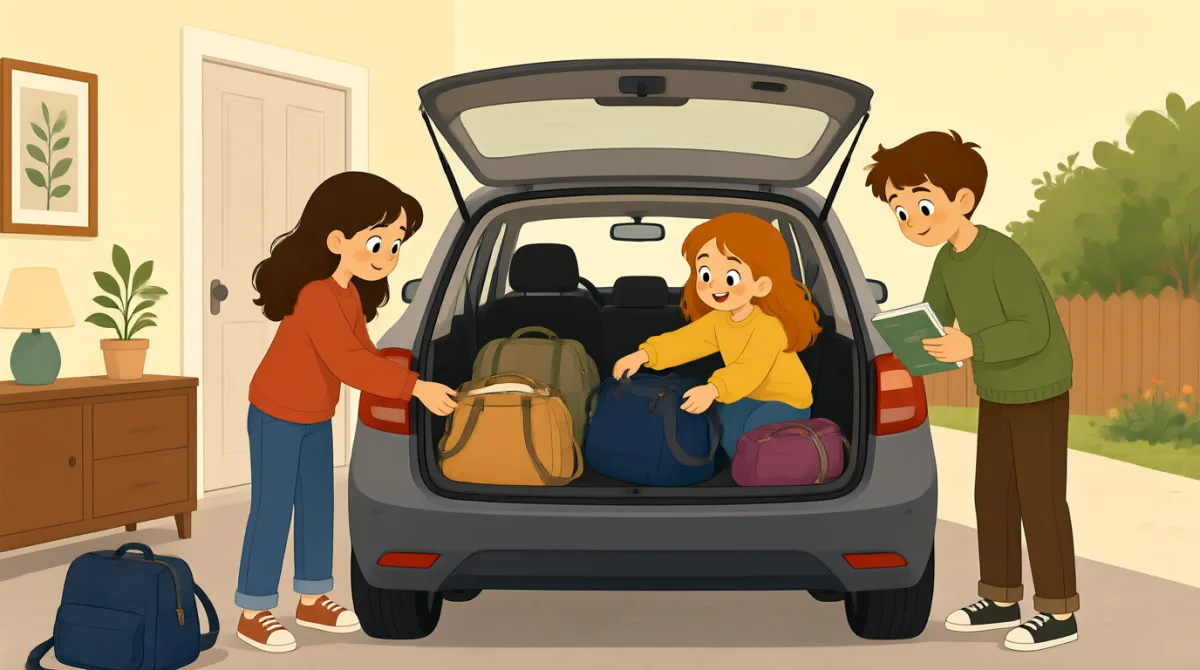

Okay, the trunk’s almost full already. Should we put the cooler in the back seat instead?
ठीक है, डिक्की अभी से लगभग भर गई है। क्या हम कूलर को इसके बजाय पीछे वाली सीट पर रख दें?

Maybe, but let’s keep the back seat clear if we can. We’ll need room for our jackets and snacks.
शायद, लेकिन हो सके तो पीछे वाली सीट खाली रखते हैं। हमें अपनी जैकेट और स्नैक्स रखने के लिए जगह चाहिए होगी।

I can move my suitcase. It’s soft, so we could fit it beside the spare tire.
मैं अपना सूटकेस हटा सकती हूँ। यह नरम है, इसलिए हम इसे अतिरिक्त टायर के बगल में रख सकते हैं।
Good idea. I’ll put the first-aid kit and water bottles up front, where we can reach them easily.
अच्छा विचार है। मैं प्राथमिक उपचार की किट और पानी की बोतलें आगे रख दूँगी, जहाँ हम उन्हें आसानी से निकाल सकें।
Let’s not block the rear window, though. I want to be able to see clearly when I’m driving.
लेकिन पीछे वाली खिड़की को मत ढकना। गाड़ी चलाते समय मैं साफ़-साफ़ देख पाना चाहती हूँ।
Right. And the phone chargers and road map should stay in the glove box, not buried under bags.
सही कहा। और फोन के चार्जर और रोड मैप ग्लव बॉक्स में रहने चाहिए, बैगों के नीचे दबे हुए नहीं।
There’s still a loose bag rolling around. Can we tuck it between the cooler and the seat?
अभी भी एक खुला बैग इधर-उधर लुढ़क रहा है। क्या हम इसे कूलर और सीट के बीच रख दें?
Sure, but let’s check that everything’s secure before we go. I don’t want anything flying forward if I brake.
ज़रूर, लेकिन चलने से पहले जाँच लेते हैं कि सब कुछ अच्छी तरह सुरक्षित है। अगर मुझे अचानक ब्रेक लगाना पड़े, तो मैं नहीं चाहती कि कोई चीज़ आगे की ओर उछले।
Essentials are easy to reach, and the window’s clear. I think we’re all set.
ज़रूरी सामान आसानी से हाथ आ सकता है और खिड़की भी साफ़ है। मुझे लगता है, अब हम पूरी तरह तैयार हैं।
शब्दावली8
- the trunk’s almost fullडिक्की लगभग भर गई है
The trunk is the storage space at the back of a car. This phrase means there is very little room left in it.
डिक्की कार के पीछे सामान रखने की जगह होती है। इस वाक्यांश का मतलब है कि उसमें अब बहुत कम जगह बची है।
- keep the back seat clearपीछे वाली सीट खाली रखना
This means not putting things on the back seat so it remains open and available. You can use “keep [a space] clear” when you want an area to stay free of objects.
इसका मतलब है कि पीछे वाली सीट पर कोई चीज़ न रखना, ताकि वह खुली और उपयोग के लिए उपलब्ध रहे। जब आप चाहते हैं कि किसी जगह पर कोई सामान न हो, तो “keep [a space] clear” का इस्तेमाल कर सकते हैं।
- fit it beside the spare tireइसे अतिरिक्त टायर के बगल में रख पाना
“Fit” means to put something into a space where it can be accommodated. “Beside” tells us the suitcase will go next to the spare tire.
“Fit” का मतलब है किसी चीज़ को ऐसी जगह रखना जहाँ वह समा सके। “Beside” बताता है कि सूटकेस अतिरिक्त टायर के पास रखा जाएगा।
- reach them easilyआसानी से उन तक पहुँच पाना
This means being able to get or touch the items without difficulty. Use “easy to reach” for things you want to keep accessible.
इसका मतलब है कि बिना कठिनाई के उन चीज़ों को लिया या छुआ जा सके। जिन चीज़ों को आसानी से उपलब्ध रखना हो, उनके लिए “easy to reach” का इस्तेमाल करें।
- block the rear windowपीछे वाली खिड़की को ढकना
To block the rear window means to cover or obstruct it so the driver cannot see through it clearly. The rear window is the back window of a car.
To block the rear window का मतलब है उसे ढकना या इस तरह रोकना कि ड्राइवर उसमें से साफ़ न देख सके। Rear window कार की पीछे वाली खिड़की होती है।
- buried under bagsबैगों के नीचे दबा हुआ
Here, “buried” means hidden beneath other things, so the items are difficult to find or get to. It can also describe something covered by a large amount of other objects.
यहाँ “buried” का मतलब है दूसरी चीज़ों के नीचे छिपा हुआ, इसलिए सामान ढूँढ़ना या निकालना मुश्किल होता है। इसका इस्तेमाल ऐसी चीज़ के लिए भी किया जा सकता है जो बहुत-सी दूसरी वस्तुओं से ढकी हो।
- tuck it between the cooler and the seatइसे कूलर और सीट के बीच रखना
“Tuck” means to put something neatly into a small or available space. Use “between” to describe a place in the space separating two things.
“Tuck” का मतलब है किसी चीज़ को करीने से किसी छोटी या उपलब्ध जगह में रखना। दो चीज़ों के बीच की जगह बताने के लिए “between” का इस्तेमाल करें।
- flying forward if I brakeब्रेक लगाने पर आगे की ओर उछलना
This describes loose items moving toward the front of the car when the driver stops suddenly. “Brake” means to slow down or stop a vehicle.
इसमें बताया गया है कि ड्राइवर के अचानक रुकने पर ढीली चीज़ें कार के आगे की ओर खिसकती हैं। “Brake” का मतलब है किसी वाहन की गति कम करना या उसे रोकना।
मुख्य वाक्य8
- 1
Should we put the cooler in the back seat instead?
क्या हम इसके बजाय कूलर को पीछे वाली सीट पर रख दें?
This is a natural way to suggest a different place for something. Use “Should we… instead?” to ask whether another option would be better.
यह किसी चीज़ के लिए दूसरी जगह सुझाने का स्वाभाविक तरीका है। यह पूछने के लिए कि दूसरा विकल्प बेहतर होगा या नहीं, “Should we… instead?” का इस्तेमाल करें।
- 2
We’ll need room for our jackets and snacks.
हमें अपनी जैकेट और स्नैक्स रखने के लिए जगह चाहिए होगी।
This sentence gives a reason for keeping space available. Use “We’ll need room for…” when explaining what space is required for.
इस वाक्य में जगह खाली रखने का कारण बताया गया है। किस काम के लिए जगह चाहिए, यह समझाने के लिए “We’ll need room for…” का इस्तेमाल करें।
- 3
I can move my suitcase.
मैं अपना सूटकेस हटा सकती हूँ।
This is a simple, helpful offer to change where something is. Use “I can…” to offer to do a task or solve a small problem.
यह किसी चीज़ की जगह बदलने की सरल और मददगार पेशकश है। कोई काम करने या छोटी समस्या हल करने की पेशकश के लिए “I can…” का इस्तेमाल करें।
- 4
I’ll put the first-aid kit and water bottles up front, where we can reach them easily.
मैं प्राथमिक उपचार की किट और पानी की बोतलें आगे रख दूँगी, जहाँ हम उन्हें आसानी से निकाल सकें।
This explains both where items will go and why they will be placed there. You can use “I’ll put [items] [place], where…” to describe a plan and its purpose.
इसमें बताया गया है कि चीज़ें कहाँ रखी जाएँगी और वहाँ क्यों रखी जाएँगी। किसी योजना और उसके उद्देश्य का वर्णन करने के लिए “I’ll put [items] [place], where…” का इस्तेमाल कर सकते हैं।
- 5
Let’s not block the rear window, though.
लेकिन पीछे वाली खिड़की को मत ढकना।
This politely warns the group not to do something, while “though” adds a contrasting point. Use “Let’s not…” to suggest avoiding an action.
यह समूह को कोई काम न करने की विनम्र चेतावनी देने का तरीका है, जबकि “though” इसके विपरीत एक बात जोड़ता है। किसी काम से बचने का सुझाव देने के लिए “Let’s not…” का इस्तेमाल करें।
- 6
The phone chargers and road map should stay in the glove box, not buried under bags.
फोन के चार्जर और रोड मैप ग्लव बॉक्स में रहने चाहिए, बैगों के नीचे दबे हुए नहीं।
This sentence states where important items should be kept and where they should not be. Use “should stay in…” to suggest a suitable place for something.
इस वाक्य में बताया गया है कि ज़रूरी चीज़ें कहाँ रखी जानी चाहिए और कहाँ नहीं। किसी चीज़ के लिए उपयुक्त जगह सुझाने के लिए “should stay in…” का इस्तेमाल करें।
- 7
Let’s check that everything’s secure before we go.
चलने से पहले जाँच लेते हैं कि सब कुछ सुरक्षित है।
This is a useful way to suggest a final safety check. Use “Let’s check that…” before leaving or starting an activity.
अंतिम सुरक्षा जाँच का सुझाव देने का यह उपयोगी तरीका है। रवाना होने या कोई गतिविधि शुरू करने से पहले “Let’s check that…” का इस्तेमाल करें।
- 8
I don’t want anything flying forward if I brake.
अगर मुझे ब्रेक लगाना पड़े, तो मैं नहीं चाहती कि कोई चीज़ आगे की ओर उछले।
This explains a safety concern and gives a reason for securing loose items. Use “I don’t want [something] happening if…” to describe an outcome you want to prevent.
इसमें सुरक्षा से जुड़ी चिंता और ढीली चीज़ों को सुरक्षित रखने का कारण बताया गया है। जिस नतीजे को आप रोकना चाहते हैं, उसका वर्णन करने के लिए “I don’t want [something] happening if…” का इस्तेमाल करें।