Finding Water Under the Sink
پیدا کردن آب زیر سینک
Emma finds water under her kitchen sink and calls her landlord, Jack, to explain what happened. They talk about where the leak is coming from.
اِما زیر سینک آشپزخانهاش آب پیدا میکند و به صاحبخانهاش، جک، زنگ میزند تا توضیح بدهد چه اتفاقی افتاده. آنها دربارهٔ محل نشت آب صحبت میکنند.
گفتوگو8
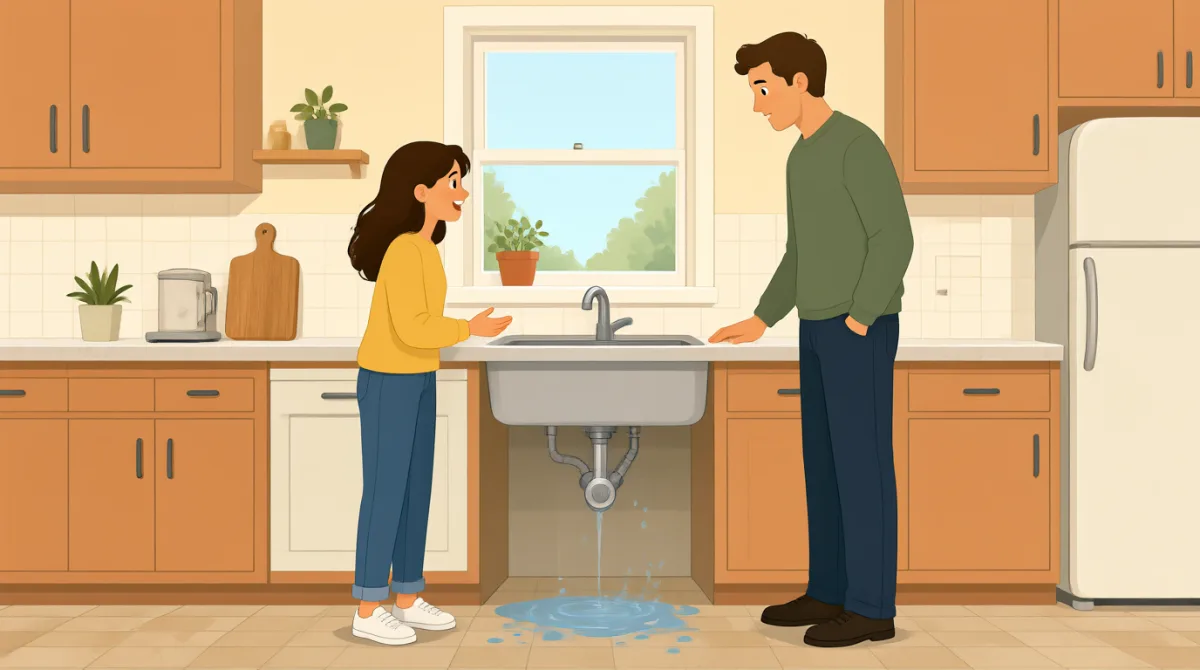

Hi, Jack. I found water under the kitchen sink this morning.
سلام جک. امروز صبح زیر سینک آشپزخونه آب پیدا کردم.

Oh no. Is there a lot of water on the floor?
وای نه. آب زیادی روی زمین جمع شده؟
Not a lot, but the cabinet is wet. I put a towel down.
خیلی زیاد نیست، ولی کابینت خیس شده. یه حوله پهن کردم.
Thanks. Did you see where the water was coming from?
ممنون. دیدی آب از کجا میاد؟
I think it’s coming from a pipe under the sink. It’s dripping slowly.
فکر کنم از یه لوله زیر سینک میاد. آرومآروم چکه میکنه.
Okay. Please don’t use the sink for now. I’ll call a plumber.
باشه. فعلاً لطفاً از سینک استفاده نکن. به لولهکش زنگ میزنم.
Should I turn off the water? I’m not sure which handle to use.
شیر آب رو ببندم؟ مطمئن نیستم کدوم دستگیره رو باید بچرخونم.
Yes, turn off the small valve under the sink. I’ll check on you soon.
آره، شیر کوچیک زیر سینک رو ببند. بهزودی بهت سر میزنم.
واژگان8
- under the kitchen sinkزیر سینک آشپزخانه
This means in the space below the kitchen sink, often inside a cabinet. Use it to say where you found something.
یعنی فضای زیر سینک آشپزخانه، که معمولاً داخل کابینت است. وقتی میخواهی بگویی چیزی را کجا پیدا کردهای، از این عبارت استفاده کن.
- a lot of waterمقدار زیادی آب
This means a large amount of water. You can use “a lot of” with many things, such as “a lot of food” or “a lot of rain.”
یعنی آب به مقدار زیاد. میتوانی از «a lot of» برای چیزهای زیادی استفاده کنی، مثلاً «a lot of food» (غذای زیاد) یا «a lot of rain» (باران زیاد).
- put a towel downحولهای پهن کردن
This means placed a towel on the floor to soak up water. Use “put [something] down” to say you placed it on a surface.
یعنی حولهای را روی زمین گذاشتی تا آب را جذب کند. از «put [something] down» برای گفتن اینکه چیزی را روی سطحی گذاشتی استفاده کن.
- coming fromاز جایی آمدن
Here, this asks about the place where the water starts. You can also ask where a sound or smell is coming from.
اینجا دربارهٔ جایی میپرسد که آب از آنجا شروع به آمدن میکند. همچنین میتوانی بپرسی صدا یا بو از کجا میآید.
- dripping slowlyآهسته چکه کردن
This means water is falling in small drops at a slow rate. Use it to describe a small, steady leak.
یعنی آب با سرعت کم و بهشکل قطرههای کوچک میچکد. برای توصیف نشتی کم و پیوسته از این عبارت استفاده کن.
- for nowفعلاً
This means for the present time, but perhaps not later. You can use it when giving a temporary instruction.
یعنی در حال حاضر، اما شاید نه بعداً. وقتی دستور موقتی میدهی، میتوانی از این عبارت استفاده کنی.
- turn offبستن
This means to stop the flow of water by moving a valve or handle. You can also use “turn off” for lights and machines.
یعنی با چرخاندن شیر یا دستگیره، جریان آب را متوقف کردن. برای چراغها و دستگاهها هم میتوانی از «turn off» استفاده کنی.
- check on youبهت سر زدن
This means to contact or visit you later to see if you are okay. Use it when you plan to make sure someone is all right.
یعنی بعداً با تو تماس گرفتن یا به دیدنت آمدن تا ببینند حالت خوب است یا نه. وقتی قصد داری مطمئن شوی کسی حالش خوب است، از این عبارت استفاده کن.
جملات کلیدی8
- 1
I found water under the kitchen sink this morning.
امروز صبح زیر سینک آشپزخانه آب پیدا کردم.
This is a clear way to explain what you discovered and when. You can reuse the pattern “I found [something] [place/time].”
این جمله راه روشنی برای توضیح دادن چیزی است که پیدا کردی و زمان پیدا کردنش. میتوانی از الگوی «I found [something] [place/time].» (من [چیزی] را [مکان/زمان] پیدا کردم) دوباره استفاده کنی.
- 2
Is there a lot of water on the floor?
آب زیادی روی زمین جمع شده؟
This is a useful question for finding out how serious a problem is. You can replace “water” with another thing, such as “dirt” or “food.”
این پرسش برای فهمیدن جدی بودن یک مشکل بهدرد میخورد. میتوانی «water» را با چیز دیگری، مثلاً «dirt» (خاک) یا «food» (غذا)، جایگزین کنی.
- 3
I put a towel down.
یه حوله پهن کردم.
This tells someone what you did to deal with the water. You can use “I put [something] down” to describe placing an item on a surface.
با این جمله به کسی میگویی برای مقابله با آب چه کار کردی. برای توصیف گذاشتن چیزی روی سطحی، میتوانی از «I put [something] down» استفاده کنی.
- 4
I think it’s coming from a pipe under the sink.
فکر کنم از یه لوله زیر سینک میاد.
Use this sentence to explain where you believe a problem starts. “I think it’s coming from…” is useful when you are not completely sure.
از این جمله برای توضیح دادن جایی که فکر میکنی یک مشکل از آنجا شروع شده استفاده کن. وقتی کاملاً مطمئن نیستی، عبارت «I think it’s coming from…» بهدرد میخورد.
- 5
Please don’t use the sink for now.
لطفاً فعلاً از سینک استفاده نکن.
This is a polite way to give someone a temporary instruction. You can replace “the sink” with another object or place.
این راهی مؤدبانه برای دادن یک دستور موقتی است. میتوانی «the sink» را با وسیله یا مکان دیگری جایگزین کنی.
- 6
I’ll call a plumber.
به لولهکش زنگ میزنم.
This is a simple way to say what you plan to do. Use “I’ll call…” to talk about a future action.
این جمله راه سادهای برای گفتن کاری است که قصد داری انجام بدهی. برای صحبت دربارهٔ کاری در آینده از «I’ll call…» استفاده کن.
- 7
Should I turn off the water?
شیر آب رو ببندم؟
This is a useful way to ask if you need to do something. You can reuse “Should I [action]?” when asking for advice.
این راهی مفید برای پرسیدن این است که آیا لازم است کاری انجام بدهی یا نه. وقتی راهنمایی میخواهی، میتوانی دوباره از «Should I [action]?» استفاده کنی.
- 8
I’m not sure which handle to use.
مطمئن نیستم از کدوم دستگیره استفاده کنم.
Use this when you do not know which item or option is correct. You can replace “handle” with another thing, such as “key” or “button.”
وقتی نمیدانی کدام وسیله یا گزینه درست است، از این جمله استفاده کن. میتوانی «handle» را با چیز دیگری، مثلاً «key» (کلید) یا «button» (دکمه)، جایگزین کنی.