Finding Water Under the Sink
सिंक के नीचे पानी मिलना
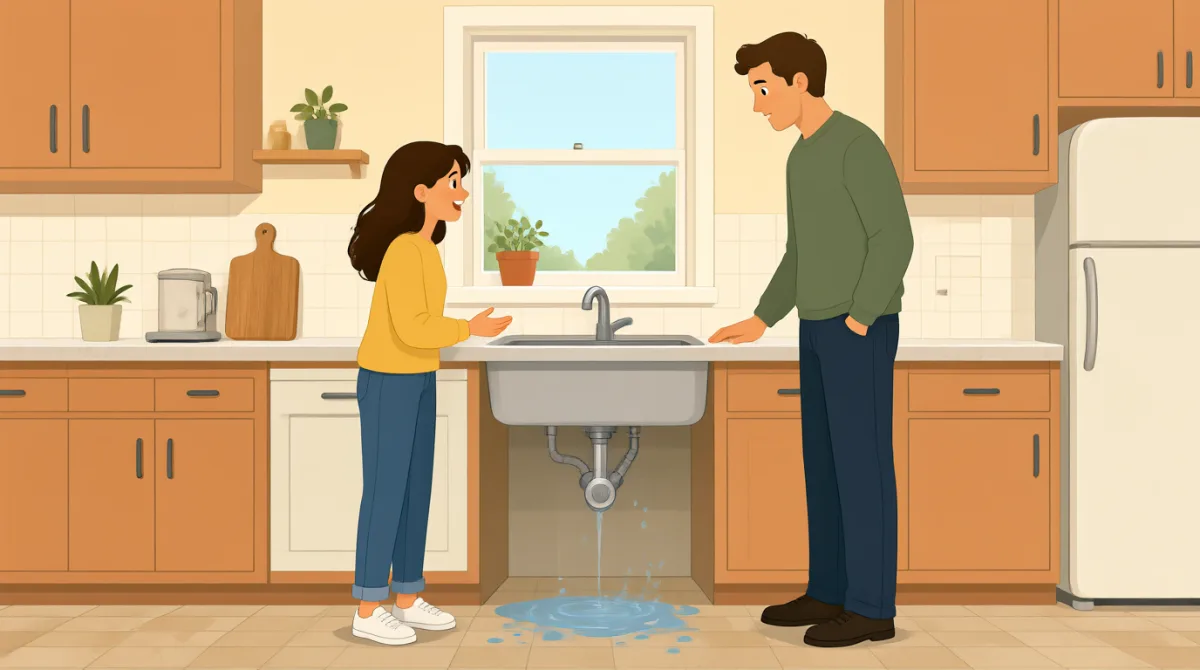
Emma finds water under her kitchen sink and calls her landlord, Jack, to explain what happened. They talk about where the leak is coming from.
एमा को अपनी रसोई के सिंक के नीचे पानी मिलता है और वह अपने मकान-मालिक जैक को फोन करके बताती है कि क्या हुआ। वे बात करते हैं कि रिसाव कहाँ से हो रहा है।
संवाद8

Hi, Jack. I found water under the kitchen sink this morning.
हाय, जैक। आज सुबह मुझे रसोई के सिंक के नीचे पानी मिला।

Oh no. Is there a lot of water on the floor?
अरे नहीं। क्या फर्श पर बहुत सारा पानी है?
Not a lot, but the cabinet is wet. I put a towel down.
ज़्यादा नहीं, लेकिन कैबिनेट गीला है। मैंने नीचे एक तौलिया रख दिया।
Thanks. Did you see where the water was coming from?
शुक्रिया। क्या तुमने देखा कि पानी कहाँ से आ रहा था?
I think it’s coming from a pipe under the sink. It’s dripping slowly.
मुझे लगता है कि सिंक के नीचे की एक पाइप से आ रहा है। पानी धीरे-धीरे टपक रहा है।
Okay. Please don’t use the sink for now. I’ll call a plumber.
ठीक है। अभी के लिए सिंक का इस्तेमाल मत करना। मैं प्लंबर को बुलाता हूँ।
Should I turn off the water? I’m not sure which handle to use.
क्या मुझे पानी बंद कर देना चाहिए? मुझे नहीं पता कि कौन-सा हैंडल इस्तेमाल करना है।
Yes, turn off the small valve under the sink. I’ll check on you soon.
हाँ, सिंक के नीचे वाला छोटा वाल्व बंद कर दो। मैं जल्द ही तुम्हारा हालचाल पूछूँगा।
शब्दावली8
- under the kitchen sinkरसोई के सिंक के नीचे
This means in the space below the kitchen sink, often inside a cabinet. Use it to say where you found something.
इसका मतलब है रसोई के सिंक के नीचे की जगह में, अक्सर कैबिनेट के अंदर। किसी चीज़ के मिलने की जगह बताने के लिए इसका इस्तेमाल करें।
- a lot of waterबहुत सारा पानी
This means a large amount of water. You can use “a lot of” with many things, such as “a lot of food” or “a lot of rain.”
इसका मतलब है पानी की बड़ी मात्रा। “a lot of” का इस्तेमाल कई चीज़ों के साथ कर सकते हैं, जैसे “a lot of food” या “a lot of rain।”
- put a towel downतौलिया नीचे रख दिया
This means placed a towel on the floor to soak up water. Use “put [something] down” to say you placed it on a surface.
इसका मतलब है पानी सोखने के लिए फर्श पर तौलिया रखना। किसी सतह पर कोई चीज़ रखने की बात कहने के लिए “put [something] down” का इस्तेमाल करें।
- coming fromसे आना
Here, this asks about the place where the water starts. You can also ask where a sound or smell is coming from.
यहाँ, इसका इस्तेमाल उस जगह के बारे में पूछने के लिए हुआ है जहाँ से पानी निकल रहा है। आप यह भी पूछ सकते हैं कि कोई आवाज़ या गंध कहाँ से आ रही है।
- dripping slowlyधीरे-धीरे टपकना
This means water is falling in small drops at a slow rate. Use it to describe a small, steady leak.
इसका मतलब है कि पानी धीरे-धीरे छोटी-छोटी बूँदों में गिर रहा है। मामूली और लगातार हो रहे रिसाव का वर्णन करने के लिए इसका इस्तेमाल करें।
- for nowअभी के लिए
This means for the present time, but perhaps not later. You can use it when giving a temporary instruction.
इसका मतलब है फिलहाल, लेकिन शायद आगे नहीं। कुछ समय के लिए दिए जाने वाले निर्देश में इसका इस्तेमाल कर सकते हैं।
- turn offबंद करना
This means to stop the flow of water by moving a valve or handle. You can also use “turn off” for lights and machines.
इसका मतलब है वाल्व या हैंडल घुमाकर पानी का बहाव रोकना। “turn off” का इस्तेमाल लाइट और मशीनें बंद करने के लिए भी कर सकते हैं।
- check on youतुम्हारा हालचाल पूछना
This means to contact or visit you later to see if you are okay. Use it when you plan to make sure someone is all right.
इसका मतलब है बाद में तुमसे संपर्क करना या मिलने आना, ताकि पता चले कि तुम ठीक हो। किसी का हाल जानने की योजना बताने के लिए इसका इस्तेमाल करें।
मुख्य वाक्य8
- 1
I found water under the kitchen sink this morning.
आज सुबह मुझे रसोई के सिंक के नीचे पानी मिला।
This is a clear way to explain what you discovered and when. You can reuse the pattern “I found [something] [place/time].”
आपने क्या और कब पाया, यह बताने का यह एक स्पष्ट तरीका है। आप “I found [something] [place/time].” वाले ढाँचे का फिर से इस्तेमाल कर सकते हैं।
- 2
Is there a lot of water on the floor?
क्या फर्श पर बहुत सारा पानी है?
This is a useful question for finding out how serious a problem is. You can replace “water” with another thing, such as “dirt” or “food.”
समस्या कितनी गंभीर है, यह जानने के लिए यह एक उपयोगी सवाल है। आप “water” की जगह कोई दूसरी चीज़, जैसे “dirt” या “food”, रख सकते हैं।
- 3
I put a towel down.
मैंने नीचे एक तौलिया रख दिया।
This tells someone what you did to deal with the water. You can use “I put [something] down” to describe placing an item on a surface.
इससे आप किसी को बताते हैं कि पानी से निपटने के लिए आपने क्या किया। किसी सतह पर कोई चीज़ रखने का वर्णन करने के लिए “I put [something] down” का इस्तेमाल कर सकते हैं।
- 4
I think it’s coming from a pipe under the sink.
मुझे लगता है कि यह सिंक के नीचे की एक पाइप से आ रहा है।
Use this sentence to explain where you believe a problem starts. “I think it’s coming from…” is useful when you are not completely sure.
आपको समस्या कहाँ से शुरू होती लगती है, यह बताने के लिए इस वाक्य का इस्तेमाल करें। जब आपको पूरा यक़ीन न हो, तो “I think it’s coming from…” कहना उपयोगी है।
- 5
Please don’t use the sink for now.
कृपया अभी के लिए सिंक का इस्तेमाल न करें।
This is a polite way to give someone a temporary instruction. You can replace “the sink” with another object or place.
किसी को कुछ समय के लिए निर्देश देने का यह एक विनम्र तरीका है। आप “the sink” की जगह कोई दूसरी चीज़ या जगह रख सकते हैं।
- 6
I’ll call a plumber.
मैं प्लंबर को बुलाऊँगा।
This is a simple way to say what you plan to do. Use “I’ll call…” to talk about a future action.
आप क्या करने की योजना बना रहे हैं, यह बताने का यह एक आसान तरीका है। भविष्य में किए जाने वाले काम के बारे में बात करने के लिए “I’ll call…” का इस्तेमाल करें।
- 7
Should I turn off the water?
क्या मुझे पानी बंद कर देना चाहिए?
This is a useful way to ask if you need to do something. You can reuse “Should I [action]?” when asking for advice.
कुछ करना ज़रूरी है या नहीं, यह पूछने का यह एक उपयोगी तरीका है। सलाह माँगते समय “Should I [action]?” वाले ढाँचे का फिर से इस्तेमाल कर सकते हैं।
- 8
I’m not sure which handle to use.
मुझे पक्का नहीं पता कि कौन-सा हैंडल इस्तेमाल करना है।
Use this when you do not know which item or option is correct. You can replace “handle” with another thing, such as “key” or “button.”
जब आपको पता न हो कि कौन-सी चीज़ या विकल्प सही है, तब इसका इस्तेमाल करें। आप “handle” की जगह कोई दूसरी चीज़, जैसे “key” या “button”, रख सकते हैं।