Finding Water Under the Sink
العثور على الماء تحت حوض المطبخ
Emma finds water under her kitchen sink and calls her landlord, Jack, to explain what happened. They talk about where the leak is coming from.
تعثر إيما على ماء تحت حوض مطبخها، وتتصل بمالك العقار جاك لتشرح له ما حدث. ويتحدثان عن مصدر التسرب.
حوار8
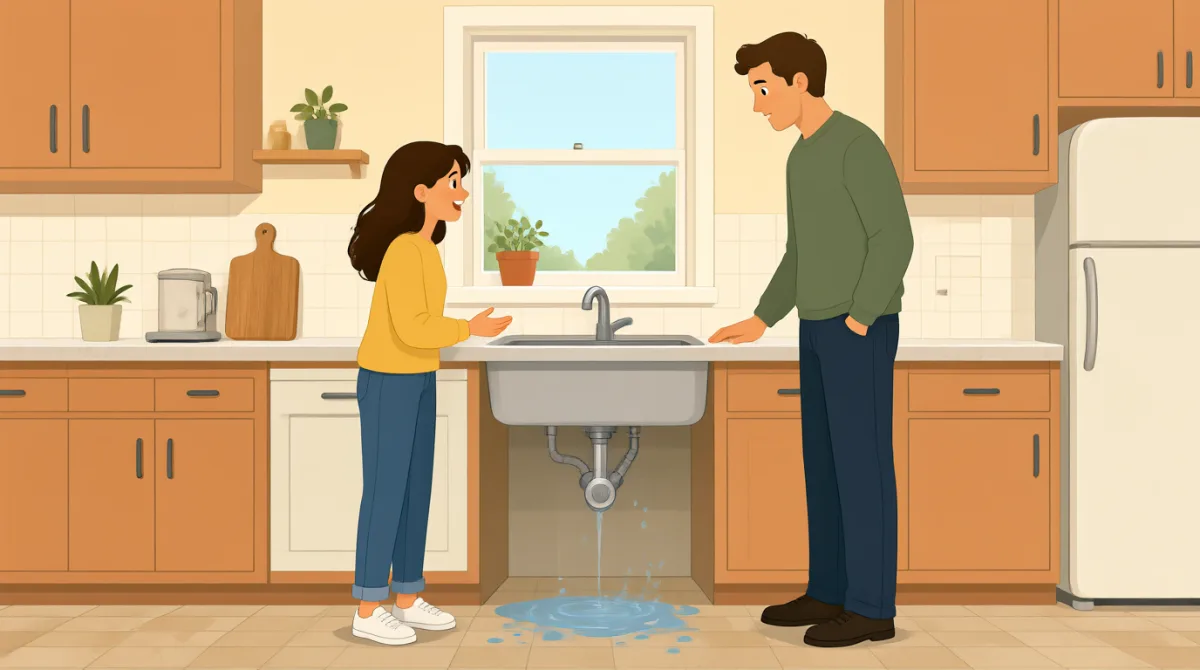

Hi, Jack. I found water under the kitchen sink this morning.
مرحبًا يا جاك. وجدت هذا الصباح ماءً تحت حوض المطبخ.

Oh no. Is there a lot of water on the floor?
يا للأسف. هل توجد كمية كبيرة من الماء على الأرض؟
Not a lot, but the cabinet is wet. I put a towel down.
ليست كمية كبيرة، لكن الخزانة مبتلة. وضعت منشفة على الأرض.
Thanks. Did you see where the water was coming from?
شكرًا. هل عرفت من أين يأتي الماء؟
I think it’s coming from a pipe under the sink. It’s dripping slowly.
أظن أنه يأتي من أنبوب تحت الحوض. إنه يقطر ببطء.
Okay. Please don’t use the sink for now. I’ll call a plumber.
حسنًا. من فضلك لا تستخدمي الحوض الآن. سأتصل بسبّاك.
Should I turn off the water? I’m not sure which handle to use.
هل أقطع الماء؟ لست متأكدة أي صمام أستخدم.
Yes, turn off the small valve under the sink. I’ll check on you soon.
نعم، أغلقي الصمام الصغير تحت الحوض. سأتواصل معك قريبًا لأطمئن عليك.
المفردات8
- under the kitchen sinkتحت حوض المطبخ
This means in the space below the kitchen sink, often inside a cabinet. Use it to say where you found something.
تعني هذه العبارة في المساحة أسفل حوض المطبخ، وغالبًا ما تكون داخل خزانة. استخدميها لتوضيح المكان الذي وجدتِ فيه شيئًا.
- a lot of waterكمية كبيرة من الماء
This means a large amount of water. You can use “a lot of” with many things, such as “a lot of food” or “a lot of rain.”
تعني هذه العبارة كمية كبيرة من الماء. يمكنك استخدام “a lot of” مع أشياء كثيرة، مثل “a lot of food” أو “a lot of rain.”
- put a towel downوضع منشفة على الأرض
This means placed a towel on the floor to soak up water. Use “put [something] down” to say you placed it on a surface.
تعني هذه العبارة أنك وضعت منشفة على الأرض لامتصاص الماء. استخدمي “put [something] down” للتعبير عن وضع شيء على سطح.
- coming fromيأتي من
Here, this asks about the place where the water starts. You can also ask where a sound or smell is coming from.
السؤال هنا عن المكان الذي يبدأ منه تدفق الماء. ويمكنك أيضًا أن تسألي من أين يأتي صوت أو رائحة.
- dripping slowlyيقطر ببطء
This means water is falling in small drops at a slow rate. Use it to describe a small, steady leak.
تعني هذه العبارة أن الماء يسقط على شكل قطرات صغيرة وببطء. استخدميها لوصف تسرب بسيط ومستمر.
- for nowفي الوقت الحالي
This means for the present time, but perhaps not later. You can use it when giving a temporary instruction.
تعني هذه العبارة في الوقت الحاضر، لكن ربما ليس لاحقًا. يمكنك استخدامها عند إعطاء تعليمات مؤقتة.
- turn offيُغلق / يقطع
This means to stop the flow of water by moving a valve or handle. You can also use “turn off” for lights and machines.
تعني هذه العبارة إيقاف تدفق الماء بتحريك صمام أو مقبض. ويمكنك أيضًا استخدام “turn off” مع الأضواء والأجهزة.
- check on youيتواصل معك للاطمئنان عليك
This means to contact or visit you later to see if you are okay. Use it when you plan to make sure someone is all right.
تعني هذه العبارة أن يتصل بك شخص أو يزورك لاحقًا ليتأكد أنك بخير. استخدميها عندما تنوين الاطمئنان على شخص ما.
الجمل الأساسية8
- 1
I found water under the kitchen sink this morning.
وجدت هذا الصباح ماءً تحت حوض المطبخ.
This is a clear way to explain what you discovered and when. You can reuse the pattern “I found [something] [place/time].”
هذه طريقة واضحة لشرح ما اكتشفتِه ومتى اكتشفتِه. يمكنك استخدام النمط “I found [something] [place/time].” مرة أخرى.
- 2
Is there a lot of water on the floor?
هل توجد كمية كبيرة من الماء على الأرض؟
This is a useful question for finding out how serious a problem is. You can replace “water” with another thing, such as “dirt” or “food.”
هذا سؤال مفيد لمعرفة مدى خطورة مشكلة ما. يمكنك استبدال “water” بشيء آخر، مثل “dirt” أو “food.”
- 3
I put a towel down.
وضعت منشفة على الأرض.
This tells someone what you did to deal with the water. You can use “I put [something] down” to describe placing an item on a surface.
تخبرين بهذا شخصًا بما فعلتِ للتعامل مع الماء. يمكنك استخدام “I put [something] down” لوصف وضع شيء على سطح.
- 4
I think it’s coming from a pipe under the sink.
أظن أن الماء يأتي من أنبوب تحت الحوض.
Use this sentence to explain where you believe a problem starts. “I think it’s coming from…” is useful when you are not completely sure.
استخدمي هذه الجملة لشرح المكان الذي تعتقدين أن المشكلة بدأت منه. يفيد التعبير “I think it’s coming from…” عندما لا تكونين متأكدة تمامًا.
- 5
Please don’t use the sink for now.
من فضلك لا تستخدمي الحوض في الوقت الحالي.
This is a polite way to give someone a temporary instruction. You can replace “the sink” with another object or place.
هذه طريقة مهذبة لإعطاء شخص تعليمات مؤقتة. يمكنك استبدال “the sink” بشيء أو مكان آخر.
- 6
I’ll call a plumber.
سأتصل بسبّاك.
This is a simple way to say what you plan to do. Use “I’ll call…” to talk about a future action.
هذه طريقة بسيطة للتعبير عما تنوين فعله. استخدمي “I’ll call…” للحديث عن فعل ستقومين به مستقبلًا.
- 7
Should I turn off the water?
هل أقطع الماء؟
This is a useful way to ask if you need to do something. You can reuse “Should I [action]?” when asking for advice.
هذه طريقة مفيدة للسؤال عما إذا كان عليك فعل شيء. يمكنك استخدام “Should I [action]?” مرة أخرى عندما تطلبين النصيحة.
- 8
I’m not sure which handle to use.
لست متأكدة أي مقبض أستخدم.
Use this when you do not know which item or option is correct. You can replace “handle” with another thing, such as “key” or “button.”
استخدمي هذه العبارة عندما لا تعرفين أي غرض أو خيار هو الصحيح. يمكنك استبدال “handle” بشيء آخر، مثل “key” أو “button.”