Finding Water Under the Sink
เจอน้ำขังใต้ซิงก์
Emma finds water under her kitchen sink and calls her landlord, Jack, to explain what happened. They talk about where the leak is coming from.
เอ็มมาเจอน้ำใต้ซิงก์ในครัวและโทรหาแจ็ก เจ้าของบ้าน เพื่อเล่าให้ฟังว่าเกิดอะไรขึ้น ทั้งคู่คุยกันว่าน้ำรั่วมาจากตรงไหน
บทสนทนา8
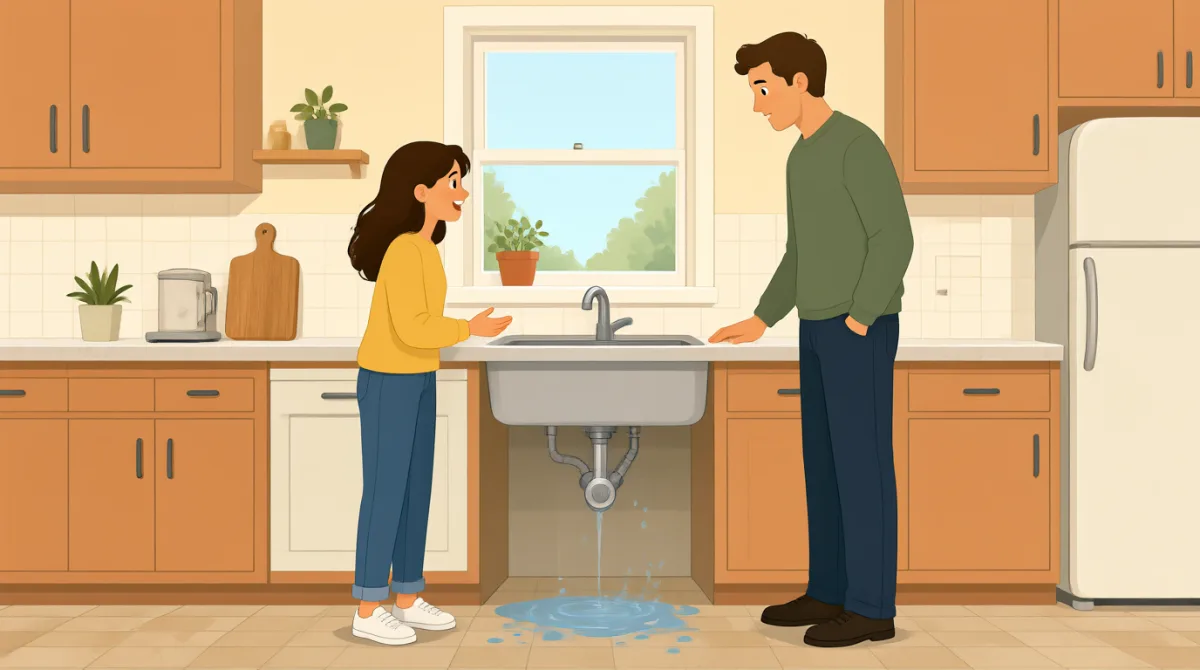

Hi, Jack. I found water under the kitchen sink this morning.
สวัสดี แจ็ก เมื่อเช้าฉันเจอน้ำใต้ซิงก์ในครัว

Oh no. Is there a lot of water on the floor?
แย่จัง พื้นมีน้ำเยอะไหม
Not a lot, but the cabinet is wet. I put a towel down.
ไม่เยอะ แต่ตู้เปียก ฉันเอาผ้าขนหนูปูไว้แล้ว
Thanks. Did you see where the water was coming from?
ขอบคุณนะ เห็นไหมว่าน้ำรั่วมาจากตรงไหน
I think it’s coming from a pipe under the sink. It’s dripping slowly.
คิดว่ามาจากท่อใต้ซิงก์ น้ำหยดช้า ๆ
Okay. Please don’t use the sink for now. I’ll call a plumber.
โอเค ช่วงนี้อย่าเพิ่งใช้ซิงก์นะ ฉันจะโทรเรียกช่างประปา
Should I turn off the water? I’m not sure which handle to use.
ฉันควรปิดน้ำไหม ไม่แน่ใจว่าต้องใช้วาล์วอันไหน
Yes, turn off the small valve under the sink. I’ll check on you soon.
ใช่ ปิดวาล์วตัวเล็กใต้ซิงก์นะ เดี๋ยวฉันจะติดต่อมาดูว่าเธอเป็นยังไงบ้าง
คำศัพท์8
- under the kitchen sinkใต้ซิงก์ในครัว
This means in the space below the kitchen sink, often inside a cabinet. Use it to say where you found something.
หมายถึงบริเวณใต้ซิงก์ในครัว ซึ่งมักอยู่ในตู้ ใช้บอกตำแหน่งที่คุณเจอของบางอย่างได้
- a lot of waterน้ำเยอะ
This means a large amount of water. You can use “a lot of” with many things, such as “a lot of food” or “a lot of rain.”
หมายถึงน้ำปริมาณมาก คุณใช้ “a lot of” กับสิ่งต่าง ๆ ได้หลายอย่าง เช่น “a lot of food” หรือ “a lot of rain”
- put a towel downเอาผ้าขนหนูปูไว้
This means placed a towel on the floor to soak up water. Use “put [something] down” to say you placed it on a surface.
หมายถึงวางผ้าขนหนูไว้บนพื้นเพื่อซับน้ำ ใช้ “put [something] down” เพื่อบอกว่าคุณวางสิ่งของลงบนพื้นผิว
- coming fromรั่วมาจาก
Here, this asks about the place where the water starts. You can also ask where a sound or smell is coming from.
ในที่นี้เป็นการถามว่าน้ำเริ่มไหลมาจากตรงไหน คุณถามได้เช่นกันว่าเสียงหรือกลิ่นมาจากไหน
- dripping slowlyหยดช้า ๆ
This means water is falling in small drops at a slow rate. Use it to describe a small, steady leak.
หมายถึงน้ำหยดลงมาทีละหยดอย่างช้า ๆ ใช้บรรยายการรั่วซึมเล็กน้อยที่เกิดขึ้นต่อเนื่อง
- for nowช่วงนี้
This means for the present time, but perhaps not later. You can use it when giving a temporary instruction.
หมายถึงในตอนนี้ แต่อาจไม่ใช่ในภายหลัง ใช้เมื่อต้องการบอกให้ทำอะไรชั่วคราว
- turn offปิด
This means to stop the flow of water by moving a valve or handle. You can also use “turn off” for lights and machines.
หมายถึงหยุดการไหลของน้ำโดยหมุนวาล์วหรือมือจับ คุณยังใช้ “turn off” กับไฟและเครื่องจักรได้ด้วย
- check on youติดต่อมาดูว่าเป็นยังไงบ้าง
This means to contact or visit you later to see if you are okay. Use it when you plan to make sure someone is all right.
หมายถึงติดต่อหรือแวะมาหาคุณทีหลังเพื่อดูว่าคุณสบายดีไหม ใช้เมื่อคุณตั้งใจจะตรวจดูว่าใครโอเคหรือเปล่า
ประโยคสำคัญ8
- 1
I found water under the kitchen sink this morning.
เมื่อเช้าฉันเจอน้ำใต้ซิงก์ในครัว
This is a clear way to explain what you discovered and when. You can reuse the pattern “I found [something] [place/time].”
ประโยคนี้ใช้เล่าสิ่งที่คุณเจอและเจอเมื่อไหร่ได้อย่างชัดเจน คุณนำรูปแบบ “I found [something] [place/time].” ไปปรับใช้ได้
- 2
Is there a lot of water on the floor?
พื้นมีน้ำเยอะไหม
This is a useful question for finding out how serious a problem is. You can replace “water” with another thing, such as “dirt” or “food.”
นี่เป็นคำถามที่มีประโยชน์ในการดูว่าปัญหาร้ายแรงแค่ไหน คุณเปลี่ยน “water” เป็นสิ่งอื่นได้ เช่น “dirt” หรือ “food”
- 3
I put a towel down.
ฉันเอาผ้าขนหนูปูไว้แล้ว
This tells someone what you did to deal with the water. You can use “I put [something] down” to describe placing an item on a surface.
ประโยคนี้บอกอีกฝ่ายว่าคุณทำอะไรเพื่อจัดการกับน้ำ คุณใช้ “I put [something] down” เพื่อบอกว่าวางสิ่งของลงบนพื้นผิวได้
- 4
I think it’s coming from a pipe under the sink.
คิดว่าน้ำรั่วมาจากท่อใต้ซิงก์
Use this sentence to explain where you believe a problem starts. “I think it’s coming from…” is useful when you are not completely sure.
ใช้ประโยคนี้เพื่อบอกว่าคุณคิดว่าปัญหาเริ่มจากตรงไหน “I think it’s coming from…” มีประโยชน์เมื่อคุณยังไม่แน่ใจเต็มที่
- 5
Please don’t use the sink for now.
ช่วงนี้อย่าเพิ่งใช้ซิงก์นะ
This is a polite way to give someone a temporary instruction. You can replace “the sink” with another object or place.
นี่เป็นวิธีสุภาพในการบอกให้ใครทำหรืองดทำอะไรชั่วคราว คุณเปลี่ยน “the sink” เป็นสิ่งของหรือสถานที่อื่นได้
- 6
I’ll call a plumber.
ฉันจะโทรเรียกช่างประปา
This is a simple way to say what you plan to do. Use “I’ll call…” to talk about a future action.
นี่เป็นวิธีง่าย ๆ ในการบอกแผนของคุณ ใช้ “I’ll call…” เพื่อพูดถึงสิ่งที่จะทำในอนาคต
- 7
Should I turn off the water?
ฉันควรปิดน้ำไหม
This is a useful way to ask if you need to do something. You can reuse “Should I [action]?” when asking for advice.
นี่เป็นวิธีที่มีประโยชน์ในการถามว่าคุณควรทำอะไรไหม คุณนำรูปแบบ “Should I [action]?” ไปใช้เมื่อต้องการขอคำแนะนำได้
- 8
I’m not sure which handle to use.
ฉันไม่แน่ใจว่าต้องใช้มือจับอันไหน
Use this when you do not know which item or option is correct. You can replace “handle” with another thing, such as “key” or “button.”
ใช้ประโยคนี้เมื่อคุณไม่รู้ว่าสิ่งของหรือตัวเลือกไหนถูกต้อง คุณเปลี่ยน “handle” เป็นสิ่งอื่นได้ เช่น “key” หรือ “button”