The First Day
El primer día
On the first morning, Emma and Jack bring their child to the daycare and check in with Grace. They talk through drop-off arrangements and what to expect during the day.
La primera mañana, Emma y Jack llevan a su hija a la guardería y hablan con Grace. Conversan sobre cómo será la despedida y qué pueden esperar durante el día.
Diálogo9
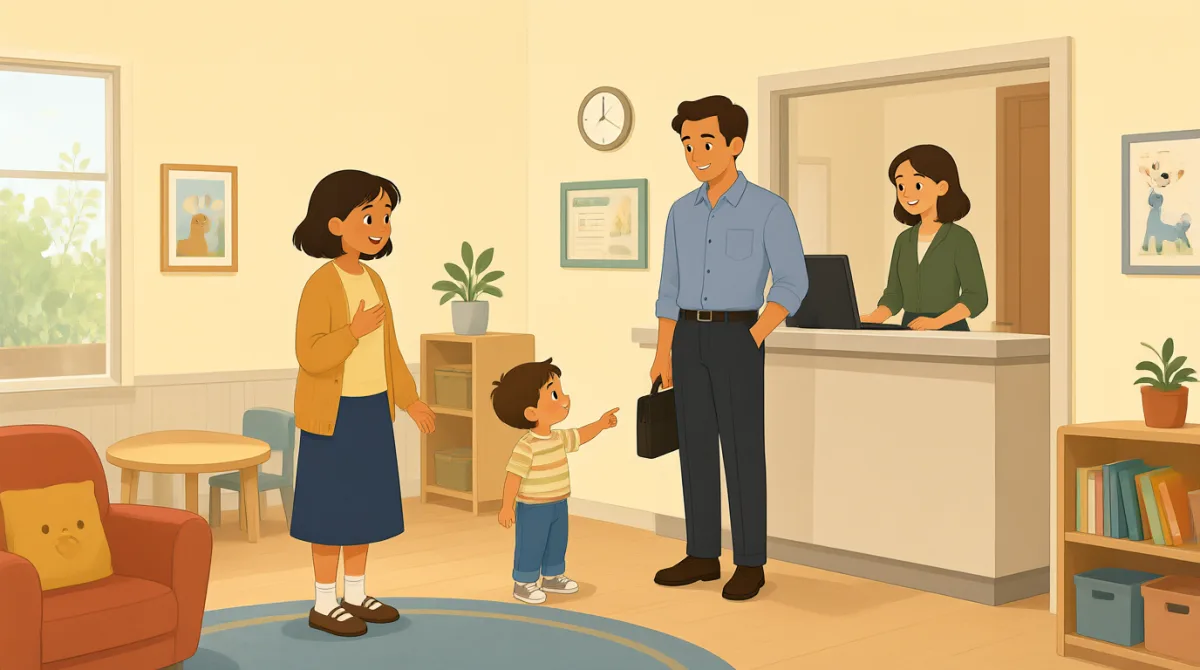

Good morning, Emma and Jack. Welcome in! You can leave your child’s bag in the cubby, and I’ll show you where everything goes.
Buenos días, Emma y Jack. ¡Bienvenidos! Pueden dejar la mochila de su hija en el casillero y les mostraré dónde va cada cosa.

Thanks, Grace. We packed a change of clothes, diapers, and her favorite stuffed animal. Is there anything else she’ll need today?
Gracias, Grace. Trajimos una muda de ropa, pañales y su animal de peluche favorito. ¿Necesitará algo más hoy?
That should be plenty. We have extra supplies here, too. At drop-off, just sign her in and let us know about any changes to her routine.
Con eso debería ser suficiente. También tenemos suministros adicionales aquí. Al dejarla, solo tienen que registrarla y avisarnos si hay algún cambio en su rutina.

She usually naps around one, but she might take a little while to settle in. What happens if she gets upset after we leave?
Por lo general, duerme la siesta alrededor de la una, pero quizá tarde un poco en adaptarse. ¿Qué pasa si se angustia después de que nos vayamos?
We’ll comfort her and help her join an activity when she’s ready. We’ll keep an eye on her and call you if she needs extra support.
La consolaremos y la ayudaremos a incorporarse a una actividad cuando esté lista. Estaremos pendientes de ella y los llamaremos si necesita apoyo adicional.
That’s reassuring. Should we say goodbye quickly, or stay for a few minutes so she can get used to the room?
Eso nos tranquiliza. ¿Deberíamos despedirnos rápidamente o quedarnos unos minutos para que se acostumbre al lugar?
A warm, brief goodbye usually works best. You can tell her you’ll be back after snack time, then let one of us take over.
Por lo general, lo mejor es una despedida cariñosa y breve. Pueden decirle que volverán después de la merienda y luego dejar que alguien de nuestro equipo se haga cargo.
Okay, we’ll give that a try. What time should we pick her up, and how will we hear about her day?
De acuerdo, lo intentaremos. ¿A qué hora deberíamos venir a buscarla y cómo nos enteraremos de cómo le fue?
Pickup is by five thirty. I’ll share a daily update about meals, naps, and activities, and you can call us anytime with questions.
Tienen que venir a buscarla antes de las cinco y media. Les contaré cada día cómo le fue con las comidas, las siestas y las actividades, y pueden llamarnos cuando quieran si tienen alguna pregunta.
Vocabulario7
- drop-offdejar al niño en la guardería
The time when you bring your child to daycare. At drop-off, parents usually sign their child in.
Es el momento en que llevas a tu hijo a la guardería. Al dejarlo, los padres suelen registrarlo.
- sign her inregistrarla
Write down that she has arrived. You can reuse “sign [someone] in” when checking in at a school or activity.
Anotar que ya llegó. Puedes volver a usar “sign [someone] in” cuando registres la llegada de alguien en una escuela o actividad.
- settle inadaptarse
Feel comfortable in a new place or situation. Children may need time to settle in at daycare.
Sentirse a gusto en un lugar o una situación nuevos. Los niños quizá necesiten tiempo para adaptarse a la guardería.
- keep an eye on herestar pendiente de ella
Watch her carefully to make sure she is safe and doing well. You can use “keep an eye on” when talking about looking after someone or something.
Vigilarla con atención para asegurarte de que esté segura y se encuentre bien. Puedes usar “keep an eye on” cuando hables de cuidar a alguien o algo.
- a warm, brief goodbyeuna despedida cariñosa y breve
A kind but short goodbye before leaving. This phrase describes a simple way to help a child feel reassured at drop-off.
Una despedida amable pero corta antes de irse. Esta expresión describe una forma sencilla de tranquilizar a un niño cuando lo dejan en la guardería.
- take overhacerse cargo
Take responsibility from someone else. Here, a daycare worker takes over caring for the child after her parents say goodbye.
Asumir la responsabilidad que tenía otra persona. Aquí, alguien del personal de la guardería se hace cargo de la niña después de que sus padres se despiden.
- daily updateinforme diario
A short report about what happened during the day. Daycare staff might share an update about a child's meals, naps, and activities.
Un breve resumen de lo que pasó durante el día. El personal de la guardería podría compartir un informe sobre las comidas, las siestas y las actividades de un niño.
Frases clave7
- 1
Is there anything else she’ll need today?
¿Necesitará algo más hoy?
Use this question to check whether someone needs anything more. Replace “she” with another person or use “you” when asking about a different situation.
Usa esta pregunta para comprobar si alguien necesita algo más. Sustituye “she” por otra persona o usa “you” si preguntas por una situación distinta.
- 2
At drop-off, just sign her in and let us know about any changes to her routine.
Al dejarla, solo tienen que registrarla y avisarnos si hay algún cambio en su rutina.
This sentence gives clear instructions for arriving and checking in. You can reuse “let us know about any changes to…” to share new information.
Esta frase da instrucciones claras para dejar a alguien y registrarlo. Puedes volver a usar “let us know about any changes to…” para compartir información nueva.
- 3
What happens if she gets upset after we leave?
¿Qué pasa si se angustia después de que nos vayamos?
Use this question to ask what someone will do if a possible problem occurs. Replace “she gets upset” with another situation you are concerned about.
Usa esta pregunta para saber qué hará alguien si ocurre un posible problema. Sustituye “she gets upset” por otra situación que te preocupe.
- 4
We’ll comfort her and help her join an activity when she’s ready.
La consolaremos y la ayudaremos a incorporarse a una actividad cuando esté lista.
This is a reassuring way to explain how you will support someone. You can reuse “help [someone] join…” when describing how you’ll include a person in an activity.
Esta es una forma tranquilizadora de explicar cómo apoyarás a alguien. Puedes volver a usar “help [someone] join…” para describir cómo ayudarás a alguien a participar en una actividad.
- 5
A warm, brief goodbye usually works best.
Por lo general, lo mejor es una despedida cariñosa y breve.
Use this sentence to share advice about what tends to be most effective. Replace “a warm, brief goodbye” with another approach to fit the situation.
Usa esta frase para dar un consejo sobre lo que suele funcionar mejor. Sustituye “a warm, brief goodbye” por otro enfoque que se adapte a la situación.
- 6
You can tell her you’ll be back after snack time, then let one of us take over.
Pueden decirle que volverán después de la merienda y luego dejar que alguien de nuestro equipo se haga cargo.
This gives a practical way to reassure a child and hand over care. You can reuse “tell [someone] you’ll be back…” when explaining when you will return.
Esta frase ofrece una forma práctica de tranquilizar a un niño y dejarlo al cuidado de otra persona. Puedes volver a usar “tell [someone] you’ll be back…” para explicar cuándo regresarás.
- 7
I’ll share a daily update about meals, naps, and activities, and you can call us anytime with questions.
Les contaré cada día cómo le fue con las comidas, las siestas y las actividades, y pueden llamarnos cuando quieran si tienen alguna pregunta.
This sentence explains how someone will share information and invites questions. You can adapt “I’ll share a daily update about…” for regular reports in other settings.
Esta frase explica cómo compartirás información e invita a hacer preguntas. Puedes adaptar “I’ll share a daily update about…” para dar informes periódicos en otros contextos.