Making a List of Questions
Preparar una lista de preguntas
Emma and Jack prepare questions before visiting nearby daycares. They decide to ask about staff experience, safety, daily routines, and fees.
Emma y Jack preparan preguntas antes de visitar las guarderías cercanas. Deciden preguntar por la experiencia del personal, la seguridad, las rutinas diarias y las tarifas.
Diálogo8
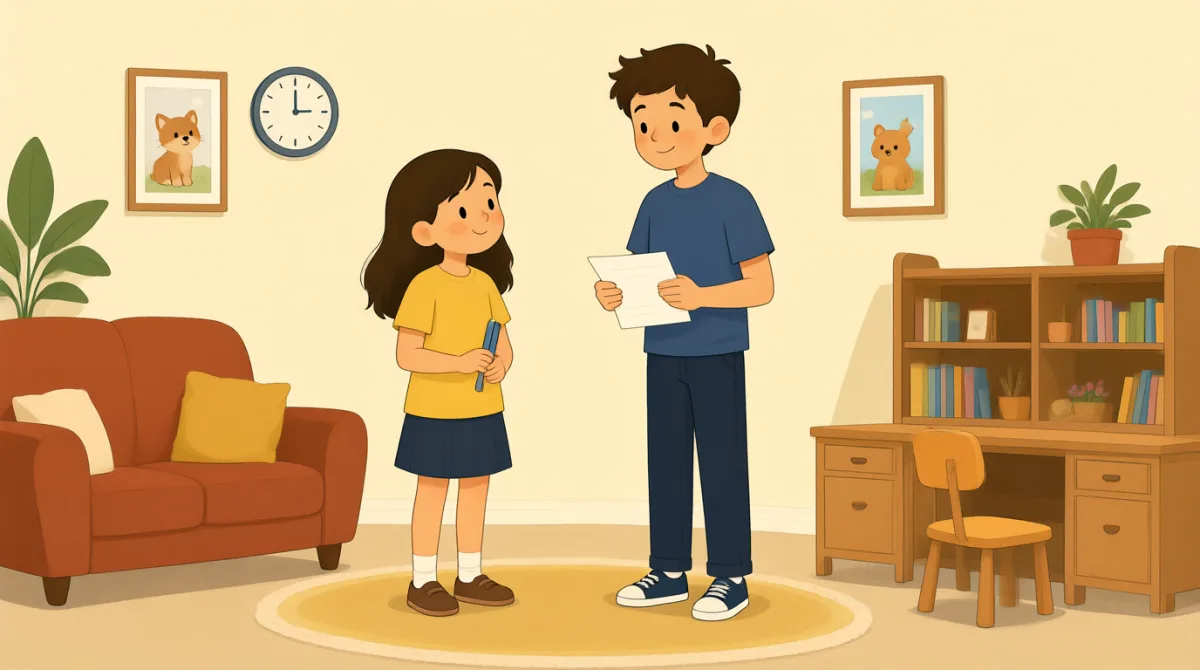

I found three daycares near us. Before we visit, let’s make a list of questions so we don’t forget anything.
Encontré tres guarderías cerca de casa. Antes de ir, hagamos una lista de preguntas para que no se nos olvide nada.

Good idea. We should ask how much experience the staff have and whether they’re trained in first aid.
Buena idea. Deberíamos preguntar cuánta experiencia tiene el personal y si está capacitado en primeros auxilios.
Definitely. And we should ask how many children each staff member looks after. I want to know they’ll get enough attention.
Claro. También deberíamos preguntar cuántos niños atiende cada miembro del personal. Quiero asegurarme de que reciban suficiente atención.
Let’s ask about safety, too—how they handle pick-ups, emergencies, and visitors. Those details really matter.
Preguntemos también por la seguridad: cómo gestionan la recogida de los niños, las emergencias y las visitas. Esos detalles importan mucho.
Right. I’d also like to know what a typical day looks like, including meals, naps, and outdoor play.
Sí. También me gustaría saber cómo es un día normal, incluyendo las comidas, las siestas y el tiempo de juego al aire libre.
We should check the fees and ask what’s included. Some places charge extra for meals or early drop-off.
Deberíamos revisar las tarifas y preguntar qué incluyen. Algunos lugares cobran extra por las comidas o por dejar a los niños más temprano.
Good point. Let’s ask about their hours and whether they offer flexible drop-off. Our schedules can change.
Buena observación. Preguntemos por sus horarios y si ofrecen flexibilidad para dejar a los niños. Nuestros horarios pueden cambiar.
I’ll write everything down on my phone. Then we can compare the answers after we visit each place.
Anotaré todo en mi teléfono. Así podremos comparar las respuestas después de visitar cada lugar.
Vocabulario8
- make a list of questionshacer una lista de preguntas
To write down questions you want to ask. Here, Emma and Jack do this so they remember what to check at each daycare.
Anotar las preguntas que quieres hacer. En este caso, Emma y Jack lo hacen para recordar qué deben averiguar en cada guardería.
- trained in first aidcapacitado en primeros auxilios
Having learned how to give basic medical help in an emergency. You can ask whether staff members are trained in first aid.
Haber aprendido a prestar ayuda médica básica en una emergencia. Puedes preguntar si los miembros del personal están capacitados en primeros auxilios.
- looks afteratiende
Takes care of someone. Here, it describes how many children each staff member is responsible for.
Cuida de alguien. Aquí describe cuántos niños están a cargo de cada miembro del personal.
- get enough attentionrecibir suficiente atención
Receive enough care and notice from other people. You can use this phrase when talking about whether a child will be well cared for.
Recibir suficiente cuidado y atención de otras personas. Puedes usar esta expresión para hablar de si cuidarán bien a un niño.
- handle pick-upsgestionar la recogida de los niños
Manage the process of children being collected. It is useful when asking about a daycare’s safety procedures.
Encargarse del proceso de recoger a los niños. Es útil cuando preguntas por los procedimientos de seguridad de una guardería.
- what a typical day looks likecómo es un día normal
What usually happens during a normal day. You can use this phrase to ask about someone’s routine or a service’s schedule.
Lo que suele pasar durante un día normal. Puedes usar esta expresión para preguntar por la rutina de alguien o el horario de un servicio.
- what’s includedqué está incluido
What is covered as part of a price or service. You can ask this before paying for childcare or another service.
Lo que cubre un precio o servicio. Puedes preguntarlo antes de pagar por el cuidado infantil u otro servicio.
- flexible drop-offflexibilidad para dejar a los niños
A drop-off arrangement that can adjust to different schedules. Here, it means being able to bring a child in at different times.
Un acuerdo para dejar a los niños que se adapta a distintos horarios. Aquí significa que puedes llevar a un niño a diferentes horas.
Frases clave8
- 1
Before we visit, let’s make a list of questions so we don’t forget anything.
Antes de ir, hagamos una lista de preguntas para que no se nos olvide nada.
This is a natural way to suggest preparing before a visit. Use “let’s make a list of questions” when planning an appointment, tour, or meeting.
Esta es una forma natural de sugerir que se preparen antes de una visita. Usa “let’s make a list of questions” (hagamos una lista de preguntas) al planear una cita, una visita o una reunión.
- 2
We should ask how much experience the staff have and whether they’re trained in first aid.
Deberíamos preguntar cuánta experiencia tiene el personal y si está capacitado en primeros auxilios.
This sentence combines two useful questions about staff qualifications. Reuse “We should ask…” to suggest information to check before making a decision.
Esta oración combina dos preguntas útiles sobre las cualificaciones del personal. Puedes volver a usar “We should ask…” (Deberíamos preguntar…) para sugerir qué información conviene averiguar antes de tomar una decisión.
- 3
And we should ask how many children each staff member looks after.
También deberíamos preguntar cuántos niños atiende cada miembro del personal.
This is a clear way to ask about the number of people one staff member cares for. Replace “children” with another group, such as customers or students, to fit a different situation.
Esta es una forma clara de preguntar cuántas personas atiende un miembro del personal. Puedes sustituir “children” por otro grupo, como clientes o estudiantes, para adaptarla a otra situación.
- 4
Those details really matter.
Esos detalles importan mucho.
This short sentence emphasizes that some information is important. Use it after mentioning details that could affect a decision.
Esta oración breve enfatiza que cierta información es importante. Úsala después de mencionar detalles que podrían influir en una decisión.
- 5
I’d also like to know what a typical day looks like, including meals, naps, and outdoor play.
También me gustaría saber cómo es un día normal, incluyendo las comidas, las siestas y el tiempo de juego al aire libre.
This politely asks for a description of a normal routine. You can reuse “I’d also like to know…” to add another question.
Esta es una forma cortés de pedir que describan una rutina normal. Puedes volver a usar “I’d also like to know…” (También me gustaría saber…) para añadir otra pregunta.
- 6
We should check the fees and ask what’s included.
Deberíamos revisar las tarifas y preguntar qué incluyen.
This is a useful way to make sure you understand the price and what it covers. Replace “fees” with “cost” or “price” when talking about other services.
Esta es una forma útil de asegurarte de que entiendes el precio y lo que cubre. Si hablas de otros servicios, sustituye “fees” por “cost” o “price”.
- 7
Let’s ask about their hours and whether they offer flexible drop-off.
Preguntemos por sus horarios y si ofrecen flexibilidad para dejar a los niños.
This sentence suggests checking opening times and whether arrival times can vary. Use “whether they offer…” to ask if a business provides a particular option.
Esta oración propone averiguar los horarios de apertura y si se puede llegar a distintas horas. Usa “whether they offer…” para preguntar si un negocio ofrece una opción determinada.
- 8
Then we can compare the answers after we visit each place.
Así podremos comparar las respuestas después de visitar cada lugar.
This explains how to make a decision after gathering information. Reuse “compare the answers” when evaluating several services or options.
Esta oración explica cómo tomar una decisión después de reunir información. Vuelve a usar “compare the answers” (comparar las respuestas) cuando evalúes varios servicios u opciones.