Discussing Who Pays
商量費用怎麼分攤
Mia and Jack discuss how to split the repair costs, considering that the fence serves both yards. They agree to share the expense fairly and get a few quotes before deciding.
米婭和傑克討論如何分攤維修費用,並考慮到圍欄供兩家共用。他們同意公平分擔費用,並在決定前詢問幾家報價。
對話9
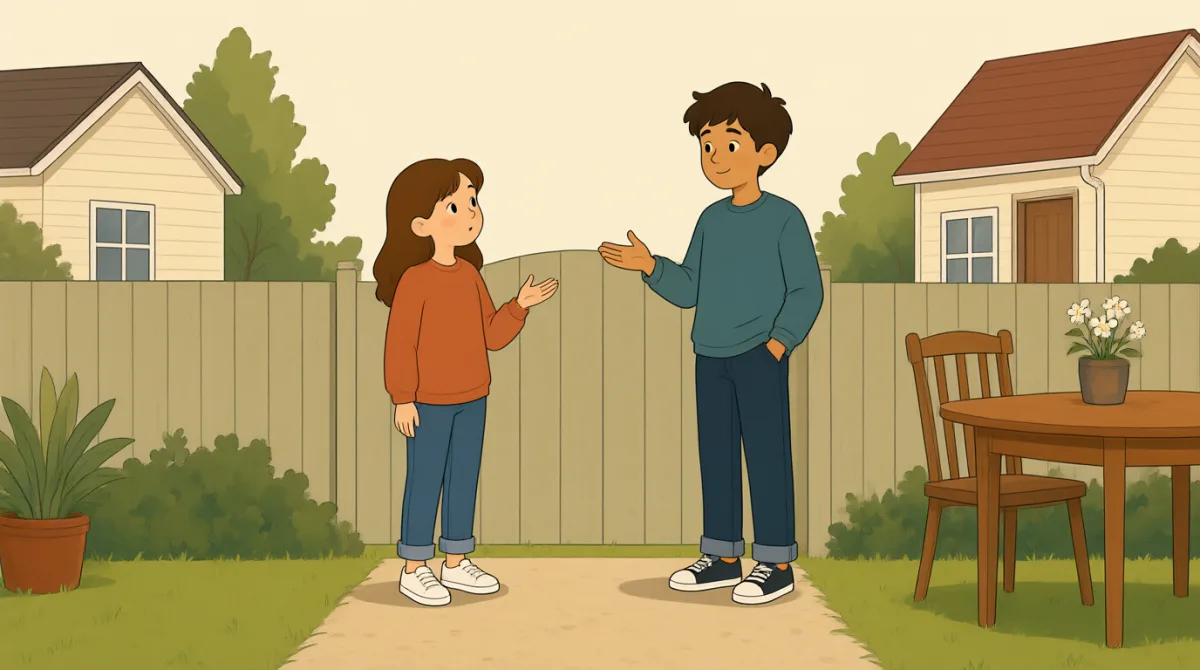

I got an estimate for the fence repair. It’s more than I expected, so we should talk about how to split the cost.
我拿到一份修圍欄的報價了。比我預想的貴,所以我們應該談談怎麼分攤費用。

Definitely. Since the fence sits between our yards and we both use it, splitting the bill seems fair to me.
當然。圍欄在我們兩家的院子之間,而且我們都用得到,我覺得平攤費用挺公平的。
I agree, though one section on my side looks worse. Would it make sense for each of us to pay for that side?
我同意,不過我這邊有一段看起來損壞得更嚴重。我們各自付自己那一側的費用,會不會更合理?
Maybe, but the whole fence needs support. If we only fix one section, the rest could start leaning before long.
也許吧,但整段圍欄都需要加固。如果我們只修一段,其他部分可能很快也會開始傾斜。
That’s a good point. I don’t want us to patch it up now and end up paying more for another repair later.
你說得有道理。我不希望我們現在只做臨時修補,結果以後又得花更多錢再修一次。
How about we share the cost of the main repair fifty-fifty? If any extra work is only for one side, we can discuss that separately.
主要維修費用我們各付一半怎麼樣?如果有額外工作只涉及一側,我們可以再單獨商量。
That sounds fair. Before we decide, let’s get a couple more quotes so we know we’re not paying over the odds.
這樣挺公平的。決定之前,我們再多問幾家報價,這樣就知道自己沒有付得太貴。
Agreed. I’ll contact two local companies, and you can check whether the estimate includes materials and cleanup.
同意。我去聯絡兩家本地公司,你可以確認一下報價是否包含材料和清理工作。
Great. Once we compare the quotes, we can choose a reasonable option and split the final bill evenly.
好。等我們比較完報價,就可以選一個價格合理的方案,再平攤最終賬單。
詞彙8
- estimate報價
An estimate is an approximate price for a job. Here, it tells Mia how much the fence repair may cost.
報價是對一項工作的預估價格。這裡,報價讓米婭知道修圍欄大概要花多少錢。
- split the cost分攤費用
To split the cost is to divide the expense between people. You can use this phrase when discussing how to share a bill.
“分攤費用”就是由幾個人一起承擔一筆開銷。討論如何分攤賬單時,可以用這個說法。
- seems fair to me我覺得挺公平
This means that something feels reasonable or just in your opinion. Use it to express agreement with a suggestion.
這個表達表示在你看來,某件事合情合理或公平。你可以用它來表示贊同某個提議。
- before long很快
This means soon or after a short time. Jack uses it to explain that the rest of the fence may start leaning soon.
這個表達的意思是很快或過不了多久。傑克用它說明圍欄的其他部分可能很快就會開始傾斜。
- patch it up簡單修補一下
To patch something up is to make a quick, limited repair. The phrase can also describe fixing a problem temporarily.
“簡單修補一下”指進行快速、有限的修理。這個說法也可以形容暫時解決某個問題。
- fifty-fifty一人一半
This means divided equally, with each person paying half. It is a casual way to talk about sharing costs.
這個表達表示平均分攤,每個人付一半。這是一種比較隨意的談論費用分擔的說法。
- over the odds付得比合理價格高
If you pay over the odds, you pay more than something is worth or more than a reasonable price. It is a useful phrase when comparing prices.
如果你“付得比合理價格高”,就是付出的價格超過了物品或服務的實際價值,或者高於合理價位。比較價格時,這個表達很實用。
- evenly平均地
Evenly means in equal amounts. Here, Mia uses it to describe how they will divide the final bill.
“平均地”表示以相等的份額分配。這裡,米婭用它來說明他們會如何分攤最後的賬單。
關鍵句8
- 1
Since the fence sits between our yards and we both use it, splitting the bill seems fair to me.
圍欄在我們兩家的院子之間,而且我們都用得到,我覺得平攤費用挺公平的。
This sentence gives a reason for sharing a cost and then states an opinion. Reuse the pattern “Since [reason], [suggestion] seems fair to me” in discussions about shared expenses.
這句話先說明分攤費用的理由,再表達看法。討論共同開銷時,可以套用 “Since [reason], [suggestion] seems fair to me”(既然[理由],我覺得[提議]挺公平)。
- 2
Would it make sense for each of us to pay for that side?
我們各自付自己那一側的費用,會不會更合理?
This is a polite way to ask whether a suggestion is reasonable. You can reuse “Would it make sense for [person] to [action]?” when proposing a plan.
這是一種禮貌詢問某個提議是否合理的說法。提出計劃時,可以套用 “Would it make sense for [person] to [action]?”(讓[某人]做[某事]是否合理?)。
- 3
If we only fix one section, the rest could start leaning before long.
如果我們只修一段,其他部分很快也可能開始傾斜。
This sentence explains a possible result of doing only part of a job. Use “If we only [action], [result] could…” to point out a risk.
這句話說明只完成一部分工作可能會造成什麼結果。你可以用 “If we only [action], [result] could…”(如果我們只[做某事],[某種結果]可能會……)來指出風險。
- 4
I don’t want us to patch it up now and end up paying more for another repair later.
我不希望我們現在只做臨時修補,結果以後又得花更多錢再修一次。
This sentence explains a concern about a quick fix leading to a bigger expense. “End up + -ing” is useful for describing an unexpected final result.
這句話表達了對臨時修理最終導致更大開銷的擔憂。“End up + -ing”可以用來描述最終出現的、可能出乎意料的結果。
- 5
How about we share the cost of the main repair fifty-fifty?
主要維修費用我們各付一半怎麼樣?
This is a friendly way to suggest an equal split. Use “How about we…?” to offer a plan or solution.
這是一種友好地提議平攤費用的說法。你可以用 “How about we…?” 來提出計劃或解決辦法。
- 6
If any extra work is only for one side, we can discuss that separately.
如果有額外工作只涉及一側,我們可以再單獨商量。
This sentence separates a shared expense from a cost that affects only one person. Reuse “If [condition], we can discuss that separately” when agreeing on how to handle exceptions.
這句話把共同承擔的開銷和隻影響一方的費用區分開來。商量如何處理例外情況時,可以套用 “If [condition], we can discuss that separately”(如果[條件成立],我們可以再單獨商量)。
- 7
Before we decide, let’s get a couple more quotes so we know we’re not paying over the odds.
決定之前,我們再多問幾家報價,這樣就知道自己沒有付得太貴。
This sentence suggests comparing prices before making a decision. “Let’s get a couple more quotes” is useful when arranging repairs or other services.
這句話建議在做決定前比較價格。“Let’s get a couple more quotes”適用於安排維修或其他服務時,表示再多問幾家報價。
- 8
Once we compare the quotes, we can choose a reasonable option and split the final bill evenly.
等我們比較完報價,就可以選一個價格合理的方案,再平攤最終賬單。
This sentence lays out the next steps in a clear order. Use “Once we [action], we can [next action]” to explain a plan.
這句話按清楚的順序說明了接下來的步驟。你可以用 “Once we [action], we can [next action]”(等我們[做完某事],就可以[進行下一步])來說明計劃。