Showing Them Around the City
帶他們遊覽城市
Emma and her visiting relatives explore the city, choosing between a famous landmark and a quieter neighborhood. They discuss local customs and take breaks when everyone gets tired.
Emma帶來訪的親戚遊覽城市,在著名地標和較安靜的街區之間做選擇。大家聊起當地習俗,並在感到疲倦時停下來休息。
對話9
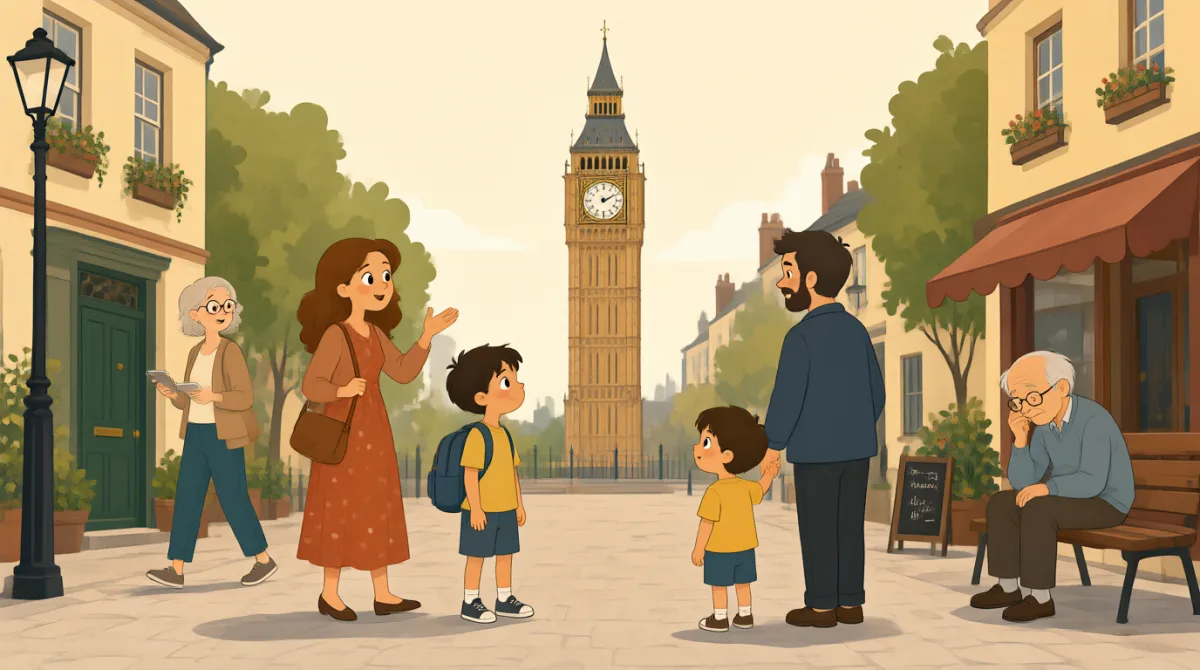

The famous tower is only a few blocks away. We could see it first, then explore the quieter neighborhood nearby.
那座著名的塔離這裡只有幾個街區。我們可以先去看看,然後逛逛附近比較安靜的街區。

That sounds good, but let’s check how everyone’s feeling. They had a long flight, so we shouldn’t pack too much into the day.
聽起來不錯,不過我們先看看大家感覺怎麼樣。他們坐了很久的飛機,所以一天裡別安排得太滿。

The tower gets crowded around noon. If we go now, we can take a few photos before the tour groups arrive.
那座塔中午前後人很多。我們現在去的話,可以趕在旅行團到之前拍幾張照片。
Great. And after that, the neighborhood has little cafés and shops. It’ll be a nice change from the busy tourist spots.
好啊。之後可以去那個街區,那裡有不少小咖啡館和商店。和熱鬧的旅遊景點比起來,會讓人輕鬆不少。
One thing to remember: people usually wait in line here, even for a bus. Let’s give them a heads-up so they know what to expect.
有一點要記住:在這裡,人們通常會排隊,連坐公交車也是。我們先提醒他們一下,讓他們有個準備。
Good point. We can take the bus to the neighborhood, but there’s also a nice walking route if everyone still has energy.
說得對。我們可以坐公交車去那個街區;如果大家還有精力,也可以沿著一條不錯的路線走過去。
Let’s decide after the tower. There’s a bench nearby where we can sit down, have some water, and see how everyone feels.
我們看完塔再決定吧。附近有張長椅,我們可以坐下來喝點水,看看大家感覺怎麼樣。
Perfect. A little flexibility goes a long way. We want them to enjoy the city, not feel like they’re racing through it.
好極了。行程靈活一點會輕鬆很多。我們希望他們能好好享受這座城市,而不是覺得自己在趕場。
All right, tower first, then a break, and we’ll play the rest by ear. That should keep the day comfortable for everyone.
好,那就先去塔那裡,然後休息一下,之後再看情況安排。這樣大家一天都會過得比較舒服。
詞彙7
- a few blocks away幾條街之外
A short distance away, measured in city blocks. Use it to describe how near a place is.
指以街區為單位衡量的一小段距離。可以用它來說明某個地方離這裡有多近。
- pack too much into the day把一天安排得太滿
To plan too many activities for one day. Use this phrase when you want to keep a schedule manageable.
指一天裡安排了太多活動。想讓日程安排得輕鬆些時,可以用這個短語。
- gets crowded變得擁擠
Becomes full of many people. You can use this to describe a place that is busy at certain times.
指有很多人聚集在一起。可以用它來形容某個地方在特定時段人很多。
- give them a heads-up提前告訴他們一聲
Tell them about something in advance so they can be prepared. This informal phrase is useful when sharing practical information.
提前告訴他們某件事,讓他們有所準備。這個非正式短語適合用來分享實用資訊。
- what to expect可能會遇到的情況
What is likely to happen or what a situation will be like. Use it to help someone prepare for an unfamiliar place or experience.
指可能發生的事情,或某種情況大概會是什麼樣。可以用它來幫助別人為陌生的地方或體驗做好準備。
- a nice change from和……相比是個不錯的變化
Something different and pleasant compared with what came before. Use it when suggesting a welcome alternative.
指和之前的經歷相比,一種不同又令人愉快的選擇。可以用它來推薦一個令人耳目一新的替代方案。
- play the rest by ear到時候再看情況決定
Decide what to do later based on how things go. This informal idiom is useful when you want to keep plans flexible.
根據事情進展來決定之後做什麼。這個非正式習語適合用來表示計劃可以靈活調整。
關鍵句8
- 1
They had a long flight, so we shouldn’t pack too much into the day.
他們坐了很久的飛機,所以我們不該把一天安排得太滿。
This sentence gives a reason for keeping plans light. Reuse the pattern “They had…, so we shouldn’t…” to explain why you want to avoid doing too much.
這句話說明了為什麼要把行程安排得輕鬆一些。可以套用 “They had…, so we shouldn’t…” 來解釋為什麼不想安排太多活動。
- 2
If we go now, we can take a few photos before the tour groups arrive.
如果我們現在去,就能趕在旅行團到之前拍幾張照片。
This sentence suggests an action and explains its benefit. Use “If we…, we can…” to make a practical plan.
這句話提出了一個做法,並說明這樣做的好處。可以用 “If we…, we can…” 來制定實用的計劃。
- 3
It’ll be a nice change from the busy tourist spots.
和那些熱鬧的旅遊景點相比,這裡會讓人耳目一新。
This is a natural way to recommend something different. Reuse “It’ll be a nice change from…” when suggesting a new activity or place.
這是推薦不同選擇的一種自然說法。推薦新的活動或地點時,可以套用 “It’ll be a nice change from…” 來表達。
- 4
Let’s give them a heads-up so they know what to expect.
我們提前告訴他們一聲,讓他們知道可能會遇到什麼情況吧。
This sentence suggests warning or informing someone in advance. Use “Let’s give [someone] a heads-up so…” to explain why you’re sharing information.
這句話建議提前提醒或告知別人。可以用 “Let’s give [someone] a heads-up so…” 來解釋你為什麼要告訴對方這件事。
- 5
There’s a bench nearby where we can sit down, have some water, and see how everyone feels.
附近有張長椅,我們可以坐下來、喝點水,也看看大家感覺怎麼樣。
This sentence offers a practical place to rest and check in with a group. Reuse “There’s a [place] nearby where we can…” to suggest a convenient option.
這句話為大家提供了一個方便的休息地點,也提議瞭解一下大家的狀態。可以套用 “There’s a [place] nearby where we can…” 來提出方便的選擇。
- 6
A little flexibility goes a long way.
稍微靈活一點,效果就會好很多。
This concise expression says that being adaptable can make a big difference. Use it when plans may need to change to suit people’s needs.
這個簡潔的說法表示靈活變通能帶來很大不同。當計劃可能需要調整以照顧大家的需要時,可以用這句話。
- 7
We want them to enjoy the city, not feel like they’re racing through it.
我們希望他們能好好享受這座城市,而不是覺得自己在匆匆趕路。
This sentence contrasts a positive goal with an unwanted feeling. Reuse “We want [someone] to…, not…” to explain what you hope to achieve.
這句話把積極的目標和不希望出現的感受作了對比。可以套用 “We want [someone] to…, not…” 來說明你希望達到什麼效果。
- 8
We’ll play the rest by ear.
剩下的行程我們到時候再看情況決定。
This is an informal way to say you’ll decide later based on the situation. Use it when you want to leave part of a plan open.
這是一種非正式的說法,表示之後會根據情況再做決定。想讓計劃留有餘地時,可以用這句話。