Cooking Over a Fire
在篝火上做飯
Emma and Jack cook dinner over the campsite fire. They prepare a simple meal and talk about what they want to do the next day.
Emma 和 Jack 在營地的篝火上做晚飯。他們準備了一頓簡單的飯菜,並聊起第二天想做什麼。
對話8
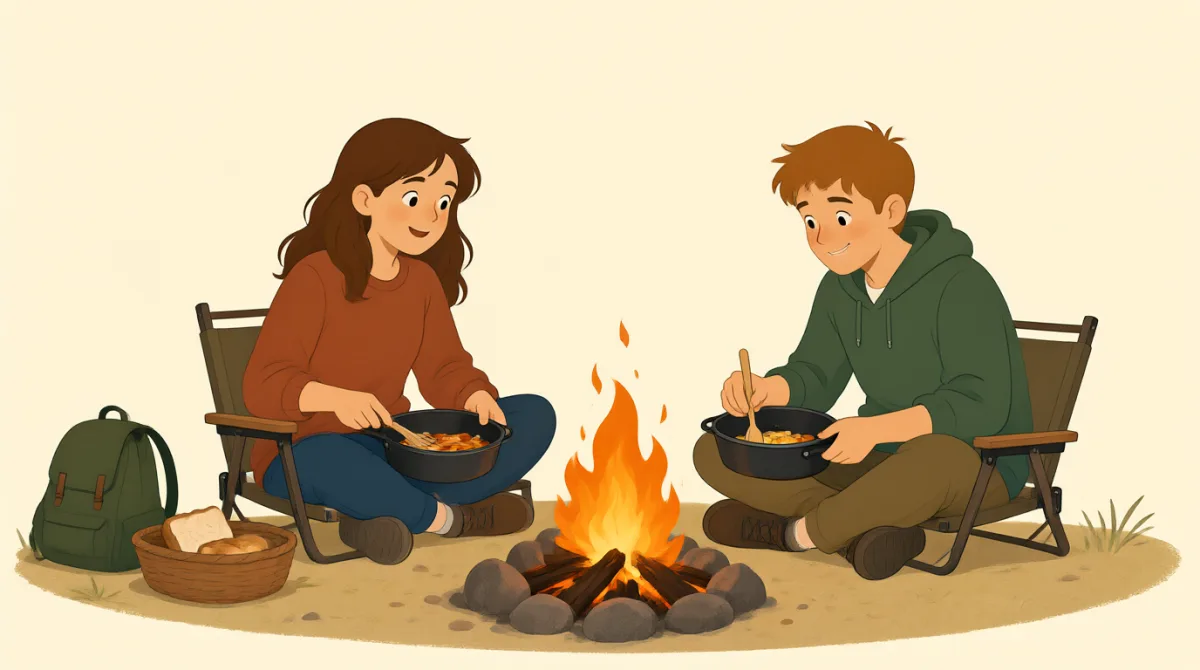

The fire is ready. What should we cook for dinner?
火準備好了。我們晚飯做什麼?

Let’s cook sausages and potatoes. I brought some bread, too.
我們烤香腸和土豆吧。我還帶了些麵包。
Great! Can you put the potatoes in the pan?
太好了!你能把土豆放進鍋裡嗎?
Sure. We should cook them slowly so they don’t burn.
當然。我們應該慢慢煮,免得燒焦。
I’ll turn the sausages. They smell really good.
我來翻香腸。聞起來真香。
Dinner will be ready soon. What do you want to do tomorrow?
晚飯很快就好了。你明天想做什麼?
I’d like to hike by the lake and take some pictures.
我想去湖邊徒步,還想拍些照片。
Sounds good. Let’s eat, then plan our morning.
聽起來不錯。我們先吃飯,然後計劃一下早上的安排。
詞彙8
- cook for dinner做晚飯
This means to prepare food for the evening meal. You can ask, “What should we cook for dinner?”
這個短語指準備晚餐。你可以問:“What should we cook for dinner?”(晚飯做什麼?)
- brought帶來了
“Brought” is the past form of “bring.” Use it to say you carried something with you, such as food on a camping trip.
“Brought”是“bring”的過去式。可以用它來表示你把某樣東西帶在身邊,比如露營時帶了食物。
- put the potatoes in the pan把土豆放進鍋裡
This means to place the potatoes inside the pan. You can use “put [something] in [a container]” when giving a simple instruction.
這個短語指把土豆放到鍋裡。給出簡單指示時,可以用“put [something] in [a container]”這個結構。
- cook them slowly慢慢煮
This means to heat the food gently over time. You can use this phrase when food needs to cook without burning.
這個短語指用小火慢慢加熱食物。如果食物需要慢慢煮熟、以免燒焦,就可以這樣說。
- turn the sausages翻動香腸
This means to move or flip the sausages so they cook on the other side. It is useful when cooking food in a pan or over a fire.
這個短語指翻動香腸,讓另一面也能煎熟。用鍋或篝火做飯時,這個說法很實用。
- burn燒焦
Food burns when it gets too hot or cooks for too long. You can say, “Watch the food so it doesn’t burn.”
食物溫度太高或煮得太久就會燒焦。你可以說:“Watch the food so it doesn’t burn.”(看著點食物,別讓它燒焦。)
- by the lake在湖邊
This means near or beside the lake. Use “by” to describe a place next to something.
這個短語指在湖的附近或旁邊。用“by”可以表示某個地方緊挨著某處。
- take some pictures拍些照片
This means to use a camera or phone to make photographs. You can say, “I’d like to take some pictures” when talking about plans.
這個短語指用相機或手機拍照。聊到計劃時,可以說:“I’d like to take some pictures”(我想拍些照片)。
關鍵句8
- 1
What should we cook for dinner?
晚飯做什麼?
Use this question to ask for ideas about what to prepare for an evening meal. You can replace “dinner” with another meal or occasion.
用這個問題徵求晚餐準備什麼的建議。你可以把“dinner”換成其他餐食或場合。
- 2
I brought some bread, too.
我還帶了些麵包。
This sentence tells someone that you brought an additional item. Use “I brought [something], too” to mention something you have with you.
這句話告訴對方,你還帶了另一件東西。想提到自己帶著的東西時,可以用“I brought [something], too”這個結構。
- 3
Can you put the potatoes in the pan?
你能把土豆放進鍋裡嗎?
This is a polite way to ask someone to do a task. Replace “the potatoes” and “the pan” with other things and places.
這是請別人幫忙做某件事的一種禮貌說法。你可以把“the potatoes”和“the pan”換成其他物品和地方。
- 4
We should cook them slowly so they don’t burn.
我們應該慢慢煮,免得燒焦。
Use “We should” to make a suggestion, and “so” to explain the reason. You can use this pattern to give practical advice.
用“We should”提出建議,再用“so”說明原因。你可以用這個句型給出實用的建議。
- 5
I’ll turn the sausages.
我來翻香腸。
Use “I’ll” to offer to do something now or soon. Replace “turn the sausages” with another helpful task.
用“I’ll”表示你現在或很快就會去做某件事。你可以把“turn the sausages”換成其他能幫上忙的事情。
- 6
What do you want to do tomorrow?
你明天想做什麼?
Use this question to ask someone about their plans for the next day. You can replace “tomorrow” with another time.
用這個問題詢問對方第二天的計劃。你可以把“tomorrow”換成其他時間。
- 7
I’d like to hike by the lake and take some pictures.
我想去湖邊徒步,還想拍些照片。
Use “I’d like to” to talk about something you want to do. Add two activities with “and” to describe your plans.
用“I’d like to”談論自己想做的事。用“and”連線兩項活動,就能描述你的計劃。
- 8
Let’s eat, then plan our morning.
我們先吃飯,然後計劃一下早上的安排。
Use “Let’s” to suggest doing something together. “Then” shows the order of the activities: eat first and plan afterward.
用“Let’s”提議一起做某件事。“Then”表示活動的先後順序:先吃飯,再做計劃。