Meeting the Driving Instructor
พบครูสอนขับรถ
Emma meets her driving instructor, David, and asks what they will practice today. He explains the lesson and checks that she is ready.
เอมมาพบเดวิด ครูสอนขับรถของเธอ แล้วถามว่าวันนี้จะฝึกอะไรกันบ้าง เขาอธิบายบทเรียนและถามว่าเธอพร้อมหรือยัง
บทสนทนา8
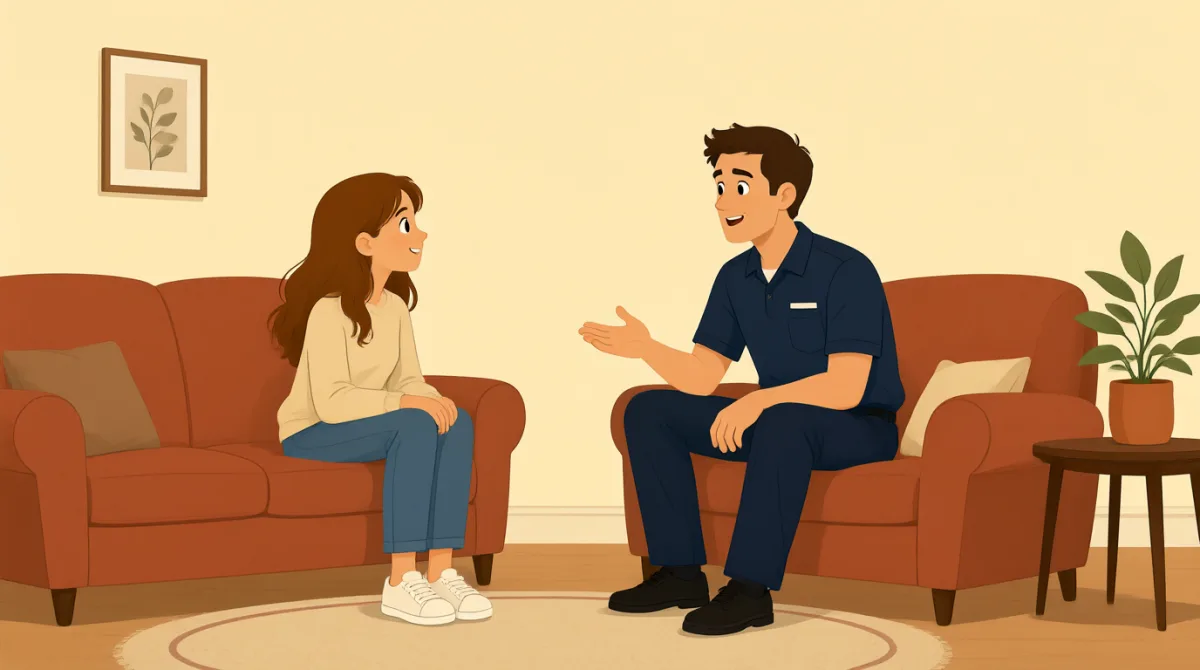

Hi, David. I’m ready for my first driving lesson. What will we practice today?
สวัสดีเดวิด ฉันพร้อมเรียนขับรถครั้งแรกแล้ว วันนี้เราจะฝึกอะไรกันบ้าง

Hi, Emma. We’ll start with a few checks, then drive on a quiet street.
สวัสดีเอมมา เราจะเริ่มจากตรวจเช็กเล็กน้อย แล้วค่อยขับบนถนนที่รถไม่พลุกพล่าน
Okay. Will I drive the whole time, or will you show me first?
โอเค ฉันจะได้ขับตลอดเลยไหม หรือคุณจะสาธิตให้ดูก่อน
I’ll explain the controls first. Then you can drive while I give directions.
ผมจะอธิบายอุปกรณ์ควบคุมรถก่อน จากนั้นคุณก็ขับได้เลย ระหว่างนั้นผมจะคอยบอกทางให้
That sounds good. Should I bring anything for the lesson?
ฟังดูดีเลย ฉันต้องเตรียมอะไรมาเรียนไหม
Just your learner’s permit and glasses, if you need them to see clearly.
เอาแค่ใบอนุญาตหัดขับกับแว่นตา ถ้าคุณต้องใช้เพื่อให้มองเห็นชัด
I have my permit with me. I’m a little nervous, but I’m ready.
ฉันพกใบอนุญาตมาด้วย ฉันกังวลนิดหน่อย แต่พร้อมแล้ว
That’s normal. We’ll go slowly, and you can ask me questions anytime.
เป็นเรื่องปกติ เราจะค่อย ๆ ไป คุณถามผมได้ทุกเมื่อเลย
คำศัพท์8
- driving lessonบทเรียนขับรถ
A class where you learn how to drive. Here, Emma is having her first one.
ชั้นเรียนที่สอนวิธีขับรถ ในที่นี้เอมมากำลังเรียนครั้งแรก
- practiceฝึก
To do something to improve at it. You can use it to ask what you will work on in a lesson.
ทำสิ่งใดสิ่งหนึ่งเพื่อให้ทำได้ดีขึ้น ใช้คำนี้ถามได้ว่าในบทเรียนจะฝึกเรื่องอะไร
- quiet streetถนนที่รถไม่พลุกพล่าน
A street with little traffic or noise. It can be a good place for a beginner to practice driving.
ถนนที่มีรถหรือเสียงไม่มาก เหมาะให้มือใหม่ฝึกขับรถ
- controlsอุปกรณ์ควบคุมรถ
The parts of a car that you use to operate it, such as the pedals and steering wheel.
ส่วนต่าง ๆ ของรถที่ใช้ควบคุมรถ เช่น แป้นเหยียบและพวงมาลัย
- give directionsบอกทาง
To tell someone where to go or what to do next. An instructor gives directions while a learner drives.
บอกใครสักคนว่าควรไปทางไหนหรือทำอะไรต่อไป ครูสอนขับรถจะคอยบอกทางขณะที่ผู้เรียนขับรถ
- learner’s permitใบอนุญาตหัดขับ
A document that allows someone to practice driving before getting a full license.
เอกสารที่อนุญาตให้ฝึกขับรถได้ก่อนจะได้รับใบขับขี่เต็มรูปแบบ
- a little nervousกังวลนิดหน่อย
Slightly worried or unsure. You can use this phrase to describe how you feel before a new experience.
รู้สึกเป็นห่วงหรือไม่มั่นใจเล็กน้อย ใช้บอกความรู้สึกก่อนทำสิ่งใหม่ ๆ ได้
- go slowlyค่อย ๆ ไป
To move or do something at a slow speed. Here, it reassures Emma that the lesson will not be rushed.
เคลื่อนไหวหรือทำบางอย่างด้วยความเร็วช้า ในที่นี้เป็นการบอกเอมมาว่าจะไม่เร่งบทเรียน
ประโยคสำคัญ7
- 1
What will we practice today?
วันนี้เราจะฝึกอะไรกันบ้าง
Use this question to ask what you will learn or do in a lesson or activity. Replace “practice” with another verb to ask about a plan.
ใช้คำถามนี้ถามว่าจะเรียนหรือทำอะไรในบทเรียนหรือกิจกรรม ลองเปลี่ยน “practice” เป็นคำกริยาอื่นเพื่อถามเกี่ยวกับแผนได้
- 2
Will I drive the whole time, or will you show me first?
ฉันจะได้ขับตลอดเลยไหม หรือคุณจะสาธิตให้ดูก่อน
This asks whether you will do an activity yourself or watch someone demonstrate first. Use “Will I… or will you…?” to compare two possible plans.
ใช้ถามว่าคุณจะทำกิจกรรมด้วยตัวเอง หรือจะดูก่อนว่ามีคนสาธิตอย่างไร โครงสร้าง “Will I… or will you…?” ใช้เปรียบเทียบแผนสองแบบที่เป็นไปได้
- 3
I’ll explain the controls first.
ผมจะอธิบายอุปกรณ์ควบคุมรถก่อน
This sentence describes what someone plans to do before the next step. Use “I’ll” plus a verb to talk about a future action.
ประโยคนี้บอกว่าใครบางคนวางแผนจะทำอะไรก่อนขั้นตอนถัดไป ใช้ “I’ll” ตามด้วยคำกริยาเพื่อพูดถึงสิ่งที่จะทำในอนาคต
- 4
Should I bring anything for the lesson?
ฉันต้องเตรียมอะไรมาเรียนไหม
Use this polite question to ask if you need to bring something. You can replace “the lesson” with another event or activity.
ใช้คำถามสุภาพนี้ถามว่าจำเป็นต้องนำอะไรติดตัวมาหรือไม่ เปลี่ยน “the lesson” เป็นกิจกรรมหรืองานอื่นได้
- 5
I have my permit with me.
ฉันพกใบอนุญาตมาด้วย
This means you have your permit with you now. Use “I have [item] with me” to say you brought something.
หมายความว่าตอนนี้คุณมีใบอนุญาตอยู่กับตัว ใช้ “I have [item] with me” เพื่อบอกว่าคุณนำสิ่งของมาด้วย
- 6
I’m a little nervous, but I’m ready.
ฉันกังวลนิดหน่อย แต่พร้อมแล้ว
This sentence shares a feeling while also showing willingness to begin. Use “I’m a little [feeling], but I’m ready” before a new activity.
ประโยคนี้บอกความรู้สึกพร้อมกับแสดงว่าคุณยินดีเริ่มต้น ใช้ “I’m a little [feeling], but I’m ready” ก่อนเริ่มกิจกรรมใหม่
- 7
We’ll go slowly, and you can ask me questions anytime.
เราจะค่อย ๆ ไป คุณถามผมได้ทุกเมื่อเลย
This reassures someone that there is no need to rush and that questions are welcome. Use “You can ask me questions anytime” to encourage someone to speak up.
ประโยคนี้ช่วยให้ใครสักคนสบายใจว่าไม่ต้องรีบ และถามคำถามได้เสมอ ใช้ “You can ask me questions anytime” เพื่อกระตุ้นให้อีกฝ่ายกล้าถาม