Meeting the Driving Instructor
Emma meets her driving instructor, David, and asks what they will practice today. He explains the lesson and checks that she is ready.
Dialogue8
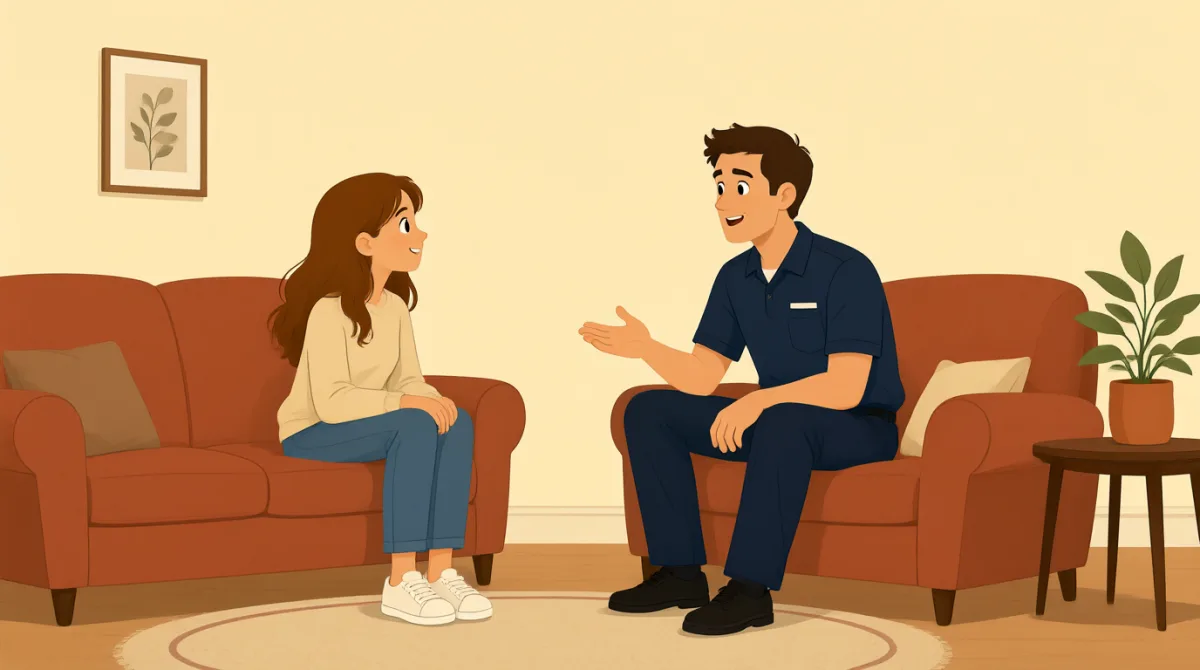

Hi, David. I’m ready for my first driving lesson. What will we practice today?

Hi, Emma. We’ll start with a few checks, then drive on a quiet street.
Okay. Will I drive the whole time, or will you show me first?
I’ll explain the controls first. Then you can drive while I give directions.
That sounds good. Should I bring anything for the lesson?
Just your learner’s permit and glasses, if you need them to see clearly.
I have my permit with me. I’m a little nervous, but I’m ready.
That’s normal. We’ll go slowly, and you can ask me questions anytime.
Vocabulary8
- driving lesson
A class where you learn how to drive. Here, Emma is having her first one.
- practice
To do something to improve at it. You can use it to ask what you will work on in a lesson.
- quiet street
A street with little traffic or noise. It can be a good place for a beginner to practice driving.
- controls
The parts of a car that you use to operate it, such as the pedals and steering wheel.
- give directions
To tell someone where to go or what to do next. An instructor gives directions while a learner drives.
- learner’s permit
A document that allows someone to practice driving before getting a full license.
- a little nervous
Slightly worried or unsure. You can use this phrase to describe how you feel before a new experience.
- go slowly
To move or do something at a slow speed. Here, it reassures Emma that the lesson will not be rushed.
Key Sentences7
- 1
What will we practice today?
Use this question to ask what you will learn or do in a lesson or activity. Replace “practice” with another verb to ask about a plan.
- 2
Will I drive the whole time, or will you show me first?
This asks whether you will do an activity yourself or watch someone demonstrate first. Use “Will I… or will you…?” to compare two possible plans.
- 3
I’ll explain the controls first.
This sentence describes what someone plans to do before the next step. Use “I’ll” plus a verb to talk about a future action.
- 4
Should I bring anything for the lesson?
Use this polite question to ask if you need to bring something. You can replace “the lesson” with another event or activity.
- 5
I have my permit with me.
This means you have your permit with you now. Use “I have [item] with me” to say you brought something.
- 6
I’m a little nervous, but I’m ready.
This sentence shares a feeling while also showing willingness to begin. Use “I’m a little [feeling], but I’m ready” before a new activity.
- 7
We’ll go slowly, and you can ask me questions anytime.
This reassures someone that there is no need to rush and that questions are welcome. Use “You can ask me questions anytime” to encourage someone to speak up.