Meeting the Driving Instructor
ড্রাইভিং প্রশিক্ষকের সঙ্গে পরিচয়
Emma meets her driving instructor, David, and asks what they will practice today. He explains the lesson and checks that she is ready.
এমা তার ড্রাইভিং প্রশিক্ষক ডেভিডের সঙ্গে দেখা করে এবং আজ তারা কী অনুশীলন করবে তা জানতে চায়। তিনি পাঠে কী হবে তা বুঝিয়ে বলেন এবং এমা প্রস্তুত কি না নিশ্চিত হন।
সংলাপ8
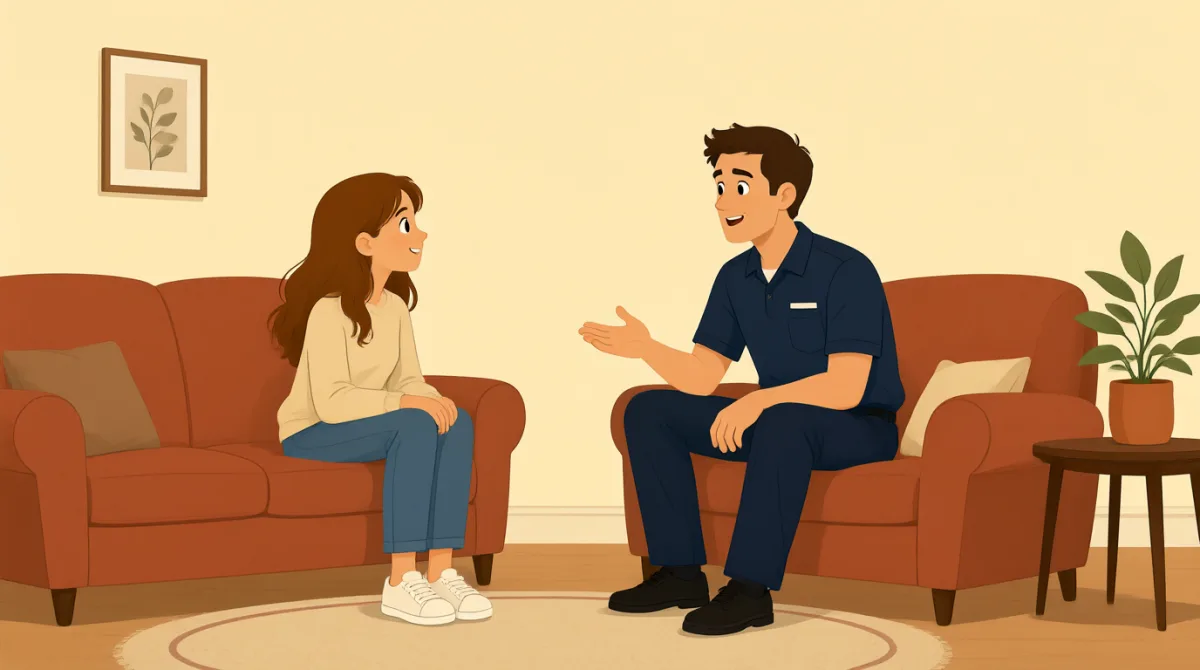

Hi, David. I’m ready for my first driving lesson. What will we practice today?
হাই, ডেভিড। আমার প্রথম ড্রাইভিং পাঠের জন্য আমি প্রস্তুত। আজ আমরা কী অনুশীলন করব?

Hi, Emma. We’ll start with a few checks, then drive on a quiet street.
হাই, এমা। প্রথমে কয়েকটা বিষয় পরীক্ষা করে নেব, তারপর একটা নিরিবিলি রাস্তায় গাড়ি চালাব।
Okay. Will I drive the whole time, or will you show me first?
আচ্ছা। পুরো সময় কি আমিই গাড়ি চালাব, নাকি আগে তুমি আমাকে দেখিয়ে দেবে?
I’ll explain the controls first. Then you can drive while I give directions.
আগে গাড়ির নিয়ন্ত্রণগুলো বুঝিয়ে দেব। তারপর আমি নির্দেশনা দিতে দিতে তুমি গাড়ি চালাতে পারবে।
That sounds good. Should I bring anything for the lesson?
বেশ ভালো। পাঠের জন্য আমার কি কিছু নিয়ে আসা উচিত?
Just your learner’s permit and glasses, if you need them to see clearly.
শুধু তোমার শিক্ষানবিশ ড্রাইভিং পারমিট আর চশমা—যদি পরিষ্কার দেখার জন্য চশমা লাগে।
I have my permit with me. I’m a little nervous, but I’m ready.
আমার পারমিটটা সঙ্গে আছে। একটু নার্ভাস লাগছে, তবে আমি প্রস্তুত।
That’s normal. We’ll go slowly, and you can ask me questions anytime.
এটা স্বাভাবিক। আমরা ধীরে ধীরে এগোব, আর যেকোনো সময় আমাকে প্রশ্ন করতে পারো।
শব্দভান্ডার8
- driving lessonড্রাইভিংয়ের পাঠ
A class where you learn how to drive. Here, Emma is having her first one.
গাড়ি চালানো শেখার ক্লাস। এখানে এমা তার প্রথম ড্রাইভিংয়ের পাঠ নিচ্ছে।
- practiceঅনুশীলন করা
To do something to improve at it. You can use it to ask what you will work on in a lesson.
কোনো কিছুতে দক্ষ হওয়ার জন্য সেটি বারবার করা। পাঠে কী নিয়ে কাজ করবে তা জানতে এই শব্দটি দিয়ে প্রশ্ন করতে পারো।
- quiet streetনিরিবিলি রাস্তা
A street with little traffic or noise. It can be a good place for a beginner to practice driving.
যে রাস্তায় যানবাহন বা শব্দের পরিমাণ কম। নতুন চালকের গাড়ি চালানোর অনুশীলনের জন্য এমন রাস্তা ভালো হতে পারে।
- controlsগাড়ির নিয়ন্ত্রণব্যবস্থা
The parts of a car that you use to operate it, such as the pedals and steering wheel.
গাড়ি চালাতে যে অংশগুলো ব্যবহার করা হয়, যেমন প্যাডেল ও স্টিয়ারিং হুইল।
- give directionsপথনির্দেশ দেওয়া
To tell someone where to go or what to do next. An instructor gives directions while a learner drives.
কাউকে কোথায় যেতে হবে বা পরের ধাপে কী করতে হবে তা বলা। শিক্ষার্থী গাড়ি চালানোর সময় প্রশিক্ষক পথনির্দেশ দেন।
- learner’s permitশিক্ষানবিশ ড্রাইভিং পারমিট
A document that allows someone to practice driving before getting a full license.
পূর্ণ ড্রাইভিং লাইসেন্স পাওয়ার আগে কাউকে গাড়ি চালানোর অনুশীলন করার অনুমতি দেয় এমন একটি নথি।
- a little nervousএকটু নার্ভাস
Slightly worried or unsure. You can use this phrase to describe how you feel before a new experience.
সামান্য উদ্বিগ্ন বা দ্বিধাগ্রস্ত। নতুন কোনো অভিজ্ঞতার আগে নিজের অনুভূতি বোঝাতে এই কথাটি ব্যবহার করতে পারো।
- go slowlyধীরে চলা
To move or do something at a slow speed. Here, it reassures Emma that the lesson will not be rushed.
কম গতিতে চলা বা কোনো কাজ করা। এখানে কথাটি এমাকে আশ্বস্ত করে যে পাঠে তাড়াহুড়ো করা হবে না।
গুরুত্বপূর্ণ বাক্য7
- 1
What will we practice today?
আজ আমরা কী অনুশীলন করব?
Use this question to ask what you will learn or do in a lesson or activity. Replace “practice” with another verb to ask about a plan.
কোনো পাঠ বা কার্যকলাপে কী শিখবে বা করবে, তা জানতে এই প্রশ্নটি করো। পরিকল্পনা সম্পর্কে জানতে “practice”-এর বদলে অন্য ক্রিয়া বসাতে পারো।
- 2
Will I drive the whole time, or will you show me first?
পুরো সময় কি আমিই গাড়ি চালাব, নাকি আগে তুমি আমাকে দেখিয়ে দেবে?
This asks whether you will do an activity yourself or watch someone demonstrate first. Use “Will I… or will you…?” to compare two possible plans.
কোনো কাজ তুমি নিজে করবে, নাকি আগে অন্য কাউকে তা করে দেখাতে দেখবে—এই প্রশ্নে সেটাই জানতে চাওয়া হয়। দুটি সম্ভাব্য পরিকল্পনার তুলনা করতে “Will I… or will you…?” ব্যবহার করো।
- 3
I’ll explain the controls first.
আগে গাড়ির নিয়ন্ত্রণগুলো বুঝিয়ে দেব।
This sentence describes what someone plans to do before the next step. Use “I’ll” plus a verb to talk about a future action.
পরের ধাপে যাওয়ার আগে কেউ কী করার পরিকল্পনা করেছে, এই বাক্যে তা বলা হয়েছে। ভবিষ্যতে কী করবে জানাতে “I’ll”-এর পরে একটি ক্রিয়া বসাও।
- 4
Should I bring anything for the lesson?
পাঠের জন্য আমার কি কিছু নিয়ে আসা উচিত?
Use this polite question to ask if you need to bring something. You can replace “the lesson” with another event or activity.
কিছু সঙ্গে আনা দরকার কি না, তা ভদ্রভাবে জানতে এই প্রশ্নটি করো। “the lesson”-এর বদলে অন্য কোনো অনুষ্ঠান বা কার্যকলাপের নাম বসাতে পারো।
- 5
I have my permit with me.
আমার পারমিটটা সঙ্গে আছে।
This means you have your permit with you now. Use “I have [item] with me” to say you brought something.
এর মানে, এই মুহূর্তে পারমিটটি তোমার সঙ্গে আছে। কিছু সঙ্গে এনেছ জানাতে “I have [item] with me” ব্যবহার করো।
- 6
I’m a little nervous, but I’m ready.
একটু নার্ভাস লাগছে, তবে আমি প্রস্তুত।
This sentence shares a feeling while also showing willingness to begin. Use “I’m a little [feeling], but I’m ready” before a new activity.
এই বাক্যে নিজের অনুভূতির কথা বলার পাশাপাশি শুরু করার আগ্রহও প্রকাশ করা হয়। নতুন কোনো কাজ শুরুর আগে “I’m a little [feeling], but I’m ready” ব্যবহার করতে পারো।
- 7
We’ll go slowly, and you can ask me questions anytime.
আমরা ধীরে ধীরে এগোব, আর যেকোনো সময় আমাকে প্রশ্ন করতে পারো।
This reassures someone that there is no need to rush and that questions are welcome. Use “You can ask me questions anytime” to encourage someone to speak up.
কোনো তাড়াহুড়োর দরকার নেই এবং প্রশ্ন করতে স্বাগত—এই আশ্বাস দেওয়া হয়। কাউকে কথা বলতে উৎসাহিত করতে “You can ask me questions anytime” ব্যবহার করো।