Meeting the Driving Instructor
ड्राइविंग इंस्ट्रक्टर से मुलाकात
Emma meets her driving instructor, David, and asks what they will practice today. He explains the lesson and checks that she is ready.
एमा अपने ड्राइविंग इंस्ट्रक्टर डेविड से मिलती है और पूछती है कि वे आज क्या अभ्यास करेंगे। वह उसे पाठ के बारे में बताता है और देखता है कि वह तैयार है या नहीं।
संवाद8
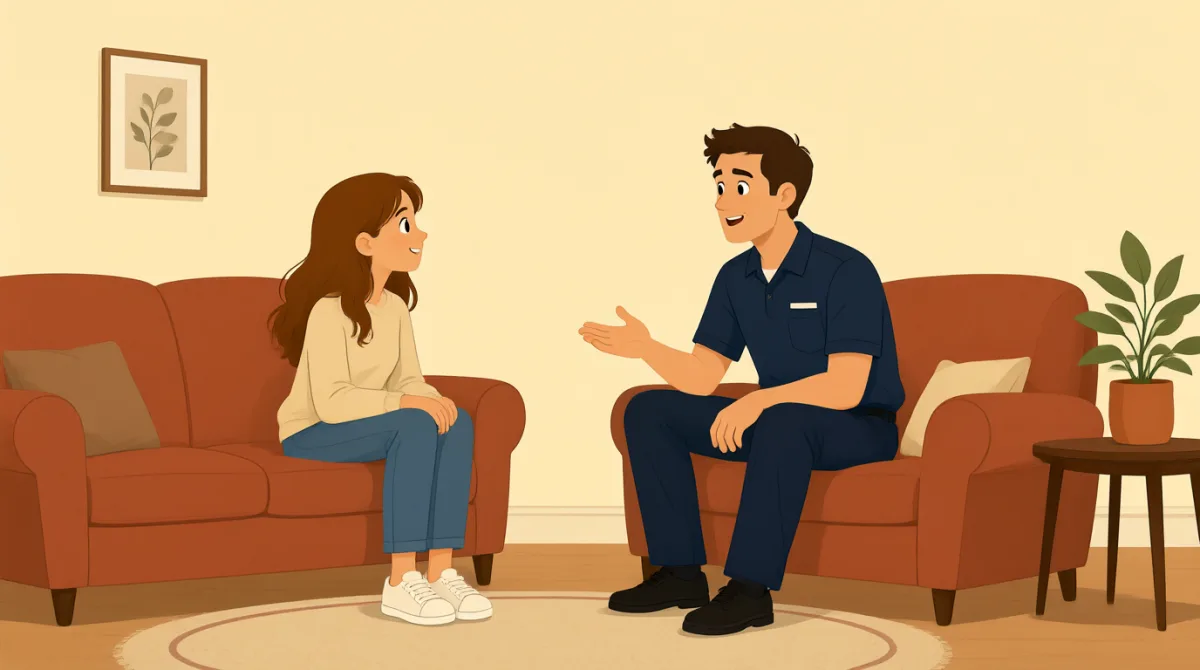

Hi, David. I’m ready for my first driving lesson. What will we practice today?
हाय, डेविड। मैं अपने पहले ड्राइविंग पाठ के लिए तैयार हूँ। आज हम क्या अभ्यास करेंगे?

Hi, Emma. We’ll start with a few checks, then drive on a quiet street.
हाय, एमा। पहले हम कुछ जाँच करेंगे, फिर किसी शांत सड़क पर गाड़ी चलाएँगे।
Okay. Will I drive the whole time, or will you show me first?
ठीक है। क्या मैं पूरे समय गाड़ी चलाऊँगी, या आप पहले मुझे करके दिखाएँगे?
I’ll explain the controls first. Then you can drive while I give directions.
मैं पहले गाड़ी के नियंत्रणों के बारे में समझाऊँगा। फिर मैं रास्ता बताऊँगा और तुम गाड़ी चला सकती हो।
That sounds good. Should I bring anything for the lesson?
यह अच्छा लग रहा है। क्या मुझे पाठ के लिए कुछ लाना चाहिए?
Just your learner’s permit and glasses, if you need them to see clearly.
बस अपना लर्नर परमिट और चश्मा, अगर साफ़ देखने के लिए तुम्हें उनकी ज़रूरत पड़ती है।
I have my permit with me. I’m a little nervous, but I’m ready.
मेरा परमिट मेरे पास है। मैं थोड़ी घबराई हुई हूँ, लेकिन तैयार हूँ।
That’s normal. We’ll go slowly, and you can ask me questions anytime.
यह सामान्य है। हम धीरे-धीरे चलेंगे, और तुम कभी भी मुझसे सवाल पूछ सकती हो।
शब्दावली8
- driving lessonड्राइविंग का पाठ
A class where you learn how to drive. Here, Emma is having her first one.
ऐसी कक्षा जिसमें आप गाड़ी चलाना सीखते हैं। यहाँ एमा अपना पहला ड्राइविंग पाठ ले रही है।
- practiceअभ्यास करना
To do something to improve at it. You can use it to ask what you will work on in a lesson.
किसी चीज़ में बेहतर होने के लिए उसे करना। किसी पाठ में आप क्या सीखेंगे या किस पर काम करेंगे, यह पूछने के लिए इस शब्द का इस्तेमाल कर सकते हैं।
- quiet streetशांत सड़क
A street with little traffic or noise. It can be a good place for a beginner to practice driving.
ऐसी सड़क जहाँ यातायात या शोर कम हो। शुरुआती लोगों के लिए गाड़ी चलाने का अभ्यास करने की यह अच्छी जगह हो सकती है।
- controlsनियंत्रण
The parts of a car that you use to operate it, such as the pedals and steering wheel.
गाड़ी चलाने के लिए इस्तेमाल होने वाले उसके हिस्से, जैसे पैडल और स्टीयरिंग व्हील।
- give directionsरास्ता बताना
To tell someone where to go or what to do next. An instructor gives directions while a learner drives.
किसी को बताना कि कहाँ जाना है या आगे क्या करना है। सीखने वाला गाड़ी चलाता है, तो इंस्ट्रक्टर उसे रास्ता बताता है।
- learner’s permitलर्नर परमिट
A document that allows someone to practice driving before getting a full license.
ऐसा दस्तावेज़ जो किसी को पूरा ड्राइविंग लाइसेंस मिलने से पहले गाड़ी चलाने का अभ्यास करने की अनुमति देता है।
- a little nervousथोड़ा घबराया हुआ
Slightly worried or unsure. You can use this phrase to describe how you feel before a new experience.
थोड़ी चिंता या अनिश्चितता महसूस करना। किसी नए अनुभव से पहले अपनी मनःस्थिति बताने के लिए आप इस वाक्यांश का इस्तेमाल कर सकते हैं।
- go slowlyधीरे चलना
To move or do something at a slow speed. Here, it reassures Emma that the lesson will not be rushed.
धीमी गति से चलना या कोई काम करना। यहाँ यह एमा को भरोसा दिलाता है कि पाठ में जल्दबाज़ी नहीं की जाएगी।
मुख्य वाक्य7
- 1
What will we practice today?
आज हम क्या अभ्यास करेंगे?
Use this question to ask what you will learn or do in a lesson or activity. Replace “practice” with another verb to ask about a plan.
किसी पाठ या गतिविधि में आप क्या सीखेंगे या करेंगे, यह पूछने के लिए इस सवाल का इस्तेमाल करें। योजना के बारे में पूछने के लिए “practice” की जगह कोई दूसरा क्रिया-शब्द रख सकते हैं।
- 2
Will I drive the whole time, or will you show me first?
क्या मैं पूरे समय गाड़ी चलाऊँगी, या आप पहले मुझे करके दिखाएँगे?
This asks whether you will do an activity yourself or watch someone demonstrate first. Use “Will I… or will you…?” to compare two possible plans.
इससे आप पूछते हैं कि कोई काम आप खुद करेंगे या पहले किसी को करते हुए देखेंगे। दो संभावित योजनाओं की तुलना करने के लिए “Will I… or will you…?” का इस्तेमाल करें।
- 3
I’ll explain the controls first.
मैं पहले गाड़ी के नियंत्रणों के बारे में समझाऊँगा।
This sentence describes what someone plans to do before the next step. Use “I’ll” plus a verb to talk about a future action.
इस वाक्य में बताया जाता है कि कोई व्यक्ति अगले कदम से पहले क्या करने की योजना बना रहा है। भविष्य में किए जाने वाले काम के लिए “I’ll” के बाद क्रिया का इस्तेमाल करें।
- 4
Should I bring anything for the lesson?
क्या मुझे पाठ के लिए कुछ लाना चाहिए?
Use this polite question to ask if you need to bring something. You can replace “the lesson” with another event or activity.
कुछ लाने की ज़रूरत है या नहीं, यह विनम्रता से पूछने के लिए इस सवाल का इस्तेमाल करें। “the lesson” की जगह किसी दूसरे कार्यक्रम या गतिविधि का नाम रख सकते हैं।
- 5
I have my permit with me.
मेरा परमिट मेरे पास है।
This means you have your permit with you now. Use “I have [item] with me” to say you brought something.
इसका मतलब है कि आपका परमिट अभी आपके पास है। यह बताने के लिए कि आप कोई चीज़ साथ लाए हैं, “I have [item] with me” का इस्तेमाल करें।
- 6
I’m a little nervous, but I’m ready.
मैं थोड़ी घबराई हुई हूँ, लेकिन तैयार हूँ।
This sentence shares a feeling while also showing willingness to begin. Use “I’m a little [feeling], but I’m ready” before a new activity.
इस वाक्य से आप अपनी भावना बताते हुए यह भी दिखाते हैं कि आप शुरू करने के लिए तैयार हैं। किसी नई गतिविधि से पहले “I’m a little [feeling], but I’m ready” का इस्तेमाल करें।
- 7
We’ll go slowly, and you can ask me questions anytime.
हम धीरे-धीरे चलेंगे, और तुम कभी भी मुझसे सवाल पूछ सकती हो।
This reassures someone that there is no need to rush and that questions are welcome. Use “You can ask me questions anytime” to encourage someone to speak up.
इससे आप किसी को भरोसा दिलाते हैं कि जल्दबाज़ी करने की ज़रूरत नहीं है और सवाल पूछने का स्वागत है। किसी को खुलकर बोलने के लिए प्रोत्साहित करने के लिए “You can ask me questions anytime” का इस्तेमाल करें।