Meeting the Driving Instructor
Conociendo al instructor de manejo
Emma meets her driving instructor, David, and asks what they will practice today. He explains the lesson and checks that she is ready.
Emma conoce a su instructor de manejo, David, y le pregunta qué practicarán hoy. Él le explica cómo será la clase y se asegura de que esté lista.
Diálogo8
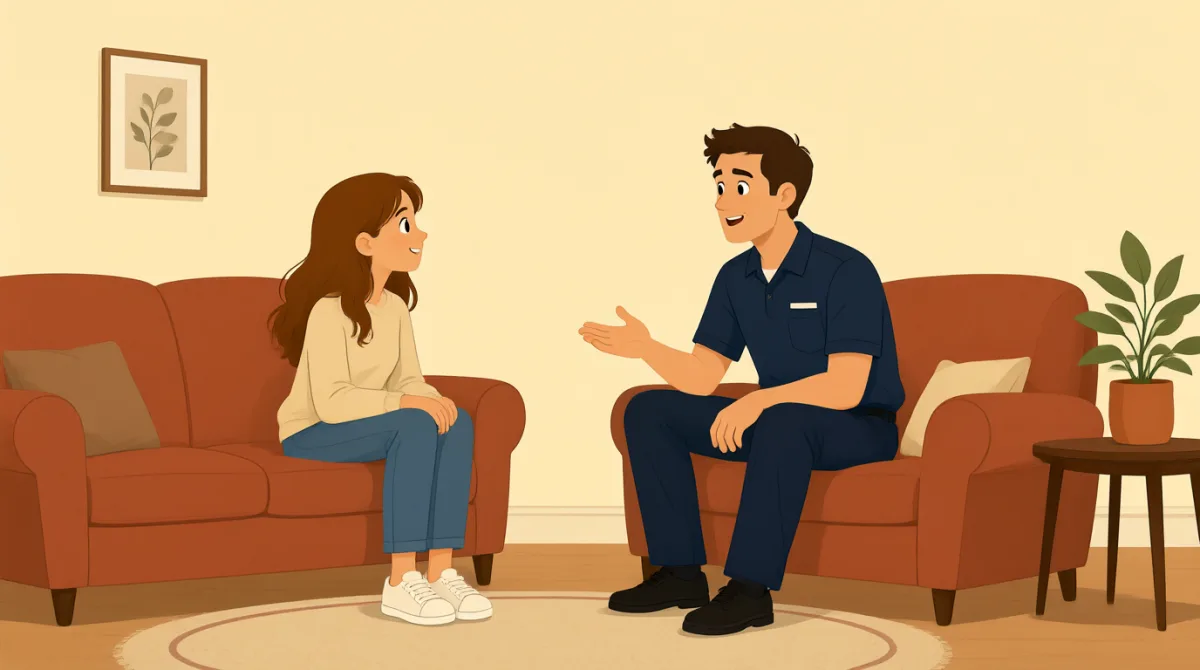

Hi, David. I’m ready for my first driving lesson. What will we practice today?
Hola, David. Estoy lista para mi primera clase de manejo. ¿Qué practicaremos hoy?

Hi, Emma. We’ll start with a few checks, then drive on a quiet street.
Hola, Emma. Empezaremos con unas comprobaciones y después conduciremos por una calle tranquila.
Okay. Will I drive the whole time, or will you show me first?
Está bien. ¿Conduciré todo el tiempo o primero me mostrarás cómo se hace?
I’ll explain the controls first. Then you can drive while I give directions.
Primero te explicaré los controles. Después podrás conducir mientras te voy dando indicaciones.
That sounds good. Should I bring anything for the lesson?
Me parece bien. ¿Debería llevar algo para la clase?
Just your learner’s permit and glasses, if you need them to see clearly.
Solo tu permiso de aprendizaje y gafas, si las necesitas para ver bien.
I have my permit with me. I’m a little nervous, but I’m ready.
Tengo el permiso conmigo. Estoy un poco nerviosa, pero estoy lista.
That’s normal. We’ll go slowly, and you can ask me questions anytime.
Es normal. Iremos despacio y puedes hacerme preguntas en cualquier momento.
Vocabulario8
- driving lessonclase de manejo
A class where you learn how to drive. Here, Emma is having her first one.
Una clase en la que aprendes a conducir. En este caso, Emma va a tomar su primera clase.
- practicepracticar
To do something to improve at it. You can use it to ask what you will work on in a lesson.
Hacer algo para mejorar en ello. Puedes usar esta palabra para preguntar qué van a trabajar en una clase.
- quiet streetcalle tranquila
A street with little traffic or noise. It can be a good place for a beginner to practice driving.
Una calle con poco tráfico o ruido. Puede ser un buen lugar para que alguien que empieza practique la conducción.
- controlscontroles
The parts of a car that you use to operate it, such as the pedals and steering wheel.
Las partes del auto que usas para manejarlo, como los pedales y el volante.
- give directionsdar indicaciones
To tell someone where to go or what to do next. An instructor gives directions while a learner drives.
Decirle a alguien por dónde ir o qué hacer después. Un instructor da indicaciones mientras el alumno conduce.
- learner’s permitpermiso de aprendizaje
A document that allows someone to practice driving before getting a full license.
Un documento que permite practicar la conducción antes de obtener una licencia completa.
- a little nervousun poco nervioso/a
Slightly worried or unsure. You can use this phrase to describe how you feel before a new experience.
Algo preocupado/a o inseguro/a. Puedes usar esta expresión para describir cómo te sientes antes de vivir una experiencia nueva.
- go slowlyir despacio
To move or do something at a slow speed. Here, it reassures Emma that the lesson will not be rushed.
Moverse o hacer algo a poca velocidad. Aquí, sirve para tranquilizar a Emma y decirle que no tendrán que apresurarse durante la clase.
Frases clave7
- 1
What will we practice today?
¿Qué practicaremos hoy?
Use this question to ask what you will learn or do in a lesson or activity. Replace “practice” with another verb to ask about a plan.
Usa esta pregunta para saber qué aprenderás o harás en una clase o actividad. Puedes cambiar “practice” por otro verbo para preguntar por un plan.
- 2
Will I drive the whole time, or will you show me first?
¿Conduciré todo el tiempo o primero me mostrarás cómo se hace?
This asks whether you will do an activity yourself or watch someone demonstrate first. Use “Will I… or will you…?” to compare two possible plans.
Esta pregunta sirve para saber si harás una actividad tú mismo o si primero verás una demostración. Usa “Will I… or will you…?” para comparar dos posibles planes.
- 3
I’ll explain the controls first.
Primero te explicaré los controles.
This sentence describes what someone plans to do before the next step. Use “I’ll” plus a verb to talk about a future action.
Esta oración describe lo que alguien tiene pensado hacer antes del siguiente paso. Usa “I’ll” seguido de un verbo para hablar de una acción futura.
- 4
Should I bring anything for the lesson?
¿Debería llevar algo para la clase?
Use this polite question to ask if you need to bring something. You can replace “the lesson” with another event or activity.
Usa esta pregunta cortés para saber si necesitas llevar algo. Puedes cambiar “the lesson” por otro evento o actividad.
- 5
I have my permit with me.
Tengo el permiso conmigo.
This means you have your permit with you now. Use “I have [item] with me” to say you brought something.
Significa que tienes el permiso contigo ahora. Usa “I have [item] with me” para decir que llevaste algo.
- 6
I’m a little nervous, but I’m ready.
Estoy un poco nerviosa, pero estoy lista.
This sentence shares a feeling while also showing willingness to begin. Use “I’m a little [feeling], but I’m ready” before a new activity.
Esta oración expresa cómo te sientes y, al mismo tiempo, muestra que estás dispuesta a empezar. Usa “I’m a little [feeling], but I’m ready” antes de una actividad nueva.
- 7
We’ll go slowly, and you can ask me questions anytime.
Iremos despacio y puedes hacerme preguntas en cualquier momento.
This reassures someone that there is no need to rush and that questions are welcome. Use “You can ask me questions anytime” to encourage someone to speak up.
Esta frase tranquiliza a alguien: le dice que no hace falta apresurarse y que puede hacer preguntas. Usa “You can ask me questions anytime” para animar a alguien a expresarse.