Turning at the Corner
การเลี้ยวตรงหัวมุม
Emma drives along a quiet street while David tells her when to slow down and signal. She asks when to turn the wheel and makes the turn safely.
เอ็มมาขับรถไปตามถนนที่เงียบสงบ โดยมีเดวิดคอยบอกให้เธอชะลอรถและเปิดไฟเลี้ยว เธอถามว่าควรหมุนพวงมาลัยตอนไหน แล้วก็เลี้ยวได้อย่างปลอดภัย
บทสนทนา8
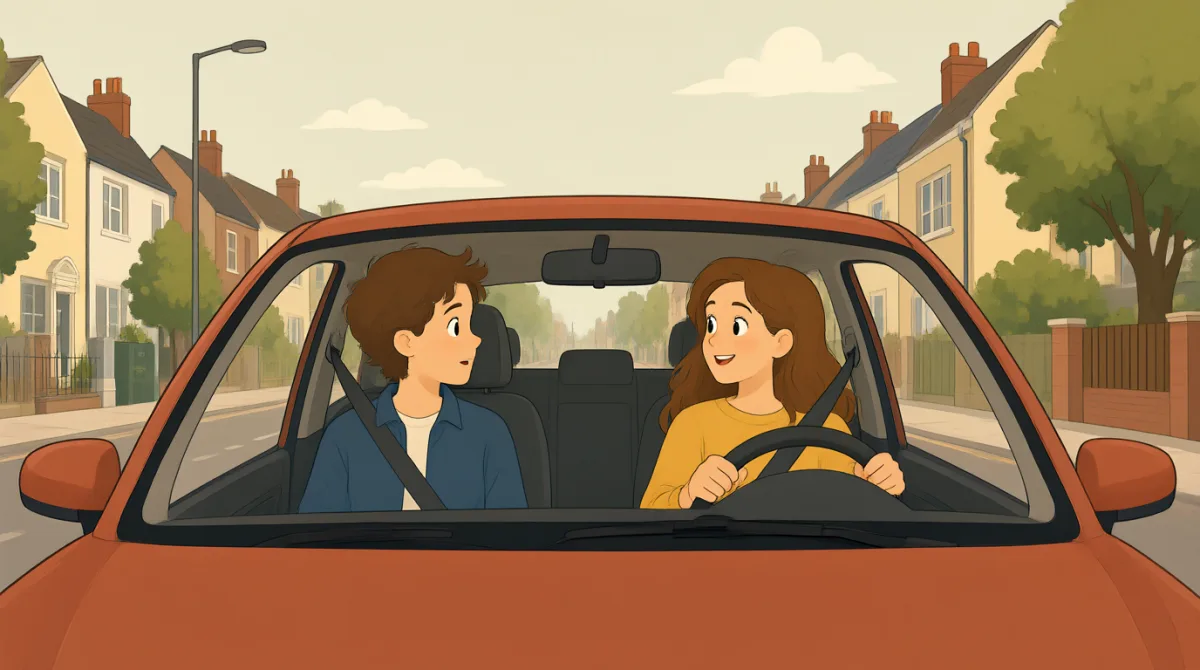

Keep going straight, Emma. There’s a corner coming up on your right.
ขับตรงไปเรื่อย ๆ นะ เอ็มมา ข้างหน้ามีหัวมุมอยู่ทางขวามือ

Should I slow down now, or wait until we get closer?
ฉันควรชะลอตอนนี้เลย หรือรอให้เข้าไปใกล้กว่านี้ก่อน?
Slow down now, and check the road ahead. No need to rush.
ชะลอตอนนี้เลย แล้วก็มองถนนข้างหน้า ไม่ต้องรีบนะ
I see the corner. Should I put on my signal now?
ฉันเห็นหัวมุมแล้ว ควรเปิดไฟเลี้ยวตอนนี้ไหม?
Yes, signal right. Check your mirror, then look for people crossing.
ใช่ เปิดไฟเลี้ยวขวา เช็กกระจก แล้วมองหาคนที่กำลังข้ามถนนด้วย
The road looks clear. When should I turn the wheel?
ถนนดูโล่งแล้ว ฉันควรหมุนพวงมาลัยตอนไหน?
Turn the wheel gently to the right as you reach the corner.
พอถึงหัวมุมก็ค่อย ๆ หมุนพวงมาลัยไปทางขวา
Okay, I’m turning now. I made it around safely!
โอเค ฉันกำลังเลี้ยวแล้ว เลี้ยวผ่านหัวมุมมาได้อย่างปลอดภัยแล้ว!
คำศัพท์8
- keep going straightขับตรงไปเรื่อย ๆ
Continue driving forward without turning. You can use this phrase to give someone directions.
ขับไปข้างหน้าโดยไม่เลี้ยว วลีนี้ใช้บอกทางให้ใครสักคนได้
- coming upกำลังจะถึง
Something is approaching soon. Here, it means the corner is not far away.
ใช้พูดถึงสิ่งที่ใกล้เข้ามาแล้ว ในที่นี้หมายถึงหัวมุมอยู่ไม่ไกล
- slow downชะลอรถ
Drive more slowly. Use this phrasal verb when you want a driver to reduce speed.
ขับให้ช้าลง ใช้กริยาวลีนี้เมื่อต้องการบอกคนขับให้ลดความเร็ว
- get closerเข้าไปใกล้
Move nearer to something. You can use this phrase to talk about approaching a place or object.
เคลื่อนเข้าไปใกล้บางสิ่ง วลีนี้ใช้พูดถึงการเข้าใกล้สถานที่หรือสิ่งของได้
- put on my signalเปิดไฟเลี้ยว
Turn on the car’s indicator to show which way you plan to turn. Drivers use it before changing direction.
เปิดไฟเลี้ยวของรถเพื่อบอกว่าจะเลี้ยวไปทางไหน คนขับจะใช้ไฟเลี้ยวก่อนเปลี่ยนทิศทาง
- look forมองหา
Try to see or find someone or something. Here, Emma should look for people crossing the road.
พยายามมองเห็นหรือค้นหาใครหรืออะไรสักอย่าง ในที่นี้เอ็มมาควรมองหาคนที่กำลังข้ามถนน
- turn the wheelหมุนพวงมาลัย
Move the steering wheel to change the direction of the car. You can say which way to turn it.
หมุนพวงมาลัยเพื่อเปลี่ยนทิศทางของรถ และยังระบุได้ด้วยว่าควรหมุนไปทางไหน
- made it around safelyเลี้ยวผ่านไปได้อย่างปลอดภัย
Successfully went around the corner without danger. This phrase can describe completing a difficult movement safely.
เลี้ยวผ่านหัวมุมไปได้สำเร็จโดยไม่เกิดอันตราย วลีนี้ยังใช้พูดถึงการผ่านช่วงที่ยากลำบากไปได้อย่างปลอดภัย
ประโยคสำคัญ8
- 1
Should I slow down now, or wait until we get closer?
ฉันควรชะลอตอนนี้เลย หรือรอให้เข้าไปใกล้กว่านี้ก่อน?
Use this question to ask when to do something. You can replace “slow down” with another action.
ใช้คำถามนี้เพื่อถามว่าควรทำบางอย่างตอนไหน เปลี่ยน “slow down” เป็นการกระทำอย่างอื่นได้
- 2
Slow down now, and check the road ahead.
ชะลอตอนนี้เลย แล้วก็มองถนนข้างหน้า
This gives two simple driving instructions. Use “and” to connect actions that someone should do.
ประโยคนี้เป็นคำสั่งง่าย ๆ สองอย่างในการขับรถ ใช้ “and” เพื่อเชื่อมการกระทำที่อีกฝ่ายควรทำ
- 3
No need to rush.
ไม่ต้องรีบนะ
This is a reassuring way to say that someone can take their time. It is useful when a person feels hurried or nervous.
เป็นวิธีพูดปลอบใจว่าอีกฝ่ายค่อย ๆ ทำได้ เหมาะกับเวลาที่ใครสักคนรู้สึกว่าต้องรีบหรือกำลังกังวล
- 4
Should I put on my signal now?
ฉันควรเปิดไฟเลี้ยวตอนนี้ไหม?
Use this question to ask if it is time to show that you are turning. Replace “put on my signal” with another action when asking for timing.
ใช้คำถามนี้เพื่อถามว่าถึงเวลาแสดงให้คนอื่นรู้ว่าจะเลี้ยวหรือยัง เมื่อต้องการถามว่าเมื่อไรควรทำอะไร ให้เปลี่ยน “put on my signal” เป็นการกระทำอย่างอื่น
- 5
Check your mirror, then look for people crossing.
เช็กกระจก แล้วมองหาคนที่กำลังข้ามถนน
This gives two actions in the order they should happen. Use “then” to show what to do next.
ประโยคนี้บอกการกระทำสองอย่างตามลำดับ ใช้ “then” เพื่อบอกว่าควรทำอะไรต่อ
- 6
When should I turn the wheel?
ฉันควรหมุนพวงมาลัยตอนไหน?
Use this question to ask about the right time to do an action. You can replace “turn the wheel” with another task.
ใช้คำถามนี้เพื่อถามว่าควรทำสิ่งใดสิ่งหนึ่งเวลาไหน เปลี่ยน “turn the wheel” เป็นงานอย่างอื่นได้
- 7
Turn the wheel gently to the right as you reach the corner.
พอถึงหัวมุมก็ค่อย ๆ หมุนพวงมาลัยไปทางขวา
This gives a clear instruction about how and when to turn. “Gently” describes a careful action, and “as you reach” means when you arrive at the corner.
ประโยคนี้บอกอย่างชัดเจนว่าควรเลี้ยวอย่างไรและเมื่อไร “Gently” บอกว่าควรทำอย่างระมัดระวัง ส่วน “as you reach” หมายถึงตอนที่ไปถึงหัวมุม
- 8
I made it around safely!
ฉันเลี้ยวผ่านไปได้อย่างปลอดภัยแล้ว!
Use this sentence to say that you completed a turn or passed a difficult place without danger. “Made it” often means succeeded in doing something.
ใช้ประโยคนี้เพื่อบอกว่าคุณเลี้ยวหรือผ่านจุดที่ยากลำบากไปได้โดยไม่เกิดอันตราย “Made it” มักหมายถึงทำบางอย่างสำเร็จ