Going to the Ticket Office
ไปที่ช่องจำหน่ายตั๋ว
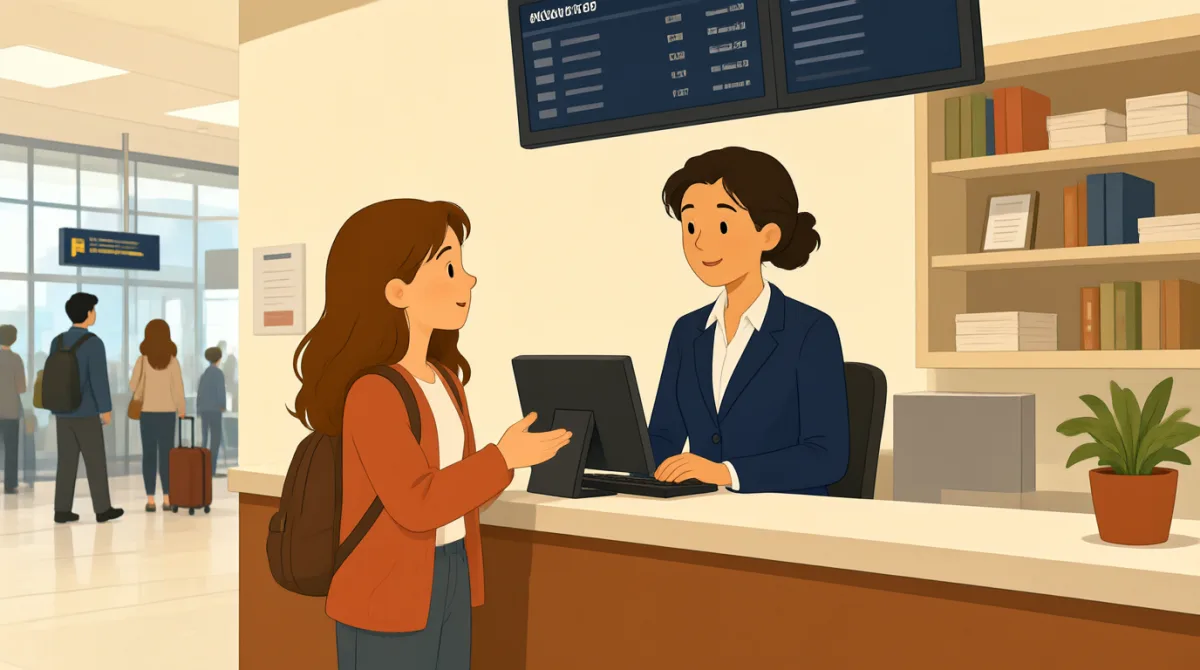
After missing her connection, Emma goes to the ticket office for help. She asks which ticket she needs to change.
หลังจากพลาดรถไฟต่อขบวน เอ็มมาไปขอความช่วยเหลือที่ช่องจำหน่ายตั๋ว เธอถามว่าต้องเปลี่ยนตั๋วใบไหน
บทสนทนา8

Hi, I missed my connection because my first train was late.
สวัสดีค่ะ ฉันพลาดรถไฟต่อขบวน เพราะรถไฟขบวนแรกมาช้า

I’m sorry to hear that. I can help you here.
เสียใจด้วยนะคะ เดี๋ยวฉันช่วยคุณได้ค่ะ
Which ticket do I need to change, my first ticket or my connection ticket?
ฉันต้องเปลี่ยนตั๋วใบไหนคะ ใบแรกหรือใบต่อรถไฟ
Please show me your tickets, and I’ll check them for you.
ขอดูตั๋วของคุณหน่อยนะคะ แล้วฉันจะตรวจสอบให้ค่ะ
Here they are. I’m not sure which one is for the next train.
นี่ค่ะ ฉันไม่แน่ใจว่าใบไหนใช้ขึ้นรถไฟขบวนถัดไป
This one is for your missed connection. We can change it at this desk.
ใบนี้เป็นตั๋วสำหรับรถไฟต่อขบวนที่คุณพลาดค่ะ เราเปลี่ยนตั๋วใบนี้ได้ที่เคาน์เตอร์นี้
Great. Do I need to change it now, or can I wait?
ดีเลยค่ะ ฉันต้องเปลี่ยนตอนนี้เลยไหม หรือรอก่อนได้คะ
It’s best to change it now. Then you’ll know which train to take.
เปลี่ยนตอนนี้เลยจะดีที่สุดค่ะ แล้วคุณก็จะรู้ว่าต้องขึ้นรถไฟขบวนไหน
คำศัพท์8
- missed my connectionพลาดรถไฟต่อขบวน
You missed your connection when you arrived too late to catch the train that followed your first train.
คุณพลาดรถไฟต่อขบวนเมื่อไปถึงช้าเกินกว่าจะขึ้นรถไฟที่ต่อจากขบวนแรกได้
- first train was lateรถไฟขบวนแรกมาช้า
This explains why Emma did not catch her next train. Use “was late” to describe a past delay.
วลีนี้อธิบายว่าทำไมเอ็มมาถึงขึ้นรถไฟขบวนถัดไปไม่ทัน ใช้ “was late” เพื่อบอกว่ามีความล่าช้าในอดีต
- show me your ticketsขอดูตั๋วของคุณหน่อย
This is a polite way to ask someone to let you see their tickets.
นี่เป็นวิธีสุภาพในการขอให้ใครสักคนให้คุณดูตั๋วของเขา
- check them for youตรวจสอบให้คุณ
Here, “check” means to look at the tickets and find out which one needs to be changed. You can use this phrase when offering help.
ในที่นี้ “check” หมายถึงดูตั๋วแล้วตรวจสอบว่าต้องเปลี่ยนใบไหน คุณใช้วลีนี้เวลายื่นมือช่วยได้
- the next trainรถไฟขบวนถัดไป
This means the train that comes after the one you missed. Use it to ask or talk about your upcoming train.
หมายถึงรถไฟขบวนที่ออกหลังจากขบวนที่คุณพลาด ใช้ถามหรือพูดถึงรถไฟขบวนที่คุณกำลังจะขึ้น
- at this deskที่เคาน์เตอร์นี้
This tells someone where a service is available. You can use it to give directions inside a station or office.
วลีนี้บอกว่ารับบริการได้ที่ไหน ใช้บอกทางภายในสถานีหรือสำนักงานได้
- change it nowเปลี่ยนตอนนี้
In this conversation, “change” means to update the ticket for a different train. Use “now” to say something should happen immediately.
ในบทสนทนานี้ “change” หมายถึงแก้ไขตั๋วให้เป็นรถไฟอีกขบวน ส่วน “now” ใช้บอกว่าควรทำทันที
- It’s best to change it now.เปลี่ยนตอนนี้เลยจะดีที่สุด
This phrase gives friendly advice about what someone should do. You can use “It’s best to…” to recommend an action.
วลีนี้ใช้แนะนำอย่างเป็นมิตรว่าอีกฝ่ายควรทำอะไร คุณใช้ “It’s best to…” เพื่อเสนอแนะให้ทำสิ่งใดสิ่งหนึ่งได้
ประโยคสำคัญ7
- 1
I missed my connection because my first train was late.
ฉันพลาดรถไฟต่อขบวน เพราะรถไฟขบวนแรกมาช้า
This sentence explains why you did not catch a connecting train. Reuse “I missed my connection because…” and give the reason.
ประโยคนี้อธิบายว่าทำไมคุณถึงขึ้นรถไฟขบวนต่อไปไม่ทัน คุณนำรูปแบบ “I missed my connection because…” มาใช้ซ้ำ แล้วเติมเหตุผลต่อท้ายได้
- 2
Which ticket do I need to change, my first ticket or my connection ticket?
ฉันต้องเปลี่ยนตั๋วใบไหนคะ ใบแรกหรือใบต่อรถไฟ
Use this question when you are unsure which ticket needs to be updated. You can replace “ticket” with another item you need help with.
ใช้คำถามนี้เมื่อไม่แน่ใจว่าต้องแก้ไขตั๋วใบไหน คุณเปลี่ยน “ticket” เป็นสิ่งอื่นที่ต้องการความช่วยเหลือได้
- 3
Please show me your tickets, and I’ll check them for you.
ขอดูตั๋วของคุณหน่อยนะคะ แล้วฉันจะตรวจสอบให้ค่ะ
This is a polite way to offer help and explain what you will do. You can use “I’ll check it for you” when offering to look at something.
นี่เป็นวิธีสุภาพในการเสนอความช่วยเหลือและบอกว่าจะทำอะไร คุณใช้ “I’ll check it for you” เมื่อต้องการเสนอตัวตรวจดูสิ่งใดสิ่งหนึ่งให้ได้
- 4
I’m not sure which one is for the next train.
ฉันไม่แน่ใจว่าใบไหนใช้ขึ้นรถไฟขบวนถัดไป
Use this sentence when you cannot identify the right item. Replace “the next train” with the person or thing you are trying to find.
ใช้ประโยคนี้เมื่อคุณระบุไม่ได้ว่าสิ่งไหนเป็นสิ่งที่ต้องการ เปลี่ยน “the next train” เป็นบุคคลหรือสิ่งของที่คุณกำลังหาได้
- 5
We can change it at this desk.
เราเปลี่ยนตั๋วใบนี้ได้ที่เคาน์เตอร์นี้
This sentence explains what service is available and where to get it. Replace “change it” with another action to give simple directions.
ประโยคนี้บอกว่ามีบริการอะไรและรับบริการได้ที่ไหน เปลี่ยน “change it” เป็นการกระทำอย่างอื่นเพื่อบอกทางแบบง่าย ๆ ได้
- 6
Do I need to change it now, or can I wait?
ฉันต้องเปลี่ยนตอนนี้เลยไหมคะ หรือรอก่อนได้
This question asks whether something must happen immediately or can happen later. You can reuse the pattern with other tasks or plans.
คำถามนี้ถามว่าต้องทำอะไรทันทีหรือทำทีหลังได้ คุณนำรูปแบบนี้ไปใช้กับงานหรือแผนอื่น ๆ ได้
- 7
Then you’ll know which train to take.
แล้วคุณก็จะรู้ว่าต้องขึ้นรถไฟขบวนไหน
This explains the result of doing something first. Use “Then you’ll know…” to describe what someone will learn or be able to decide.
ประโยคนี้อธิบายผลที่จะเกิดขึ้นหลังจากทำบางอย่างก่อน คุณใช้ “Then you’ll know…” เพื่อบอกว่าอีกฝ่ายจะได้เรียนรู้อะไรหรือสามารถตัดสินใจเรื่องใดได้