Going to the Ticket Office
टिकट कार्यालय जाना
After missing her connection, Emma goes to the ticket office for help. She asks which ticket she needs to change.
अपनी अगली ट्रेन छूट जाने के बाद, एमा मदद के लिए टिकट कार्यालय जाती है। वह पूछती है कि उसे कौन-सा टिकट बदलना होगा।
संवाद8
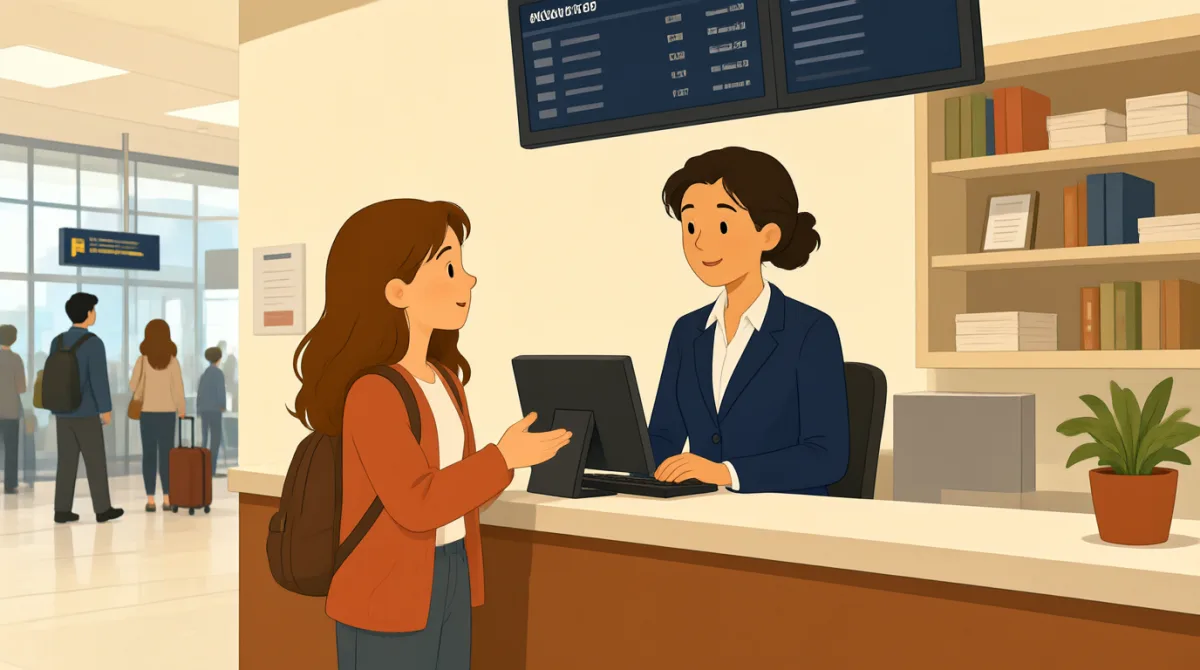

Hi, I missed my connection because my first train was late.
नमस्ते, मेरी पहली ट्रेन देर से आई, इसलिए मेरी अगली ट्रेन छूट गई।

I’m sorry to hear that. I can help you here.
यह सुनकर अफ़सोस हुआ। मैं यहाँ आपकी मदद कर सकती हूँ।
Which ticket do I need to change, my first ticket or my connection ticket?
मुझे कौन-सा टिकट बदलवाना होगा—पहला टिकट या अगली ट्रेन का टिकट?
Please show me your tickets, and I’ll check them for you.
कृपया अपने टिकट मुझे दिखाइए, मैं आपके लिए उन्हें देख लेती हूँ।
Here they are. I’m not sure which one is for the next train.
ये लीजिए। मुझे पक्का नहीं पता कि इनमें से अगली ट्रेन वाला कौन-सा है।
This one is for your missed connection. We can change it at this desk.
यह वाला आपकी छूटी हुई अगली ट्रेन का टिकट है। हम इसे इसी काउंटर पर बदल सकते हैं।
Great. Do I need to change it now, or can I wait?
बहुत अच्छा। क्या मुझे इसे अभी बदलवाना होगा, या मैं इंतज़ार कर सकती हूँ?
It’s best to change it now. Then you’ll know which train to take.
इसे अभी बदलवा लेना बेहतर होगा। फिर आपको पता होगा कि किस ट्रेन में जाना है।
शब्दावली8
- missed my connectionमेरी अगली ट्रेन छूट गई
You missed your connection when you arrived too late to catch the train that followed your first train.
जब आप अपनी पहली ट्रेन के बाद आने वाली ट्रेन पकड़ने के लिए बहुत देर से पहुँचते हैं, तो आपकी अगली ट्रेन छूट जाती है।
- first train was lateपहली ट्रेन देर से आई
This explains why Emma did not catch her next train. Use “was late” to describe a past delay.
इससे पता चलता है कि एमा अपनी अगली ट्रेन क्यों नहीं पकड़ पाई। बीते समय में हुई देरी बताने के लिए “was late” कहते हैं।
- show me your ticketsमुझे अपने टिकट दिखाइए
This is a polite way to ask someone to let you see their tickets.
किसी से उनके टिकट देखने देने का अनुरोध करने का यह एक विनम्र तरीका है।
- check them for youआपके लिए उन्हें देख लूँगी
Here, “check” means to look at the tickets and find out which one needs to be changed. You can use this phrase when offering help.
यहाँ “check” का मतलब है टिकट देखकर पता लगाना कि किसे बदलने की ज़रूरत है। मदद की पेशकश करते समय आप इस वाक्यांश का इस्तेमाल कर सकते हैं।
- the next trainअगली ट्रेन
This means the train that comes after the one you missed. Use it to ask or talk about your upcoming train.
इसका मतलब है वह ट्रेन जो आपकी छूटी हुई ट्रेन के बाद आती है। आने वाली ट्रेन के बारे में पूछने या बात करने के लिए इसका इस्तेमाल करें।
- at this deskइसी काउंटर पर
This tells someone where a service is available. You can use it to give directions inside a station or office.
यह बताता है कि कोई सेवा कहाँ उपलब्ध है। स्टेशन या कार्यालय के भीतर रास्ता बताने के लिए आप इसका इस्तेमाल कर सकते हैं।
- change it nowइसे अभी बदलवाना
In this conversation, “change” means to update the ticket for a different train. Use “now” to say something should happen immediately.
इस बातचीत में “change” का मतलब है टिकट को किसी दूसरी ट्रेन के लिए बदलना। “now” का इस्तेमाल यह बताने के लिए करें कि काम तुरंत होना चाहिए।
- It’s best to change it now.इसे अभी बदलवा लेना बेहतर होगा।
This phrase gives friendly advice about what someone should do. You can use “It’s best to…” to recommend an action.
यह किसी को क्या करना चाहिए, इस बारे में दोस्ताना सलाह देने का तरीका है। किसी काम की सिफ़ारिश करने के लिए आप “It’s best to…” कह सकते हैं।
मुख्य वाक्य7
- 1
I missed my connection because my first train was late.
मेरी पहली ट्रेन देर से आई, इसलिए मेरी अगली ट्रेन छूट गई।
This sentence explains why you did not catch a connecting train. Reuse “I missed my connection because…” and give the reason.
यह वाक्य बताता है कि आप अगली ट्रेन क्यों नहीं पकड़ पाए। “I missed my connection because…” के बाद वजह बताकर इस ढाँचे का फिर से इस्तेमाल करें।
- 2
Which ticket do I need to change, my first ticket or my connection ticket?
मुझे कौन-सा टिकट बदलवाना होगा—पहला टिकट या अगली ट्रेन का टिकट?
Use this question when you are unsure which ticket needs to be updated. You can replace “ticket” with another item you need help with.
जब आपको पता न हो कि किस टिकट में बदलाव करना है, तो यह सवाल पूछें। जिस दूसरी चीज़ के लिए आपको मदद चाहिए, उसके नाम से “ticket” की जगह ले सकते हैं।
- 3
Please show me your tickets, and I’ll check them for you.
कृपया अपने टिकट मुझे दिखाइए, मैं आपके लिए उन्हें देख लेती हूँ।
This is a polite way to offer help and explain what you will do. You can use “I’ll check it for you” when offering to look at something.
मदद की पेशकश करने और यह बताने का यह विनम्र तरीका है कि आप क्या करेंगे। किसी चीज़ को देखकर मदद की पेशकश करते समय आप “I’ll check it for you” कह सकते हैं।
- 4
I’m not sure which one is for the next train.
मुझे पक्का नहीं पता कि इनमें से अगली ट्रेन वाला कौन-सा है।
Use this sentence when you cannot identify the right item. Replace “the next train” with the person or thing you are trying to find.
जब आप सही चीज़ पहचान नहीं पाते, तब यह वाक्य इस्तेमाल करें। जिस व्यक्ति या चीज़ को आप ढूँढ़ रहे हैं, उसके हिसाब से “the next train” की जगह दूसरी बात कह सकते हैं।
- 5
We can change it at this desk.
हम इसे इसी काउंटर पर बदल सकते हैं।
This sentence explains what service is available and where to get it. Replace “change it” with another action to give simple directions.
यह वाक्य बताता है कि कौन-सी सेवा उपलब्ध है और वह कहाँ मिल सकती है। आसान निर्देश देने के लिए “change it” की जगह कोई दूसरी कार्रवाई बताएं।
- 6
Do I need to change it now, or can I wait?
क्या मुझे इसे अभी बदलवाना होगा, या मैं इंतज़ार कर सकती हूँ?
This question asks whether something must happen immediately or can happen later. You can reuse the pattern with other tasks or plans.
इस सवाल से पूछा जाता है कि कोई काम तुरंत करना ज़रूरी है या बाद में भी किया जा सकता है। दूसरे कामों या योजनाओं के बारे में पूछने के लिए भी इस ढाँचे का इस्तेमाल करें।
- 7
Then you’ll know which train to take.
फिर आपको पता होगा कि किस ट्रेन में जाना है।
This explains the result of doing something first. Use “Then you’ll know…” to describe what someone will learn or be able to decide.
यह बताता है कि पहले कोई काम करने से क्या नतीजा होगा। कोई क्या जान पाएगा या क्या तय कर पाएगा, यह बताने के लिए “Then you’ll know…” का इस्तेमाल करें।