Noticing the Flat Tire
สังเกตเห็นยางแบน
Emma and Jack notice a flat tire while getting ready to drive. They pull over and check the car.
เอมมากับแจ็กสังเกตเห็นยางแบนตอนกำลังเตรียมตัวออกเดินทาง พวกเขาจอดรถข้างทางแล้วตรวจดูรถ
บทสนทนา8
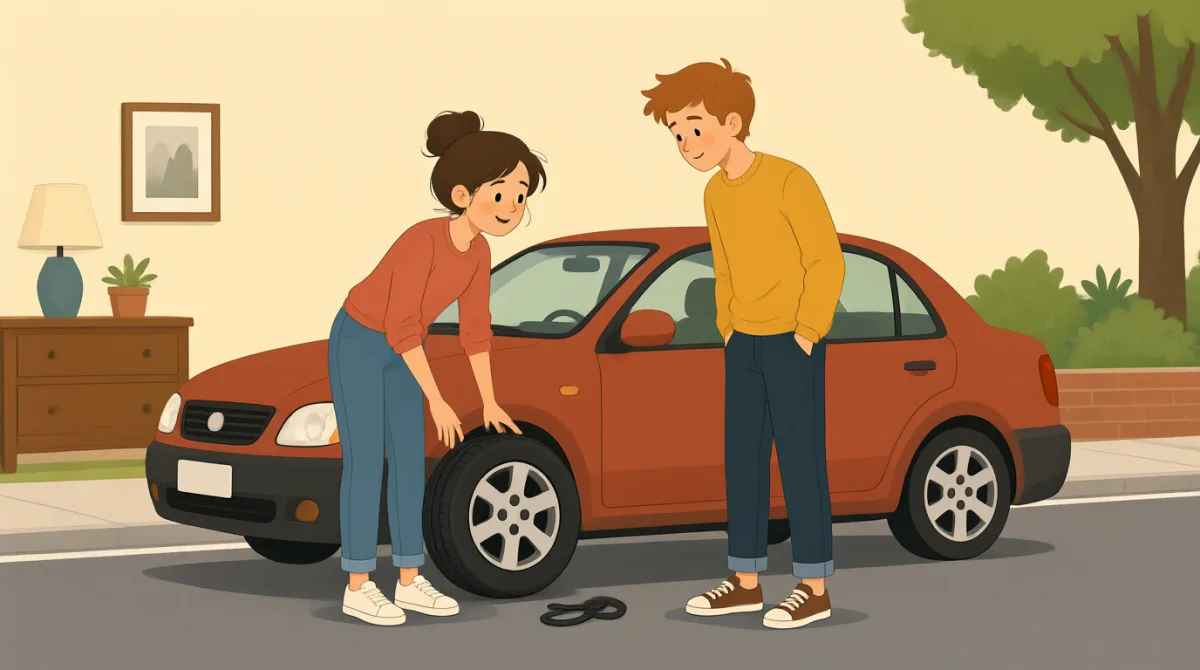

Jack, the car is pulling to the right. Can you check what’s wrong?
แจ็ก รถมันเอียงไปทางขวา ช่วยดูหน่อยได้ไหมว่าเกิดอะไรขึ้น

Sure. I’ll pull over here, away from traffic. Are you okay?
ได้ เดี๋ยวจอดข้างทางตรงนี้ให้พ้นทางรถก่อน เธอโอเคไหม
I’m fine. The car feels strange, though. Did we hit something?
ฉันไม่เป็นไร แต่รถรู้สึกแปลก ๆ นะ เราชนอะไรหรือเปล่า
I don’t think so. Let’s get out and look at the tires.
ไม่น่าจะนะ ลงไปดูยางกันเถอะ
Oh, the back tire is flat! I didn’t notice it before.
อ้าว ยางหลังแบน! ก่อนหน้านี้ฉันไม่ทันสังเกตเลย
Yes, it’s completely flat. We shouldn’t drive on it.
ใช่ แบนสนิทเลย เราไม่ควรขับต่อทั้งที่ยางเป็นแบบนี้
Can we change it ourselves, or should we call for help?
เราเปลี่ยนเองได้ไหม หรือควรโทรขอความช่วยเหลือดี
Let’s check the trunk for a spare tire and the tools first.
ลองเช็กยางอะไหล่กับเครื่องมือในท้ายรถก่อนเถอะ
คำศัพท์8
- pulling to the rightรถเอียงไปทางขวา
This means the car is moving toward the right side by itself. You can use “pulling to the left” to describe a similar problem.
หมายถึงรถเคลื่อนไปทางด้านขวาเอง ใช้ “pulling to the left” เพื่ออธิบายปัญหาคล้ายกันที่รถเอียงไปทางซ้ายได้
- pull overจอดข้างทาง
To pull over is to move a vehicle to the side of the road and stop. You can say, “Please pull over here.”
“pull over” หมายถึงขับรถไปจอดข้างถนน ลองพูดว่า “Please pull over here.” (ช่วยจอดตรงนี้หน่อย)
- what’s wrongเกิดอะไรขึ้น
This asks what the problem is. You can use it when something seems unusual or is not working.
ใช้ถามว่าปัญหาคืออะไร พูดได้เมื่อมีบางอย่างดูผิดปกติหรือใช้งานไม่ได้
- get outลงจากรถ
Here, “get out” means to leave the car. You can also say, “Let’s get out and stretch our legs.”
ในที่นี้ “get out” หมายถึงลงจากรถ นอกจากนี้ยังพูดว่า “Let’s get out and stretch our legs.” (ลงไปยืดเส้นยืดสายกันเถอะ) ได้ด้วย
- flatแบน
A tire is flat when it has lost its air and cannot be used normally. You can say, “The front tire is flat.”
ยางแบนเมื่อสูญเสียลมจนไม่สามารถใช้งานได้ตามปกติ พูดได้ว่า “The front tire is flat.” (ยางหน้าแบน)
- call for helpโทรขอความช่วยเหลือ
This means to contact someone who can assist you. You can use it when you need help with a problem or emergency.
หมายถึงติดต่อใครสักคนที่ช่วยเราได้ ใช้เมื่อมีปัญหาหรือเหตุฉุกเฉินที่ต้องการความช่วยเหลือ
- spare tireยางอะไหล่
A spare tire is an extra tire kept in a vehicle in case another tire goes flat. You can say, “Let’s check if we have a spare tire.”
ยางอะไหล่คือยางสำรองที่เก็บไว้ในรถ เผื่อยางเส้นอื่นแบน พูดได้ว่า “Let’s check if we have a spare tire.” (ลองดูว่าเรามียางอะไหล่ไหม)
- trunkท้ายรถ
The trunk is the storage area at the back of a car. You can say, “Put the bags in the trunk.”
“trunk” คือพื้นที่เก็บของด้านท้ายรถ พูดได้ว่า “Put the bags in the trunk.” (เอากระเป๋าใส่ท้ายรถ)
ประโยคสำคัญ7
- 1
The car is pulling to the right.
รถเอียงไปทางขวา
Use this sentence to describe a car that seems to move toward one side. You can replace “right” with “left.”
ใช้ประโยคนี้บรรยายรถที่ดูเหมือนเคลื่อนไปทางด้านใดด้านหนึ่ง เปลี่ยน “right” เป็น “left” ได้
- 2
Can you check what’s wrong?
ช่วยดูหน่อยได้ไหมว่าเกิดอะไรขึ้น
This is a simple way to ask someone to find out what the problem is. Replace “what’s wrong” with the thing you want them to check.
เป็นวิธีง่าย ๆ ในการขอให้ใครสักคนช่วยตรวจดูว่าปัญหาคืออะไร เปลี่ยน “what’s wrong” เป็นสิ่งที่อยากให้เขาตรวจได้
- 3
I’ll pull over here, away from traffic.
เดี๋ยวฉันจอดข้างทางตรงนี้ให้พ้นทางรถก่อน
Use this when you are going to stop your car somewhere safe. “I’ll” is a natural way to talk about a quick decision or plan.
ใช้ประโยคนี้เมื่อกำลังจะจอดรถในที่ที่ปลอดภัย “I’ll” เป็นวิธีพูดถึงการตัดสินใจหรือแผนที่เพิ่งคิดได้อย่างเป็นธรรมชาติ
- 4
Let’s get out and look at the tires.
ลงไปดูยางกันเถอะ
This suggests doing two actions together: leaving the car and checking the tires. You can use “Let’s get out and…” to suggest another activity.
ประโยคนี้ชวนให้ทำสองอย่างด้วยกัน คือ ลงจากรถแล้วตรวจดูยาง ใช้ “Let’s get out and…” เพื่อชวนกันทำกิจกรรมอื่นต่อได้
- 5
We shouldn’t drive on it.
เราไม่ควรขับต่อทั้งที่ยางเป็นแบบนี้
Use “shouldn’t” to say that something is not a good or safe idea. Replace “drive on it” with another action to give advice.
ใช้ “shouldn’t” เพื่อบอกว่าบางอย่างไม่เหมาะหรือไม่ปลอดภัย เปลี่ยน “drive on it” เป็นการกระทำอื่นเพื่อให้คำแนะนำได้
- 6
Can we change it ourselves, or should we call for help?
เราเปลี่ยนเองได้ไหม หรือควรโทรขอความช่วยเหลือดี
This asks about two possible ways to solve a problem. You can use “Can we… or should we…?” to compare doing something yourself with asking for help.
ประโยคนี้ถามถึงวิธีแก้ปัญหาสองทาง ใช้ “Can we… or should we…?” เพื่อเปรียบเทียบการทำเองกับการขอความช่วยเหลือได้
- 7
Let’s check the trunk for a spare tire and the tools first.
ลองเช็กยางอะไหล่กับเครื่องมือในท้ายรถก่อนเถอะ
Use this to suggest checking a place for items you need. Replace “the trunk” and “a spare tire and the tools” with other places and things.
ใช้ประโยคนี้เพื่อชวนตรวจดูสิ่งของที่ต้องการในสถานที่หนึ่ง เปลี่ยน “the trunk” และ “a spare tire and the tools” เป็นสถานที่และสิ่งของอื่นได้