At the Tire Shop
ที่ร้านยาง
Emma and Jack visit a tire shop to have the damaged tire checked. They ask the mechanic about repair options and the cost.
เอมมาและแจ็กไปร้านยางเพื่อให้ช่างตรวจยางที่เสียหาย พวกเขาถามช่างเกี่ยวกับวิธีซ่อมและค่าใช้จ่าย
บทสนทนา8
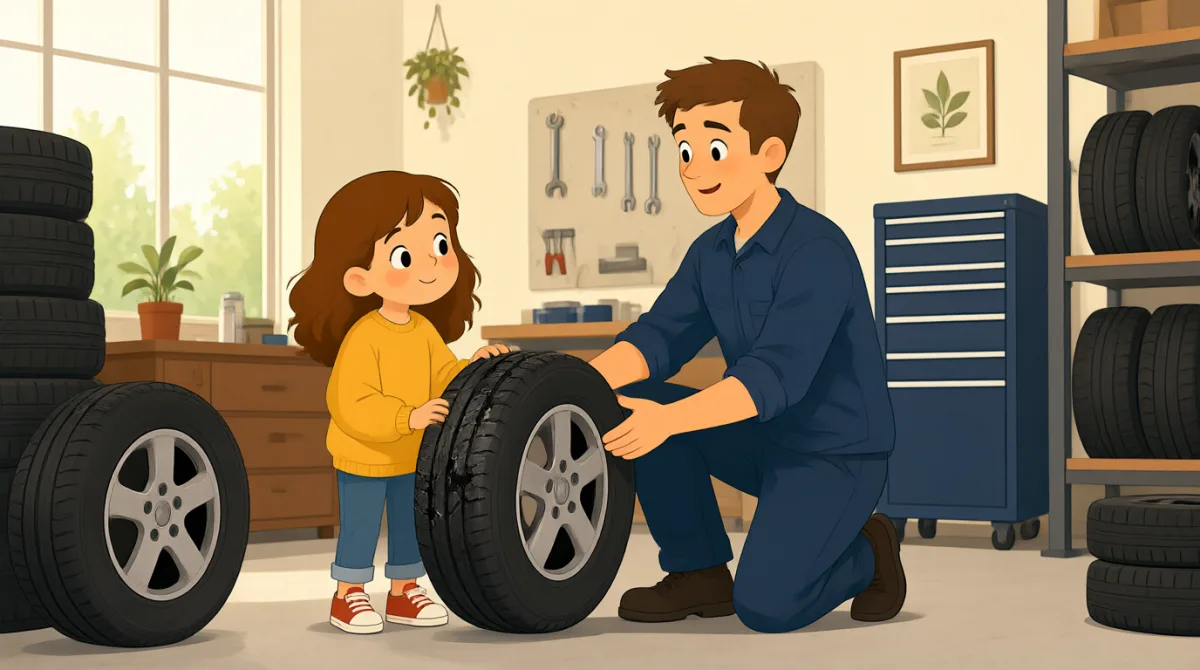

Hi, we have a flat tire. Could you check if you can repair it?
สวัสดีค่ะ ยางรถเราแบน ช่วยตรวจดูได้ไหมคะว่าซ่อมได้หรือเปล่า

Sure. I'll take a look. Did you hit anything on the road?
ได้ครับ เดี๋ยวผมขอดูหน่อยนะครับ ตอนขับรถไปชนอะไรเข้าหรือเปล่าครับ

We heard a loud thump, then the tire went flat.
เราได้ยินเสียงดังตุ้บ แล้วล้อก็แบนเลยครับ
I see a nail in the tire. I'll check how deep the damage is.
ผมเห็นตะปูอยู่ในยาง เดี๋ยวจะตรวจดูว่าความเสียหายลึกแค่ไหนครับ
Can you patch it, or will we need a new tire?
ปะได้ไหมคะ หรือต้องเปลี่ยนยางใหม่คะ
The hole looks small, but I need to check the inside, too.
รูดูเล็กนะครับ แต่ผมต้องตรวจดูด้านในด้วย
How long will the check take? We have the spare on now.
ตรวจนานแค่ไหนครับ ตอนนี้เราใส่ยางอะไหล่อยู่
About fifteen minutes. Please leave the car here, and I'll let you know.
ประมาณสิบห้านาทีครับ กรุณาจอดรถทิ้งไว้ที่นี่ แล้วผมจะแจ้งให้ทราบนะครับ
คำศัพท์8
- flat tireยางแบน
A flat tire has lost its air and cannot work properly. You can use this phrase to explain a problem with a car tire.
ยางแบนคือยางที่ลมรั่วจนใช้งานได้ไม่ปกติ ใช้วลีนี้เพื่ออธิบายปัญหาเกี่ยวกับยางรถได้
- take a lookลองดู
This means to examine or check something. You can ask someone to take a look when you need help finding a problem.
คำนี้หมายถึงตรวจดูหรือเช็กบางอย่าง ถ้าต้องการให้ใครช่วยหาสาเหตุของปัญหา ก็ขอให้เขา take a look ได้
- hit anythingชนอะไรเข้าหรือเปล่า
Here, this means to bump or strike something while driving. You can ask, “Did you hit anything?” to find out what may have caused damage.
ในที่นี้หมายถึงขับรถไปกระแทกหรือชนบางอย่าง คุณถามว่า “Did you hit anything?” เพื่อดูว่าอะไรอาจทำให้เกิดความเสียหาย
- went flatล้อแบน
This means the tire lost its air. Use “went” to describe when it happened in the past.
หมายถึงยางลมรั่ว การใช้ “went” บอกว่าเหตุการณ์นี้เกิดขึ้นในอดีต
- check the insideตรวจดูด้านใน
This means to examine the inner part of something. At a tire shop, the mechanic may check inside the tire for damage.
หมายถึงตรวจสอบส่วนด้านในของบางอย่าง ที่ร้านยาง ช่างอาจตรวจดูด้านในของยางเพื่อหาความเสียหาย
- patch itปะยาง
To patch a tire means to cover and repair a small hole. You can ask if something can be patched instead of replaced.
การ patch ยางหมายถึงปิดรูเล็ก ๆ เพื่อซ่อมยาง คุณถามได้ว่าปะได้ไหมแทนที่จะเปลี่ยนใหม่
- spareยางอะไหล่
A spare is an extra tire kept for use when another tire is damaged. You can say, “We have the spare on” to explain that it is currently being used.
ยางอะไหล่คือยางสำรองที่เก็บไว้ใช้เมื่อยางอีกเส้นเสียหาย คุณพูดว่า “We have the spare on” เพื่อบอกว่าตอนนี้กำลังใช้ยางอะไหล่อยู่
- let you knowแจ้งให้ทราบ
This means to tell someone information when you have it. You can use it when you promise to give someone an update.
หมายถึงบอกข้อมูลให้ใครสักคนเมื่อคุณทราบแล้ว ใช้ได้เมื่อรับปากว่าจะอัปเดตความคืบหน้าให้ใครฟัง
ประโยคสำคัญ7
- 1
Could you check if you can repair it?
ช่วยตรวจดูได้ไหมคะว่าซ่อมได้หรือเปล่า
This is a polite way to ask someone to see whether something can be fixed. You can reuse “Could you check if you can [do something]?” for other requests.
ประโยคนี้เป็นวิธีสุภาพในการขอให้ใครตรวจดูว่าซ่อมบางอย่างได้ไหม คุณนำรูปแบบ “Could you check if you can [do something]?” ไปใช้กับคำขออื่นได้ด้วย
- 2
Did you hit anything on the road?
ตอนขับรถไปชนอะไรเข้าหรือเปล่าครับ
This question asks if something caused damage while someone was driving. You can use “Did you hit anything?” to ask about a possible accident or bump.
คำถามนี้ถามว่ามีอะไรทำให้เกิดความเสียหายระหว่างขับรถหรือไม่ คุณใช้ “Did you hit anything?” เพื่อถามถึงอุบัติเหตุหรือการกระแทกที่อาจเกิดขึ้นได้
- 3
We heard a loud thump, then the tire went flat.
เราได้ยินเสียงดังตุ้บ แล้วล้อก็แบนเลยครับ
This sentence explains what happened and in what order. Use “We heard [sound], then [event]” to describe a problem.
ประโยคนี้อธิบายว่าเกิดอะไรขึ้นและเกิดตามลำดับไหน ใช้รูปแบบ “We heard [sound], then [event]” เพื่อเล่าปัญหาที่เกิดขึ้น
- 4
I'll check how deep the damage is.
เดี๋ยวผมจะตรวจดูว่าความเสียหายลึกแค่ไหนครับ
This is a useful way to say what you will examine next. You can use “I’ll check how [adjective] it is” when you need to measure or assess something.
นี่เป็นวิธีที่ใช้บอกว่าคุณจะตรวจอะไรต่อไป คุณใช้ “I’ll check how [adjective] it is” เมื่อต้องการวัดหรือประเมินบางอย่างได้
- 5
Can you patch it, or will we need a new tire?
ปะได้ไหมคะ หรือต้องเปลี่ยนยางใหม่คะ
This asks about two possible solutions. You can reuse “Can you [repair it], or will we need [a replacement]?” when discussing a damaged item.
ประโยคนี้ถามถึงวิธีแก้ปัญหาที่เป็นไปได้สองทาง คุณนำรูปแบบ “Can you [repair it], or will we need [a replacement]?” ไปใช้เมื่อคุยเรื่องของที่เสียหายได้
- 6
How long will the check take?
ตรวจนานแค่ไหนครับ
Use this question to ask how much time a task will need. You can change “the check” to another activity, such as “the repair.”
ใช้คำถามนี้ถามว่างานหนึ่งต้องใช้เวลาเท่าไร คุณเปลี่ยน “the check” เป็นกิจกรรมอื่นได้ เช่น “the repair”
- 7
Please leave the car here, and I'll let you know.
กรุณาจอดรถทิ้งไว้ที่นี่ แล้วผมจะแจ้งให้ทราบนะครับ
This gives a polite instruction and explains that you will provide an update later. You can use “I’ll let you know” when you promise to share information.
ประโยคนี้เป็นคำขอร้องอย่างสุภาพและบอกว่าจะอัปเดตให้ทราบภายหลัง คุณใช้ “I’ll let you know” เมื่อต้องการรับปากว่าจะบอกข้อมูลให้ทราบได้