Noticing the Flat Tire
पंचर टायर का पता चलना
Emma and Jack notice a flat tire while getting ready to drive. They pull over and check the car.
गाड़ी चलाने की तैयारी करते समय एमा और जैक को पता चलता है कि एक टायर पंचर है। वे गाड़ी सड़क के किनारे रोककर उसकी जाँच करते हैं।
संवाद8
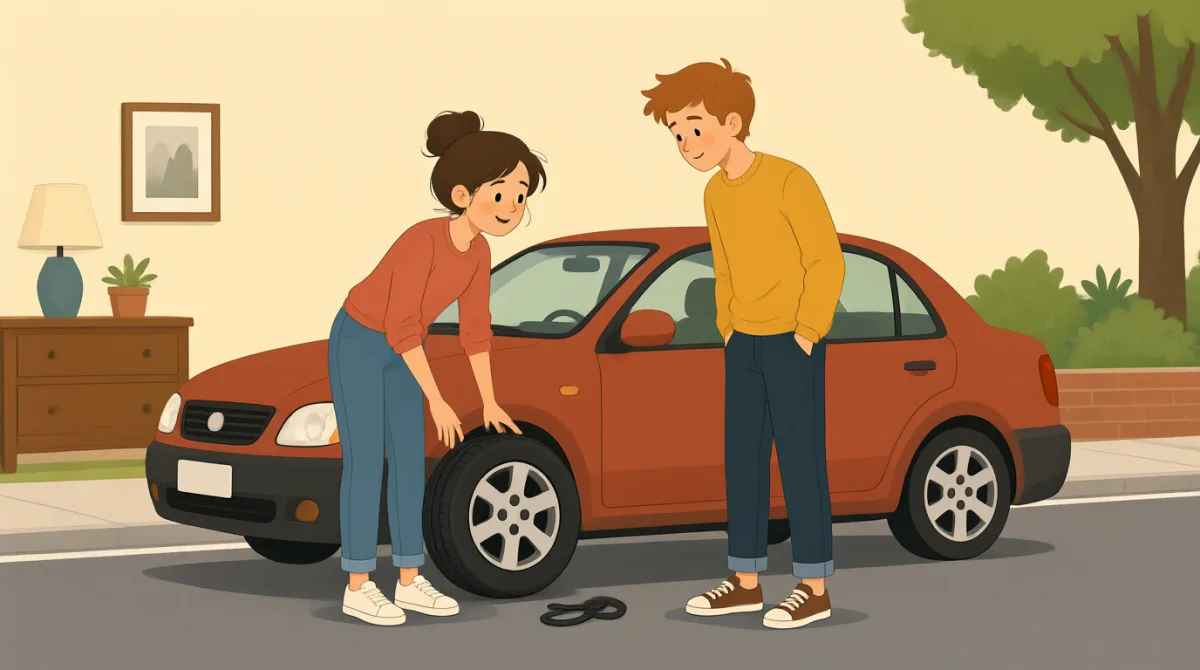

Jack, the car is pulling to the right. Can you check what’s wrong?
जैक, गाड़ी दाईं ओर खिंच रही है। देखोगे कि क्या गड़बड़ है?

Sure. I’ll pull over here, away from traffic. Are you okay?
ज़रूर। मैं यहीं सड़क के किनारे, ट्रैफ़िक से दूर गाड़ी रोकता हूँ। तुम ठीक हो?
I’m fine. The car feels strange, though. Did we hit something?
मैं ठीक हूँ। लेकिन गाड़ी कुछ अजीब लग रही है। क्या हम किसी चीज़ से टकराए?
I don’t think so. Let’s get out and look at the tires.
मुझे नहीं लगता। चलो बाहर निकलकर टायर देखते हैं।
Oh, the back tire is flat! I didn’t notice it before.
अरे, पीछे का टायर पंचर है! मैंने पहले ध्यान नहीं दिया।
Yes, it’s completely flat. We shouldn’t drive on it.
हाँ, इसमें बिल्कुल हवा नहीं है। हमें इस पर गाड़ी नहीं चलानी चाहिए।
Can we change it ourselves, or should we call for help?
क्या हम इसे खुद बदल सकते हैं, या मदद के लिए फ़ोन करना चाहिए?
Let’s check the trunk for a spare tire and the tools first.
पहले डिक्की में अतिरिक्त टायर और औज़ार देखते हैं।
शब्दावली8
- pulling to the rightदाईं ओर खिंचना
This means the car is moving toward the right side by itself. You can use “pulling to the left” to describe a similar problem.
इसका मतलब है कि गाड़ी अपने आप दाईं ओर जाने लगती है। ऐसी ही समस्या बताने के लिए “pulling to the left” भी कह सकते हैं।
- pull overगाड़ी सड़क के किनारे रोकना
To pull over is to move a vehicle to the side of the road and stop. You can say, “Please pull over here.”
“Pull over” का मतलब है गाड़ी को सड़क के किनारे ले जाकर रोकना। आप कह सकते हैं, “Please pull over here.” (कृपया गाड़ी यहीं किनारे रोकिए।)
- what’s wrongक्या गड़बड़ है
This asks what the problem is. You can use it when something seems unusual or is not working.
इसका इस्तेमाल यह पूछने के लिए होता है कि समस्या क्या है। जब कोई चीज़ असामान्य लगे या ठीक से काम न करे, तब आप यह कह सकते हैं।
- get outबाहर निकलना
Here, “get out” means to leave the car. You can also say, “Let’s get out and stretch our legs.”
यहाँ “get out” का मतलब है गाड़ी से बाहर निकलना। आप यह भी कह सकते हैं, “Let’s get out and stretch our legs.” (चलो बाहर निकलकर थोड़ा टहल लें।)
- flatपंचर
A tire is flat when it has lost its air and cannot be used normally. You can say, “The front tire is flat.”
टायर की हवा निकल जाने पर वह पंचर होता है और सामान्य रूप से इस्तेमाल नहीं किया जा सकता। आप कह सकते हैं, “The front tire is flat.” (आगे का टायर पंचर है।)
- call for helpमदद के लिए फ़ोन करना
This means to contact someone who can assist you. You can use it when you need help with a problem or emergency.
इसका मतलब है किसी ऐसे व्यक्ति से संपर्क करना जो आपकी मदद कर सके। किसी समस्या या आपात स्थिति में मदद की ज़रूरत हो, तो आप यह कह सकते हैं।
- spare tireअतिरिक्त टायर
A spare tire is an extra tire kept in a vehicle in case another tire goes flat. You can say, “Let’s check if we have a spare tire.”
अतिरिक्त टायर वह टायर है जिसे गाड़ी में इस स्थिति के लिए रखा जाता है कि कोई दूसरा टायर पंचर हो जाए। आप कह सकते हैं, “Let’s check if we have a spare tire.” (चलो देखते हैं कि हमारे पास अतिरिक्त टायर है या नहीं।)
- trunkडिक्की
The trunk is the storage area at the back of a car. You can say, “Put the bags in the trunk.”
डिक्की गाड़ी के पीछे सामान रखने की जगह होती है। आप कह सकते हैं, “Put the bags in the trunk.” (बैग डिक्की में रख दो।)
मुख्य वाक्य7
- 1
The car is pulling to the right.
गाड़ी दाईं ओर खिंच रही है।
Use this sentence to describe a car that seems to move toward one side. You can replace “right” with “left.”
इस वाक्य का इस्तेमाल तब करें जब गाड़ी एक तरफ़ जाती हुई लगे। आप “right” की जगह “left” कह सकते हैं।
- 2
Can you check what’s wrong?
देखोगे कि क्या गड़बड़ है?
This is a simple way to ask someone to find out what the problem is. Replace “what’s wrong” with the thing you want them to check.
किसी से यह पता लगाने के लिए कहने का यह एक आसान तरीका है कि समस्या क्या है। “what’s wrong” की जगह उस चीज़ का नाम लें जिसकी आप उनसे जाँच करने को कह रहे हैं।
- 3
I’ll pull over here, away from traffic.
मैं यहीं ट्रैफ़िक से दूर गाड़ी रोकता हूँ।
Use this when you are going to stop your car somewhere safe. “I’ll” is a natural way to talk about a quick decision or plan.
जब आप अपनी गाड़ी किसी सुरक्षित जगह पर रोकने वाले हों, तब यह कहें। तुरंत लिया गया फ़ैसला या योजना बताने के लिए “I’ll” बोलना स्वाभाविक है।
- 4
Let’s get out and look at the tires.
चलो बाहर निकलकर टायर देखते हैं।
This suggests doing two actions together: leaving the car and checking the tires. You can use “Let’s get out and…” to suggest another activity.
इससे एक साथ दो काम करने का सुझाव मिलता है: गाड़ी से बाहर निकलना और टायरों की जाँच करना। किसी दूसरी गतिविधि का सुझाव देने के लिए “Let’s get out and…” का इस्तेमाल कर सकते हैं।
- 5
We shouldn’t drive on it.
हमें इस पर गाड़ी नहीं चलानी चाहिए।
Use “shouldn’t” to say that something is not a good or safe idea. Replace “drive on it” with another action to give advice.
किसी काम को गलत या असुरक्षित बताने के लिए “shouldn’t” का इस्तेमाल करें। सलाह देने के लिए “drive on it” की जगह कोई दूसरी कार्रवाई रख सकते हैं।
- 6
Can we change it ourselves, or should we call for help?
क्या हम इसे खुद बदल सकते हैं, या मदद के लिए फ़ोन करना चाहिए?
This asks about two possible ways to solve a problem. You can use “Can we… or should we…?” to compare doing something yourself with asking for help.
इसमें किसी समस्या को हल करने के दो तरीकों के बारे में पूछा गया है। खुद कुछ करने और मदद माँगने की तुलना करने के लिए “Can we… or should we…?” का इस्तेमाल कर सकते हैं।
- 7
Let’s check the trunk for a spare tire and the tools first.
पहले डिक्की में अतिरिक्त टायर और औज़ार देखते हैं।
Use this to suggest checking a place for items you need. Replace “the trunk” and “a spare tire and the tools” with other places and things.
ज़रूरी चीज़ें ढूँढ़ने के लिए किसी जगह की जाँच करने का सुझाव देने हेतु यह कहें। “the trunk” और “a spare tire and the tools” की जगह कोई दूसरी जगह और चीज़ें रख सकते हैं।