Noticing the Flat Tire
Zauważenie przebitej opony
Emma and Jack notice a flat tire while getting ready to drive. They pull over and check the car.
Emma i Jack zauważają przebitą oponę, gdy szykują się do jazdy. Zjeżdżają na pobocze i sprawdzają samochód.
Dialog8
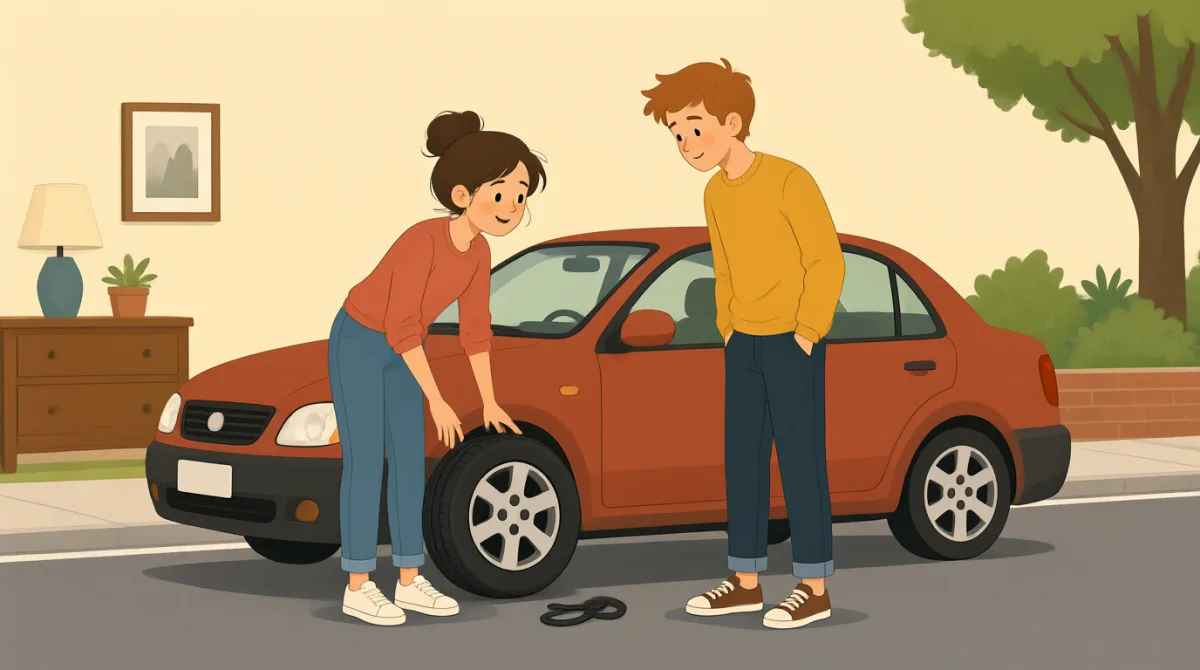

Jack, the car is pulling to the right. Can you check what’s wrong?
Jack, samochód ściąga w prawo. Możesz sprawdzić, co się dzieje?

Sure. I’ll pull over here, away from traffic. Are you okay?
Jasne. Zjadę tutaj na pobocze, z dala od ruchu. Wszystko w porządku?
I’m fine. The car feels strange, though. Did we hit something?
Wszystko dobrze. Tylko samochód dziwnie się prowadzi. Uderzyliśmy w coś?
I don’t think so. Let’s get out and look at the tires.
Chyba nie. Wysiądźmy i obejrzyjmy opony.
Oh, the back tire is flat! I didn’t notice it before.
O, tylna opona jest przebita! Wcześniej tego nie zauważyłam.
Yes, it’s completely flat. We shouldn’t drive on it.
Tak, całkiem zeszło z niej powietrze. Nie powinniśmy na niej jechać.
Can we change it ourselves, or should we call for help?
Możemy sami ją wymienić czy powinniśmy wezwać pomoc?
Let’s check the trunk for a spare tire and the tools first.
Najpierw sprawdźmy w bagażniku, czy jest koło zapasowe i narzędzia.
Słownictwo8
- pulling to the rightściągać w prawo
This means the car is moving toward the right side by itself. You can use “pulling to the left” to describe a similar problem.
To znaczy, że samochód sam zjeżdża w prawą stronę. Podobny problem opiszesz, mówiąc „pulling to the left” (ściągać w lewo).
- pull overzjechać na pobocze
To pull over is to move a vehicle to the side of the road and stop. You can say, “Please pull over here.”
„Pull over” znaczy zjechać samochodem na pobocze i się zatrzymać. Możesz powiedzieć: „Please pull over here” (Proszę tutaj zjechać na pobocze).
- what’s wrongco się dzieje
This asks what the problem is. You can use it when something seems unusual or is not working.
Tym pytaniem prosisz o wyjaśnienie, na czym polega problem. Możesz go użyć, gdy coś wydaje się nietypowe albo nie działa.
- get outwysiąść
Here, “get out” means to leave the car. You can also say, “Let’s get out and stretch our legs.”
W tym kontekście „get out” znaczy opuścić samochód. Możesz też powiedzieć: „Let’s get out and stretch our legs” (Wysiądźmy i rozprostujmy nogi).
- flatprzebity
A tire is flat when it has lost its air and cannot be used normally. You can say, “The front tire is flat.”
Opona jest „flat”, gdy zeszło z niej powietrze i nie da się jej normalnie używać. Możesz powiedzieć: „The front tire is flat” (Przednia opona jest przebita).
- call for helpwezwać pomoc
This means to contact someone who can assist you. You can use it when you need help with a problem or emergency.
„Call for help” znaczy skontaktować się z kimś, kto może ci pomóc. Możesz użyć tego wyrażenia, gdy potrzebujesz pomocy w rozwiązaniu problemu albo w nagłej sytuacji.
- spare tirekoło zapasowe
A spare tire is an extra tire kept in a vehicle in case another tire goes flat. You can say, “Let’s check if we have a spare tire.”
„Spare tire” to dodatkowe koło trzymane w samochodzie na wypadek, gdyby inna opona się przebiła. Możesz powiedzieć: „Let’s check if we have a spare tire” (Sprawdźmy, czy mamy koło zapasowe).
- trunkbagażnik
The trunk is the storage area at the back of a car. You can say, “Put the bags in the trunk.”
„Trunk” to przestrzeń bagażowa z tyłu samochodu. Możesz powiedzieć: „Put the bags in the trunk” (Włóż torby do bagażnika).
Kluczowe zdania7
- 1
The car is pulling to the right.
Samochód ściąga w prawo.
Use this sentence to describe a car that seems to move toward one side. You can replace “right” with “left.”
Użyj tego zdania, żeby opisać samochód, który zdaje się zjeżdżać na jedną stronę. Możesz zamienić „right” na „left”.
- 2
Can you check what’s wrong?
Możesz sprawdzić, co się dzieje?
This is a simple way to ask someone to find out what the problem is. Replace “what’s wrong” with the thing you want them to check.
To prosty sposób, by poprosić kogoś o sprawdzenie, na czym polega problem. Zamiast „what’s wrong” możesz wstawić to, co chcesz, żeby ta osoba sprawdziła.
- 3
I’ll pull over here, away from traffic.
Zjadę tutaj na pobocze, z dala od ruchu.
Use this when you are going to stop your car somewhere safe. “I’ll” is a natural way to talk about a quick decision or plan.
Użyj tego zdania, gdy zamierzasz bezpiecznie zatrzymać samochód. „I’ll” to naturalny sposób, by powiedzieć o szybkiej decyzji lub planie.
- 4
Let’s get out and look at the tires.
Wysiądźmy i obejrzyjmy opony.
This suggests doing two actions together: leaving the car and checking the tires. You can use “Let’s get out and…” to suggest another activity.
To propozycja wykonania dwóch czynności razem: opuszczenia samochodu i sprawdzenia opon. Możesz użyć „Let’s get out and…”, żeby zaproponować inną czynność.
- 5
We shouldn’t drive on it.
Nie powinniśmy na niej jechać.
Use “shouldn’t” to say that something is not a good or safe idea. Replace “drive on it” with another action to give advice.
Użyj „shouldn’t”, żeby powiedzieć, że coś nie jest dobrym ani bezpiecznym pomysłem. Zastąp „drive on it” inną czynnością, jeśli chcesz komuś jej odradzić.
- 6
Can we change it ourselves, or should we call for help?
Możemy sami ją wymienić czy powinniśmy wezwać pomoc?
This asks about two possible ways to solve a problem. You can use “Can we… or should we…?” to compare doing something yourself with asking for help.
To pytanie o dwa możliwe sposoby rozwiązania problemu. Możesz użyć „Can we… or should we…?”, żeby porównać samodzielne działanie z poproszeniem o pomoc.
- 7
Let’s check the trunk for a spare tire and the tools first.
Najpierw sprawdźmy w bagażniku, czy jest koło zapasowe i narzędzia.
Use this to suggest checking a place for items you need. Replace “the trunk” and “a spare tire and the tools” with other places and things.
Użyj tego zdania, żeby zaproponować sprawdzenie, czy potrzebne rzeczy znajdują się w jakimś miejscu. Zastąp „the trunk” oraz „a spare tire and the tools” innym miejscem i innymi rzeczami.