Calling the Plumber
โทรหาช่างประปา
Jack calls plumber David and describes the leak. David asks a few simple questions to understand the problem.
แจ็กโทรหาช่างประปาชื่อเดวิดและอธิบายว่ามีน้ำรั่ว เดวิดถามคำถามง่าย ๆ สองสามข้อเพื่อทำความเข้าใจปัญหา
บทสนทนา9
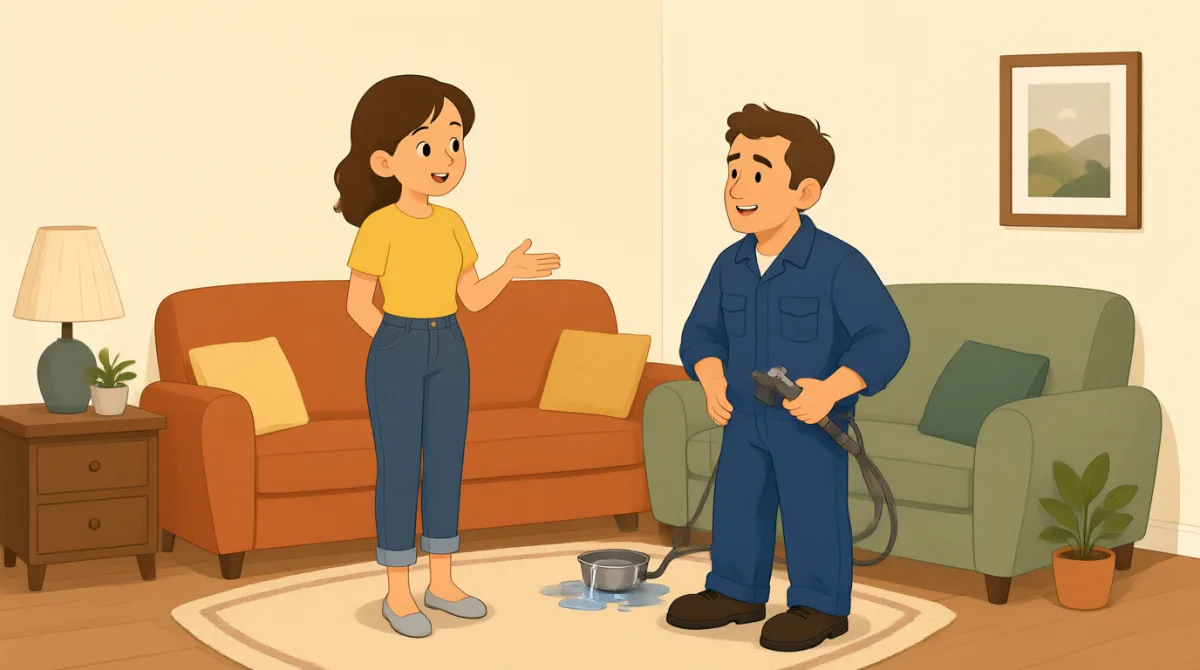

Hi, David. I’m calling about a leak under my kitchen sink.
สวัสดี เดวิด ผมโทรมาเรื่องน้ำรั่วใต้ซิงก์ในครัวครับ

I can help. When did you first notice the leak?
ผมช่วยได้ครับ คุณเพิ่งสังเกตเห็นน้ำรั่วครั้งแรกเมื่อไหร่ครับ
I saw water on the floor this morning. It’s still leaking.
เช้านี้ผมเห็นน้ำอยู่บนพื้นครับ ยังรั่วอยู่เลย
Is the water coming from a pipe or the sink itself?
น้ำรั่วมาจากท่อหรือจากตัวซิงก์เองครับ
I’m not sure. It looks like it’s coming from a pipe.
ผมไม่แน่ใจครับ ดูเหมือนว่าจะมาจากท่อ
Is it a small leak, or is a lot of water coming out?
รั่วนิดหน่อย หรือมีน้ำไหลออกมาเยอะครับ
It’s a small leak, but the cabinet is getting wet.
รั่วนิดหน่อยครับ แต่ตู้ใต้ซิงก์เริ่มเปียกแล้ว
Can you turn off the water under the sink for now?
ตอนนี้คุณปิดน้ำใต้ซิงก์ไว้ก่อนได้ไหมครับ
Yes, I can. I’ll turn it off now. Can you come take a look?
ได้ครับ เดี๋ยวผมปิดน้ำเลย คุณแวะมาดูให้หน่อยได้ไหมครับ
คำศัพท์8
- a leakน้ำรั่ว
A leak is water that escapes from a pipe or another place. Here, water is coming from under the kitchen sink.
“a leak” คือการที่น้ำรั่วออกมาจากท่อหรือที่อื่น ในบทสนทนานี้ น้ำรั่วออกมาจากใต้ซิงก์ในครัว
- under my kitchen sinkใต้ซิงก์ในครัวของฉัน
This phrase tells where the leak is. Use “under my [place]” to describe a location below something.
วลี “under my kitchen sink” ใช้บอกตำแหน่งที่น้ำรั่ว ใช้ “under my [place]” เพื่อบอกว่าสิ่งหนึ่งอยู่ข้างใต้สถานที่หรือสิ่งของนั้น
- notice the leakสังเกตเห็นน้ำรั่ว
To notice something means to see or become aware of it. Use “When did you first notice…?” to ask when someone became aware of a problem.
“notice” หมายถึงเห็นหรือรับรู้บางสิ่ง ใช้ “When did you first notice…?” เพื่อถามว่าอีกฝ่ายเริ่มรู้ตัวว่ามีปัญหาเมื่อไหร่
- on the floorบนพื้น
This phrase describes where the water was. Use “on the floor” to talk about something lying or spilling on a floor.
วลี “on the floor” บอกว่าน้ำอยู่ตรงไหน ใช้พูดถึงสิ่งที่วางอยู่หรือหกอยู่บนพื้น
- coming from a pipeมาจากท่อ
This phrase describes the source of the water. You can use “coming from” to say where something is coming from.
วลี “coming from a pipe” ใช้บอกแหล่งที่มาของน้ำ คุณใช้ “coming from” เพื่อบอกว่าสิ่งหนึ่งมาจากที่ไหน
- a small leakน้ำรั่วเล็กน้อย
A small leak means only a little water is escaping. Use “small” to describe a problem that is not serious or large.
“a small leak” หมายถึงมีน้ำรั่วออกมาเพียงเล็กน้อย ใช้ “small” บรรยายปัญหาที่ไม่ร้ายแรงหรือไม่ใหญ่
- turn off the waterปิดน้ำ
To turn off the water means to stop it from flowing. Use “turn off” with a device or supply that can be stopped.
“turn off the water” หมายถึงหยุดไม่ให้น้ำไหล ใช้ “turn off” กับอุปกรณ์หรือระบบจ่ายสิ่งต่าง ๆ ที่สามารถปิดได้
- take a lookแวะมาดู
To take a look means to examine or check something. You can ask someone to “take a look” when you want them to inspect a problem.
“take a look” หมายถึงตรวจดูหรือเช็กบางสิ่ง คุณขอให้ใคร “take a look” ได้เมื่อต้องการให้เขามาตรวจดูปัญหา
ประโยคสำคัญ8
- 1
I’m calling about a leak under my kitchen sink.
ผมโทรมาเรื่องน้ำรั่วใต้ซิงก์ในครัวครับ
This is a clear way to explain why you are calling. Replace “a leak under my kitchen sink” with the problem you need help with.
ประโยคนี้เป็นวิธีบอกเหตุผลที่โทรมาอย่างชัดเจน เปลี่ยน “a leak under my kitchen sink” เป็นปัญหาที่คุณต้องการความช่วยเหลือได้
- 2
When did you first notice the leak?
คุณเพิ่งสังเกตเห็นน้ำรั่วครั้งแรกเมื่อไหร่ครับ
This question asks when someone first became aware of a problem. You can use “When did you first notice…?” to ask about other issues too.
คำถามนี้ถามว่าอีกฝ่ายเริ่มรู้ตัวว่ามีปัญหาเมื่อไหร่ คุณใช้ “When did you first notice…?” ถามเกี่ยวกับปัญหาอื่น ๆ ได้เช่นกัน
- 3
I saw water on the floor this morning.
เช้านี้ผมเห็นน้ำอยู่บนพื้นครับ
This sentence describes what you saw and when you saw it. Use “I saw [something] [time]” to report what happened.
ประโยคนี้บอกว่าคุณเห็นอะไรและเห็นเมื่อไหร่ ใช้ “I saw [something] [time]” เพื่อเล่าว่าเกิดอะไรขึ้น
- 4
Is the water coming from a pipe or the sink itself?
น้ำรั่วมาจากท่อหรือจากตัวซิงก์เองครับ
This question asks someone to choose between two possible sources. Use “Is it coming from… or…?” when trying to identify a problem.
คำถามนี้ขอให้อีกฝ่ายเลือกระหว่างแหล่งที่มาได้สองอย่าง ใช้ “Is it coming from… or…?” เมื่อต้องการหาสาเหตุของปัญหา
- 5
I’m not sure.
ผมไม่แน่ใจครับ
This is a simple way to say you do not know the answer. You can use it before giving your best guess or asking for help.
นี่เป็นวิธีง่าย ๆ ในการบอกว่าคุณไม่รู้คำตอบ คุณพูดประโยคนี้ก่อนจะลองเดาคำตอบหรือขอความช่วยเหลือก็ได้
- 6
It’s a small leak, but the cabinet is getting wet.
น้ำรั่วนิดหน่อยครับ แต่ตู้ใต้ซิงก์เริ่มเปียกแล้ว
This sentence describes the problem and adds a detail with “but.” Use “It’s…, but…” to explain a contrast.
ประโยคนี้บอกปัญหาและเพิ่มรายละเอียดด้วย “but” ใช้ “It’s…, but…” เพื่ออธิบายสิ่งที่ขัดแย้งหรือแตกต่างกัน
- 7
Can you turn off the water under the sink for now?
ตอนนี้คุณปิดน้ำใต้ซิงก์ไว้ก่อนได้ไหมครับ
This is a polite way to ask someone to stop the water temporarily. Use “Can you… for now?” to request a short-term action.
นี่เป็นวิธีสุภาพในการขอให้อีกฝ่ายหยุดน้ำไหลชั่วคราว ใช้ “Can you… for now?” เพื่อขอให้ทำอะไรบางอย่างในช่วงสั้น ๆ
- 8
Can you come take a look?
คุณแวะมาดูให้หน่อยได้ไหมครับ
This is a natural way to ask someone to come and check a problem. Use “Can you come take a look?” when you need someone to inspect something.
นี่เป็นวิธีพูดที่เป็นธรรมชาติในการขอให้ใครสักคนมาช่วยตรวจดูปัญหา ใช้ “Can you come take a look?” เมื่อต้องการให้ใครมาตรวจดูบางสิ่ง