Falling Down
Caindo
Emma falls while practicing on a gentle slope. Grace calmly shows her how to get back up and try again.
Emma cai enquanto pratica em uma encosta suave. Grace mostra com calma como se levantar e tentar de novo.
Diálogo8
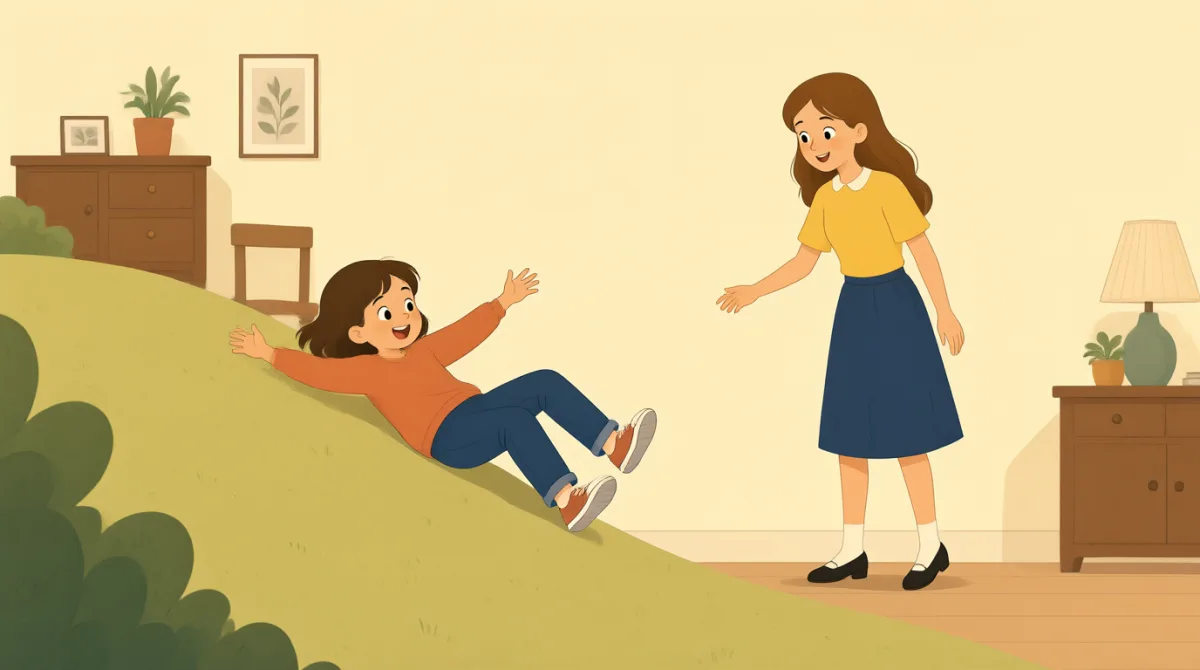

Oh! I fell down. I can't get up with my skis on.
Ah! Caí. Não consigo me levantar com os esquis nos pés.

It's okay, Emma. Stay calm. We'll get you back up.
Tudo bem, Emma. Calma. Vou ajudar você a se levantar.
Should I take my skis off first?
Devo tirar os esquis primeiro?
No, keep them on. Turn onto your side and point your skis across the slope.
Não, deixe-os nos pés. Vire de lado e aponte os esquis atravessados na encosta.
All right. My legs feel a little tangled.
Está bem. Minhas pernas estão meio enroladas.
Move your skis apart. Put your hands in the snow, then push yourself up.
Afaste os esquis. Apoie as mãos na neve e depois empurre o corpo para cima.
I did it! That was harder than I thought.
Consegui! Foi mais difícil do que eu pensei.
You did great. Take a breath, then try the slope again when you're ready.
Você foi muito bem. Respire fundo e tente descer a encosta de novo quando estiver pronta.
Vocabulário7
- fell downcair
This means you dropped to the ground. Use it to describe a fall that happened in the past.
Significa cair no chão. Use essa expressão para descrever uma queda que aconteceu no passado.
- get uplevantar-se
This means to move from the ground to a standing position. You can use it after a fall or when you wake up.
Significa sair do chão e ficar em pé. Você pode usar essa expressão depois de uma queda ou ao acordar.
- stay calmmanter a calma
This means to remain relaxed and not panic. It is useful advice in a difficult or surprising situation.
Significa continuar tranquila e não entrar em pânico. É um conselho útil em situações difíceis ou inesperadas.
- turn onto your sidevirar de lado
This means to roll your body so that one side faces the ground. It is a simple instruction for changing your position.
Significa girar o corpo para que um dos lados fique voltado para o chão. É uma instrução simples para mudar de posição.
- across the slopeatravessada na encosta
This means from one side of the hill to the other, rather than straight down. It describes the direction to point your skis.
Significa ir de um lado ao outro da encosta, em vez de descer em linha reta. A expressão descreve a direção para a qual apontar os esquis.
- push yourself upempurrar o corpo para cima
This means to use your arms and body to rise from the ground. You can use it when you need to stand up after falling.
Significa usar os braços e o corpo para se levantar do chão. Você pode usar essa expressão quando precisar ficar de pé depois de cair.
- when you're readyquando estiver pronto(a)
This means when you feel prepared to do something. It is a gentle way to let someone choose when to begin.
Significa quando você se sentir preparado para fazer alguma coisa. É uma maneira gentil de deixar a pessoa escolher quando começar.
Frases-chave7
- 1
I can't get up with my skis on.
Não consigo me levantar com os esquis nos pés.
Use this to explain that you cannot stand while wearing or carrying something. Replace “my skis” with another item to describe your situation.
Use esta frase para explicar que você não consegue ficar de pé enquanto está usando ou carregando alguma coisa. Troque “my skis” por outro item para descrever a sua situação.
- 2
Stay calm.
Mantenha a calma.
This is a short way to tell someone not to panic. You can use it to comfort someone in a stressful moment.
Esta é uma forma breve de dizer a alguém para não entrar em pânico. Você pode usá-la para tranquilizar alguém em um momento estressante.
- 3
Should I take my skis off first?
Devo tirar os esquis primeiro?
Use “Should I...?” to ask for advice about what to do. Replace “take my skis off” with another action to ask about the best next step.
Use “Should I...?” para pedir conselho sobre o que fazer. Troque “take my skis off” por outra ação para perguntar qual é o melhor próximo passo.
- 4
Turn onto your side and point your skis across the slope.
Vire de lado e aponte os esquis atravessados na encosta.
This sentence gives two clear instructions. You can use “Turn onto...” and “point...” to explain how to move or position something.
Esta frase dá duas instruções claras. Você pode usar “Turn onto...” e “point...” para explicar como se mover ou posicionar alguma coisa.
- 5
Put your hands in the snow, then push yourself up.
Apoie as mãos na neve e depois empurre o corpo para cima.
Use “Put..., then...” to give steps in order. You can replace “your hands” and “the snow” with other body parts and places.
Use “Put..., then...” para dar instruções em ordem. Você pode substituir “your hands” e “the snow” por outras partes do corpo e lugares.
- 6
I did it!
Consegui!
This is a happy way to say you completed something difficult. Use it after finishing a task or trying something new.
Esta é uma forma alegre de dizer que você conseguiu fazer algo difícil. Use-a depois de terminar uma tarefa ou experimentar algo novo.
- 7
Take a breath, then try the slope again when you're ready.
Respire fundo e tente descer a encosta de novo quando estiver pronta.
This gives gentle advice to pause before trying again. You can use “Take a breath, then...” to encourage someone to continue at their own pace.
Esta frase dá um conselho gentil: fazer uma pausa antes de tentar de novo. Você pode usar “Take a breath, then...” para incentivar alguém a continuar no próprio ritmo.