Falling Down
ล้มลง
Emma falls while practicing on a gentle slope. Grace calmly shows her how to get back up and try again.
เอ็มมาล้มขณะฝึกเล่นสกีบนเนินลาดชันไม่มาก เกรซใจเย็นและสอนวิธีลุกขึ้นมาแล้วลองใหม่อีกครั้ง
บทสนทนา8
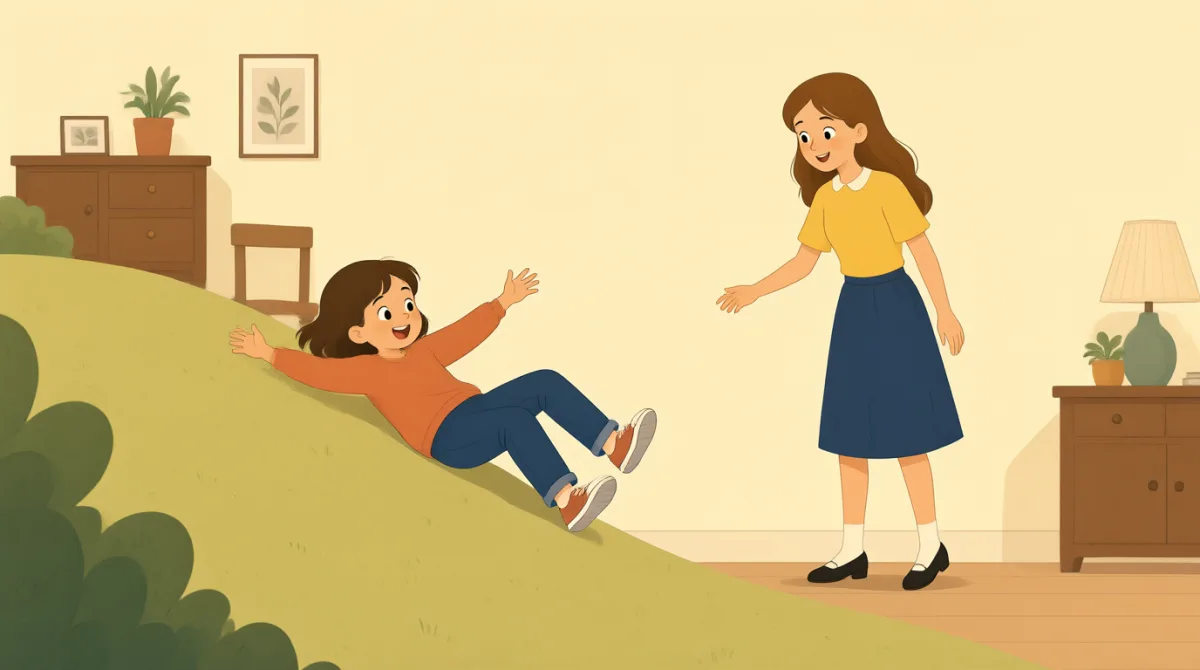

Oh! I fell down. I can't get up with my skis on.
โอ๊ย! ฉันล้มแล้ว ลุกขึ้นทั้งที่ใส่สกีอยู่ไม่ได้เลย

It's okay, Emma. Stay calm. We'll get you back up.
ไม่เป็นไรนะ เอ็มมา ใจเย็น ๆ เดี๋ยวฉันช่วยพยุงให้ลุกขึ้น
Should I take my skis off first?
ฉันควรถอดสกีก่อนมั้ย
No, keep them on. Turn onto your side and point your skis across the slope.
ไม่ต้อง ใส่ไว้ก่อน พลิกตัวตะแคง แล้วหันสกีขวางเนินไว้
All right. My legs feel a little tangled.
ได้เลย ขาฉันพันกันนิดหน่อย
Move your skis apart. Put your hands in the snow, then push yourself up.
แยกสกีออกจากกัน วางมือลงบนหิมะ แล้วดันตัวลุกขึ้น
I did it! That was harder than I thought.
ทำได้แล้ว! ยากกว่าที่คิดแฮะ
You did great. Take a breath, then try the slope again when you're ready.
ทำได้ดีมาก พักหายใจสักหน่อย แล้วค่อยลองไถลงเนินอีกครั้งตอนที่พร้อมนะ
คำศัพท์7
- fell downล้มลง
This means you dropped to the ground. Use it to describe a fall that happened in the past.
หมายถึงล้มลงไปกับพื้น ใช้พูดถึงการล้มที่เกิดขึ้นไปแล้ว
- get upลุกขึ้น
This means to move from the ground to a standing position. You can use it after a fall or when you wake up.
หมายถึงขยับตัวจากพื้นขึ้นมายืน ใช้ได้ทั้งหลังจากล้ม หรือหลังจากตื่นนอน
- stay calmใจเย็น ๆ
This means to remain relaxed and not panic. It is useful advice in a difficult or surprising situation.
หมายถึงทำใจให้สงบและไม่ตื่นตระหนก เป็นคำแนะนำที่มีประโยชน์เมื่อเจอสถานการณ์ยากลำบากหรือไม่คาดคิด
- turn onto your sideพลิกตัวตะแคง
This means to roll your body so that one side faces the ground. It is a simple instruction for changing your position.
หมายถึงพลิกตัวให้ด้านข้างด้านหนึ่งหันลงพื้น เป็นคำสั่งง่าย ๆ ที่ใช้บอกให้เปลี่ยนท่าทาง
- across the slopeขวางเนิน
This means from one side of the hill to the other, rather than straight down. It describes the direction to point your skis.
หมายถึงจากด้านหนึ่งของเนินไปยังอีกด้านหนึ่ง ไม่ใช่ตรงลงไปตามเนิน ใช้บอกทิศทางที่ควรหันสกี
- push yourself upดันตัวลุกขึ้น
This means to use your arms and body to rise from the ground. You can use it when you need to stand up after falling.
หมายถึงใช้แขนและลำตัวดันตัวให้ลุกจากพื้น ใช้ได้เมื่อต้องลุกขึ้นหลังจากล้ม
- when you're readyตอนที่พร้อม
This means when you feel prepared to do something. It is a gentle way to let someone choose when to begin.
หมายถึงตอนที่รู้สึกว่าพร้อมจะทำอะไรบางอย่าง เป็นวิธีพูดอย่างอ่อนโยน ให้อีกฝ่ายเลือกได้ว่าจะเริ่มเมื่อไหร่
ประโยคสำคัญ7
- 1
I can't get up with my skis on.
ฉันลุกขึ้นทั้งที่ใส่สกีอยู่ไม่ได้เลย
Use this to explain that you cannot stand while wearing or carrying something. Replace “my skis” with another item to describe your situation.
ใช้ประโยคนี้อธิบายว่าคุณยืนขึ้นไม่ได้ขณะที่สวมใส่หรือถือของบางอย่างอยู่ ลองเปลี่ยน “my skis” เป็นสิ่งของอื่นเพื่อบอกสถานการณ์ของตัวเอง
- 2
Stay calm.
ใจเย็น ๆ
This is a short way to tell someone not to panic. You can use it to comfort someone in a stressful moment.
นี่เป็นวิธีพูดสั้น ๆ เพื่อบอกใครสักคนว่าอย่าตื่นตระหนก ใช้ปลอบใจคนที่กำลังเครียดได้
- 3
Should I take my skis off first?
ฉันควรถอดสกีก่อนมั้ย
Use “Should I...?” to ask for advice about what to do. Replace “take my skis off” with another action to ask about the best next step.
ใช้ “Should I...?” เพื่อขอคำแนะนำว่าควรทำอะไร ลองเปลี่ยน “take my skis off” เป็นการกระทำอย่างอื่น เพื่อถามว่าควรทำอะไรต่อไป
- 4
Turn onto your side and point your skis across the slope.
พลิกตัวตะแคง แล้วหันสกีขวางเนินไว้
This sentence gives two clear instructions. You can use “Turn onto...” and “point...” to explain how to move or position something.
ประโยคนี้บอกขั้นตอนที่ชัดเจนสองอย่าง ใช้ “Turn onto...” และ “point...” เพื่ออธิบายวิธีขยับหรือจัดวางสิ่งของ
- 5
Put your hands in the snow, then push yourself up.
วางมือลงบนหิมะ แล้วดันตัวลุกขึ้น
Use “Put..., then...” to give steps in order. You can replace “your hands” and “the snow” with other body parts and places.
ใช้ “Put..., then...” เพื่อบอกขั้นตอนตามลำดับ ลองเปลี่ยน “your hands” และ “the snow” เป็นส่วนอื่นของร่างกายและสถานที่อื่นได้
- 6
I did it!
ทำได้แล้ว!
This is a happy way to say you completed something difficult. Use it after finishing a task or trying something new.
นี่เป็นวิธีพูดอย่างดีใจว่าคุณทำสิ่งที่ยากสำเร็จแล้ว ใช้หลังทำงานเสร็จหรือลองทำสิ่งใหม่
- 7
Take a breath, then try the slope again when you're ready.
พักหายใจสักหน่อย แล้วค่อยลองไถลงเนินอีกครั้งตอนที่พร้อม
This gives gentle advice to pause before trying again. You can use “Take a breath, then...” to encourage someone to continue at their own pace.
ประโยคนี้ให้คำแนะนำอย่างอ่อนโยนว่าให้พักก่อนลองอีกครั้ง ใช้ “Take a breath, then...” เพื่อให้กำลังใจใครสักคนให้ทำต่อไปตามจังหวะของตัวเอง