Falling Down
摔倒了
Emma falls while practicing on a gentle slope. Grace calmly shows her how to get back up and try again.
艾瑪在緩坡上練習時摔倒了。格蕾絲耐心地教她如何站起來再試一次。
對話8
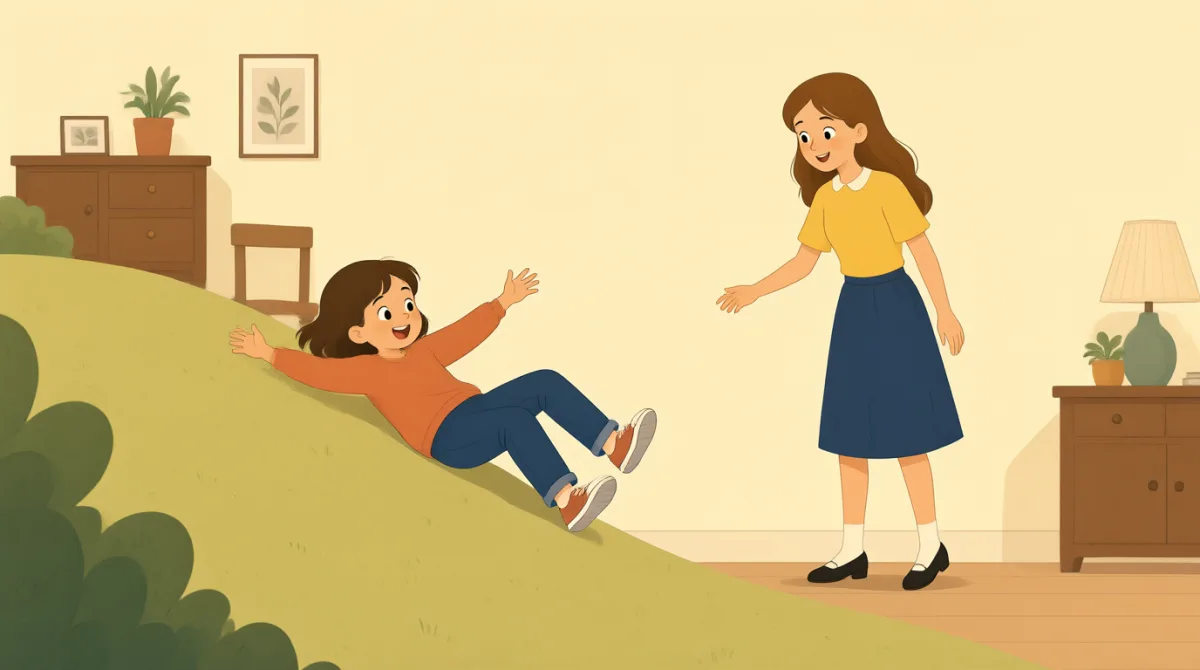

Oh! I fell down. I can't get up with my skis on.
哦!我摔倒了。穿著滑雪板,我站不起來。

It's okay, Emma. Stay calm. We'll get you back up.
沒關係,Emma。彆著急,我們會幫你站起來。
Should I take my skis off first?
我應該先把滑雪板脫下來嗎?
No, keep them on. Turn onto your side and point your skis across the slope.
不用,先穿著。側過身來,讓滑雪板橫著對著坡面。
All right. My legs feel a little tangled.
好。我的腿感覺有點纏在一起了。
Move your skis apart. Put your hands in the snow, then push yourself up.
把滑雪板分開。雙手撐在雪地上,然後把自己推起來。
I did it! That was harder than I thought.
我站起來了!這比我想的難。
You did great. Take a breath, then try the slope again when you're ready.
你做得很好。先深呼吸,準備好了就再試一次。
詞彙7
- fell down摔倒了
This means you dropped to the ground. Use it to describe a fall that happened in the past.
這表示你摔到了地上。用它來描述過去發生的摔倒。
- get up站起來
This means to move from the ground to a standing position. You can use it after a fall or when you wake up.
這表示從地上起身站立。摔倒後或睡醒後都可以用這個短語。
- stay calm保持冷靜
This means to remain relaxed and not panic. It is useful advice in a difficult or surprising situation.
這表示保持放鬆,不要慌張。在遇到困難或意外情況時,這是一句很有用的建議。
- turn onto your side側過身來
This means to roll your body so that one side faces the ground. It is a simple instruction for changing your position.
這表示翻轉身體,讓身體的一側朝向地面。這是一條簡單的指示,告訴別人如何改變姿勢。
- across the slope橫著對著坡面
This means from one side of the hill to the other, rather than straight down. It describes the direction to point your skis.
這表示從山坡的一側朝向另一側,而不是沿著坡面直直向下。它描述了滑雪板應該指向的方向。
- push yourself up把自己撐起來
This means to use your arms and body to rise from the ground. You can use it when you need to stand up after falling.
這表示用手臂和身體的力量從地上撐起身子。摔倒後需要站起來時可以用這個短語。
- when you're ready等你準備好了
This means when you feel prepared to do something. It is a gentle way to let someone choose when to begin.
這表示等到你覺得自己準備好做某件事時再開始。這是一種溫和的說法,讓對方自己決定什麼時候開始。
關鍵句7
- 1
I can't get up with my skis on.
穿著滑雪板,我站不起來。
Use this to explain that you cannot stand while wearing or carrying something. Replace “my skis” with another item to describe your situation.
用這句話說明穿著或拿著某樣東西時,你沒法站起來。把 “my skis” 換成其他物品,就可以描述自己的情況。
- 2
Stay calm.
保持冷靜。
This is a short way to tell someone not to panic. You can use it to comfort someone in a stressful moment.
這是一種簡短的說法,告訴別人不要慌張。在對方感到緊張時,可以用它來安慰對方。
- 3
Should I take my skis off first?
我應該先把滑雪板脫下來嗎?
Use “Should I...?” to ask for advice about what to do. Replace “take my skis off” with another action to ask about the best next step.
用 “Should I...?” 來徵求該怎麼做的建議。把 “take my skis off” 換成其他動作,就可以詢問下一步最好怎麼做。
- 4
Turn onto your side and point your skis across the slope.
側過身來,讓滑雪板橫著對著坡面。
This sentence gives two clear instructions. You can use “Turn onto...” and “point...” to explain how to move or position something.
這句話給出了兩條清楚的指示。你可以用 “Turn onto...” 和 “point...” 來說明怎樣移動或擺放某樣東西。
- 5
Put your hands in the snow, then push yourself up.
雙手撐在雪地上,然後把自己撐起來。
Use “Put..., then...” to give steps in order. You can replace “your hands” and “the snow” with other body parts and places.
用 “Put..., then...” 按順序說明步驟。你可以把 “your hands” 和 “the snow” 換成其他身體部位和地點。
- 6
I did it!
我做到了!
This is a happy way to say you completed something difficult. Use it after finishing a task or trying something new.
這是一種開心地表示自己完成了困難事情的說法。完成一項任務或嘗試新事物後都可以用它。
- 7
Take a breath, then try the slope again when you're ready.
深呼吸,準備好了就再試一次滑下坡。
This gives gentle advice to pause before trying again. You can use “Take a breath, then...” to encourage someone to continue at their own pace.
這句話溫和地建議對方先停下來歇一歇,再繼續嘗試。你可以用 “Take a breath, then...” 鼓勵別人按照自己的節奏繼續。