Falling Down
Caerse
Emma falls while practicing on a gentle slope. Grace calmly shows her how to get back up and try again.
Emma se cae mientras practica en una pendiente suave. Grace le muestra con calma cómo levantarse y volver a intentarlo.
Diálogo8
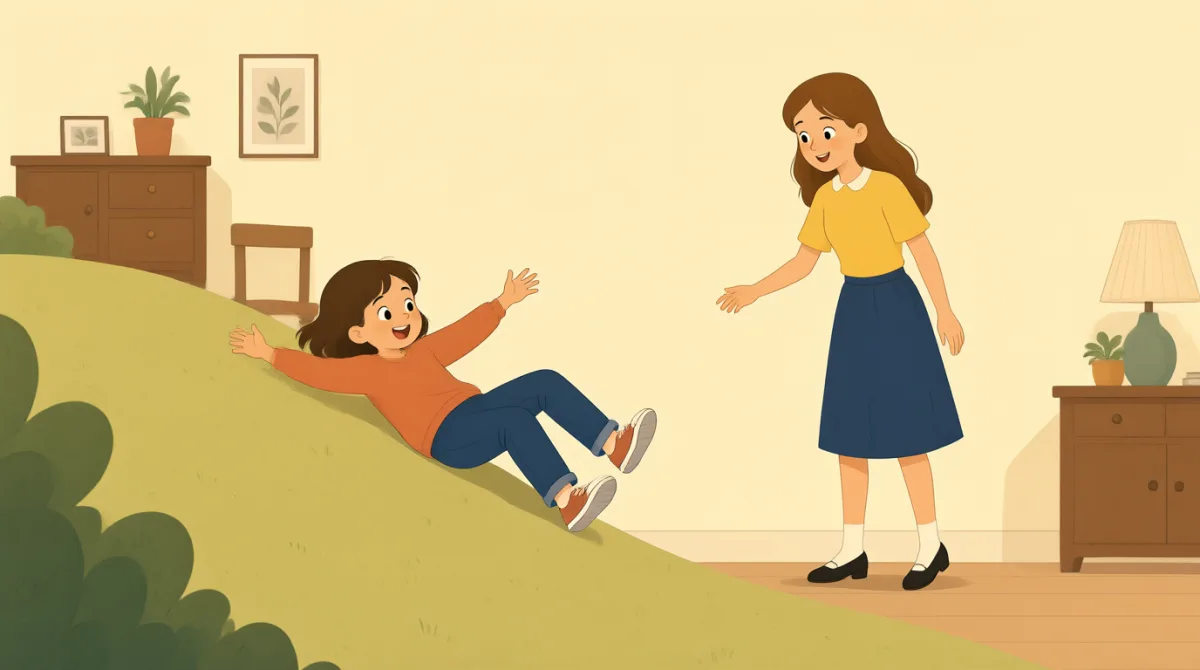

Oh! I fell down. I can't get up with my skis on.
¡Oh! Me caí. No puedo levantarme con los esquís puestos.

It's okay, Emma. Stay calm. We'll get you back up.
No pasa nada, Emma. Mantén la calma. Te ayudaremos a levantarte.
Should I take my skis off first?
¿Debería quitarme los esquís primero?
No, keep them on. Turn onto your side and point your skis across the slope.
No, déjatelos puestos. Ponte de lado y apunta los esquís de un lado al otro de la pendiente.
All right. My legs feel a little tangled.
Está bien. Siento las piernas un poco enredadas.
Move your skis apart. Put your hands in the snow, then push yourself up.
Separa los esquís. Apoya las manos en la nieve y luego impúlsate para levantarte.
I did it! That was harder than I thought.
¡Lo logré! Fue más difícil de lo que pensaba.
You did great. Take a breath, then try the slope again when you're ready.
Lo hiciste muy bien. Respira hondo y vuelve a intentar bajar por la pendiente cuando estés lista.
Vocabulario7
- fell downcaerse
This means you dropped to the ground. Use it to describe a fall that happened in the past.
Significa caer al suelo. Se usa para describir una caída que ocurrió en el pasado.
- get uplevantarse
This means to move from the ground to a standing position. You can use it after a fall or when you wake up.
Significa pasar de estar en el suelo a ponerse de pie. Puedes usarlo después de una caída o al despertarte.
- stay calmmantener la calma
This means to remain relaxed and not panic. It is useful advice in a difficult or surprising situation.
Significa seguir tranquilo y no entrar en pánico. Es un consejo útil en una situación difícil o inesperada.
- turn onto your sideponerse de lado
This means to roll your body so that one side faces the ground. It is a simple instruction for changing your position.
Significa girar el cuerpo para que un lado quede hacia el suelo. Es una instrucción sencilla para cambiar de posición.
- across the slopede un lado al otro de la pendiente
This means from one side of the hill to the other, rather than straight down. It describes the direction to point your skis.
Significa ir de un lado de la ladera al otro, en vez de ir directamente hacia abajo. Describe hacia dónde apuntar los esquís.
- push yourself upimpulsarse para levantarse
This means to use your arms and body to rise from the ground. You can use it when you need to stand up after falling.
Significa usar los brazos y el cuerpo para levantarse del suelo. Puedes usar esta expresión cuando necesitas ponerte de pie después de caerte.
- when you're readycuando estés listo/a
This means when you feel prepared to do something. It is a gentle way to let someone choose when to begin.
Significa cuando sientas que estás preparado/a para hacer algo. Es una forma amable de dejar que la otra persona decida cuándo empezar.
Frases clave7
- 1
I can't get up with my skis on.
No puedo levantarme con los esquís puestos.
Use this to explain that you cannot stand while wearing or carrying something. Replace “my skis” with another item to describe your situation.
Usa esta frase para explicar que no puedes ponerte de pie mientras llevas algo puesto o lo cargas. Cambia “my skis” por otro objeto para describir tu situación.
- 2
Stay calm.
Mantén la calma.
This is a short way to tell someone not to panic. You can use it to comfort someone in a stressful moment.
Es una forma breve de decirle a alguien que no entre en pánico. Puedes usarla para tranquilizar a alguien en un momento estresante.
- 3
Should I take my skis off first?
¿Debería quitarme los esquís primero?
Use “Should I...?” to ask for advice about what to do. Replace “take my skis off” with another action to ask about the best next step.
Usa “Should I...?” para pedir consejo sobre qué hacer. Cambia “take my skis off” por otra acción para preguntar cuál es el mejor paso a seguir.
- 4
Turn onto your side and point your skis across the slope.
Ponte de lado y apunta los esquís de un lado al otro de la pendiente.
This sentence gives two clear instructions. You can use “Turn onto...” and “point...” to explain how to move or position something.
Esta frase da dos instrucciones claras. Puedes usar “Turn onto...” y “point...” para explicar cómo moverte o cómo colocar algo.
- 5
Put your hands in the snow, then push yourself up.
Apoya las manos en la nieve y luego impúlsate para levantarte.
Use “Put..., then...” to give steps in order. You can replace “your hands” and “the snow” with other body parts and places.
Usa “Put..., then...” para dar instrucciones en orden. Puedes cambiar “your hands” y “the snow” por otras partes del cuerpo y otros lugares.
- 6
I did it!
¡Lo logré!
This is a happy way to say you completed something difficult. Use it after finishing a task or trying something new.
Es una forma alegre de decir que terminaste algo difícil. Úsala después de completar una tarea o probar algo nuevo.
- 7
Take a breath, then try the slope again when you're ready.
Respira hondo y vuelve a intentar bajar por la pendiente cuando estés lista.
This gives gentle advice to pause before trying again. You can use “Take a breath, then...” to encourage someone to continue at their own pace.
Esta frase da un consejo amable: hacer una pausa antes de volver a intentarlo. Puedes usar “Take a breath, then...” para animar a alguien a seguir a su propio ritmo.