Falling Down
পড়ে যাওয়া
Emma falls while practicing on a gentle slope. Grace calmly shows her how to get back up and try again.
হালকা ঢালে অনুশীলন করার সময় এমা পড়ে যায়। গ্রেস শান্তভাবে তাকে কীভাবে উঠে আবার চেষ্টা করতে হয় তা দেখায়।
সংলাপ8
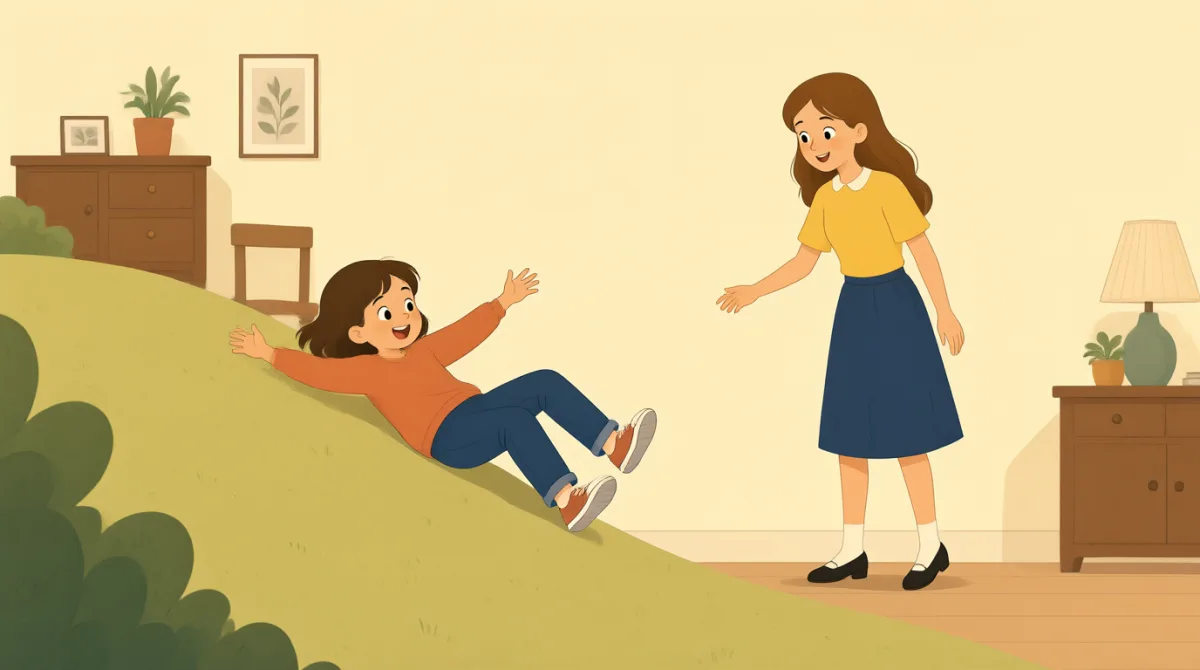

Oh! I fell down. I can't get up with my skis on.
ওহ! আমি পড়ে গেছি। স্কি পরা অবস্থায় উঠতে পারছি না।

It's okay, Emma. Stay calm. We'll get you back up.
ঠিক আছে, এমা। শান্ত থাকো। তোমাকে আবার উঠতে সাহায্য করছি।
Should I take my skis off first?
আগে কি স্কি খুলে ফেলব?
No, keep them on. Turn onto your side and point your skis across the slope.
না, স্কি পরেই রাখো। কাত হয়ে এক পাশে ফিরো এবং স্কিগুলো ঢালের আড়াআড়ি দিকে রাখো।
All right. My legs feel a little tangled.
আচ্ছা। আমার পাগুলো একটু জড়িয়ে গেছে মনে হচ্ছে।
Move your skis apart. Put your hands in the snow, then push yourself up.
স্কিগুলো আলাদা করো। বরফে হাত রাখো, তারপর নিজেকে ঠেলে ওঠো।
I did it! That was harder than I thought.
আমি পেরেছি! আমার ধারণার চেয়ে এটা কঠিন ছিল।
You did great. Take a breath, then try the slope again when you're ready.
তুমি দারুণ করেছ। একটু শ্বাস নাও, তারপর প্রস্তুত হলে আবার ঢালে চেষ্টা করো।
শব্দভান্ডার7
- fell downপড়ে গেল
This means you dropped to the ground. Use it to describe a fall that happened in the past.
এর অর্থ হলো মাটিতে পড়ে যাওয়া। অতীতে ঘটে যাওয়া কোনো পড়ে যাওয়ার ঘটনা বর্ণনা করতে এটি ব্যবহার করা হয়।
- get upউঠে দাঁড়ানো
This means to move from the ground to a standing position. You can use it after a fall or when you wake up.
এর অর্থ হলো মাটি থেকে উঠে দাঁড়ানো। পড়ে যাওয়ার পর বা ঘুম থেকে জেগে ওঠার সময় এটি ব্যবহার করা যায়।
- stay calmশান্ত থাকা
This means to remain relaxed and not panic. It is useful advice in a difficult or surprising situation.
এর অর্থ হলো শান্ত থাকা এবং আতঙ্কিত না হওয়া। কঠিন বা আকস্মিক পরিস্থিতিতে এটি একটি উপকারী পরামর্শ।
- turn onto your sideকাত হয়ে এক পাশে ফেরা
This means to roll your body so that one side faces the ground. It is a simple instruction for changing your position.
এর অর্থ হলো শরীর এমনভাবে গড়িয়ে নেওয়া, যাতে শরীরের এক পাশ মাটির দিকে থাকে। অবস্থান পরিবর্তনের জন্য এটি একটি সহজ নির্দেশ।
- across the slopeঢালের আড়াআড়ি দিকে
This means from one side of the hill to the other, rather than straight down. It describes the direction to point your skis.
এর অর্থ হলো পাহাড়ের ওপর থেকে সোজা নিচে না গিয়ে এক পাশ থেকে অন্য পাশে যাওয়া। স্কিগুলো কোন দিকে রাখতে হবে, এটি তা বোঝায়।
- push yourself upনিজেকে ঠেলে ওঠা
This means to use your arms and body to rise from the ground. You can use it when you need to stand up after falling.
এর অর্থ হলো হাত ও শরীরের সাহায্যে মাটি থেকে উঠে আসা। পড়ে যাওয়ার পর দাঁড়ানোর প্রয়োজন হলে এটি ব্যবহার করা যায়।
- when you're readyযখন তুমি প্রস্তুত হবে
This means when you feel prepared to do something. It is a gentle way to let someone choose when to begin.
এর অর্থ হলো যখন তুমি কিছু করার জন্য প্রস্তুত বোধ করবে। কাউকে নিজের ইচ্ছামতো শুরু করার সুযোগ দেওয়ার এটি একটি কোমল উপায়।
গুরুত্বপূর্ণ বাক্য7
- 1
I can't get up with my skis on.
স্কি পরা অবস্থায় উঠতে পারছি না।
Use this to explain that you cannot stand while wearing or carrying something. Replace “my skis” with another item to describe your situation.
কোনো কিছু পরা বা হাতে থাকা অবস্থায় তুমি দাঁড়াতে পারছ না—এ কথা বোঝাতে এটি ব্যবহার করো। নিজের পরিস্থিতি বর্ণনা করতে “my skis”-এর জায়গায় অন্য কোনো জিনিস বসাতে পারো।
- 2
Stay calm.
শান্ত থাকো।
This is a short way to tell someone not to panic. You can use it to comfort someone in a stressful moment.
কাউকে আতঙ্কিত না হতে বলার এটি একটি সংক্ষিপ্ত উপায়। চাপের মুহূর্তে কাউকে সান্ত্বনা দিতে এটি ব্যবহার করতে পারো।
- 3
Should I take my skis off first?
আগে কি স্কি খুলে ফেলব?
Use “Should I...?” to ask for advice about what to do. Replace “take my skis off” with another action to ask about the best next step.
কী করা উচিত সে বিষয়ে পরামর্শ চাইতে “Should I...?” ব্যবহার করো। পরবর্তী সেরা পদক্ষেপ সম্পর্কে জানতে “take my skis off”-এর জায়গায় অন্য কোনো কাজ বসাতে পারো।
- 4
Turn onto your side and point your skis across the slope.
কাত হয়ে এক পাশে ফিরো এবং স্কিগুলো ঢালের আড়াআড়ি দিকে রাখো।
This sentence gives two clear instructions. You can use “Turn onto...” and “point...” to explain how to move or position something.
এই বাক্যে দুটি স্পষ্ট নির্দেশ দেওয়া হয়েছে। কীভাবে নড়তে বা কোনো কিছুর অবস্থান ঠিক করতে হয় তা বোঝাতে “Turn onto...” এবং “point...” ব্যবহার করতে পারো।
- 5
Put your hands in the snow, then push yourself up.
বরফে হাত রাখো, তারপর নিজেকে ঠেলে ওঠো।
Use “Put..., then...” to give steps in order. You can replace “your hands” and “the snow” with other body parts and places.
ধাপগুলো ক্রমানুসারে বলতে “Put..., then...” ব্যবহার করো। শরীরের অন্য অংশ ও জায়গার নাম বসাতে “your hands” এবং “the snow” পরিবর্তন করতে পারো।
- 6
I did it!
আমি পেরেছি!
This is a happy way to say you completed something difficult. Use it after finishing a task or trying something new.
কঠিন কোনো কাজ শেষ করার আনন্দ প্রকাশের এটি একটি উপায়। কোনো কাজ শেষ করার পর বা নতুন কিছু চেষ্টা করার পর এটি ব্যবহার করো।
- 7
Take a breath, then try the slope again when you're ready.
একটু শ্বাস নাও, তারপর প্রস্তুত হলে আবার ঢালে চেষ্টা করো।
This gives gentle advice to pause before trying again. You can use “Take a breath, then...” to encourage someone to continue at their own pace.
আবার চেষ্টা করার আগে একটু থামার কোমল পরামর্শ এটি। কাউকে নিজের গতিতে চালিয়ে যেতে উৎসাহিত করতে “Take a breath, then...” ব্যবহার করতে পারো।