Falling Down
転んだとき
Emma falls while practicing on a gentle slope. Grace calmly shows her how to get back up and try again.
エマはなだらかな斜面で練習中に転んでしまう。グレースは落ち着いて、起き上がってもう一度挑戦する方法を教える。
会話8
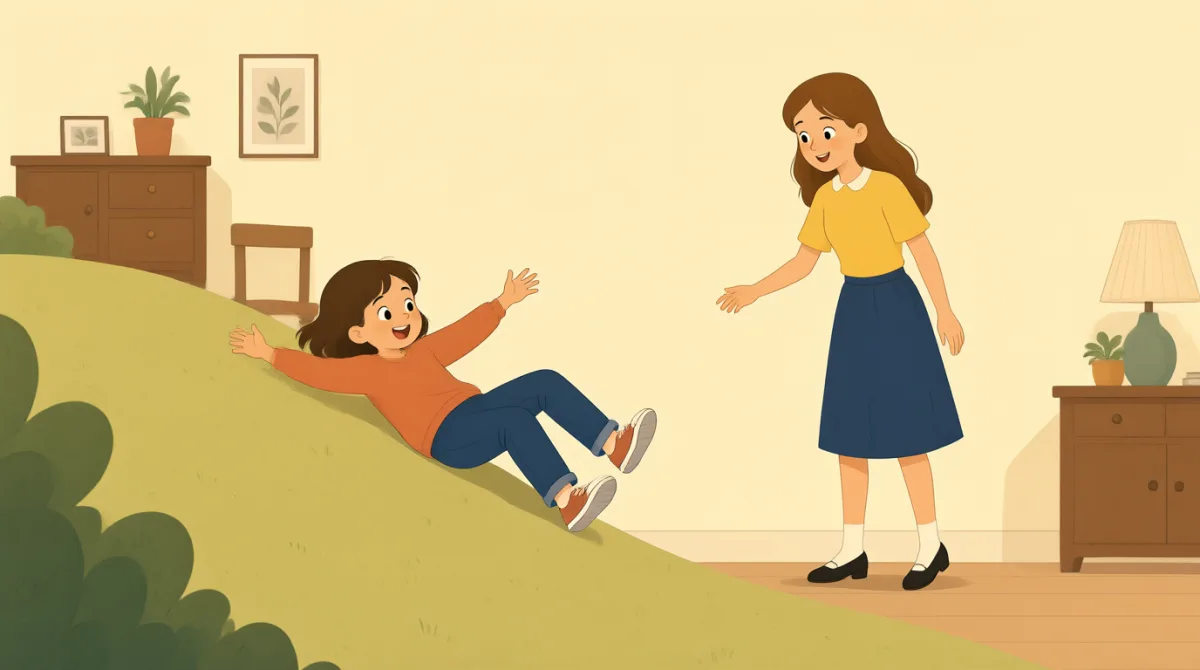

Oh! I fell down. I can't get up with my skis on.
あっ!転んじゃった。スキーを履いたままだと起き上がれないよ。

It's okay, Emma. Stay calm. We'll get you back up.
大丈夫だよ、エマ。落ち着いて。起き上がるのを手伝うね。
Should I take my skis off first?
先にスキーを脱いだほうがいい?
No, keep them on. Turn onto your side and point your skis across the slope.
ううん、履いたままでいいよ。横向きになって、スキーを斜面に対して横向きにして。
All right. My legs feel a little tangled.
わかった。脚がちょっと絡まってる感じ。
Move your skis apart. Put your hands in the snow, then push yourself up.
スキーを開いて。雪に手をついて、それから体を押し上げて。
I did it! That was harder than I thought.
できた!思ったより大変だった。
You did great. Take a breath, then try the slope again when you're ready.
よくできたね。ひと息ついて、準備ができたらもう一度滑ってみよう。
語彙7
- fell down転んだ
This means you dropped to the ground. Use it to describe a fall that happened in the past.
地面に倒れた、という意味です。過去に転んだことを説明するときに使います。
- get up起き上がる
This means to move from the ground to a standing position. You can use it after a fall or when you wake up.
地面から立った状態になる、という意味です。転んだあとや、目が覚めたときに使えます。
- stay calm落ち着いて
This means to remain relaxed and not panic. It is useful advice in a difficult or surprising situation.
慌てず、冷静でいるという意味です。困ったときや予想外のことが起きたときに役立つアドバイスです。
- turn onto your side横向きになる
This means to roll your body so that one side faces the ground. It is a simple instruction for changing your position.
体を転がして、体の片側が地面を向くようにする、という意味です。姿勢を変えるときの簡単な指示です。
- across the slope斜面を横切るように
This means from one side of the hill to the other, rather than straight down. It describes the direction to point your skis.
まっすぐ下ではなく、丘の片側から反対側へ向かう、という意味です。スキーの向きを指示するときに使います。
- push yourself up体を押し上げる
This means to use your arms and body to rise from the ground. You can use it when you need to stand up after falling.
腕や体を使って、地面から起き上がるという意味です。転んだあとに立ち上がるときに使えます。
- when you're ready準備ができたら
This means when you feel prepared to do something. It is a gentle way to let someone choose when to begin.
何かをする心の準備ができたとき、という意味です。いつ始めるかを相手に任せる、やさしい言い方です。
重要な文7
- 1
I can't get up with my skis on.
スキーを履いたままだと起き上がれないよ。
Use this to explain that you cannot stand while wearing or carrying something. Replace “my skis” with another item to describe your situation.
何かを身につけたり、持ったりした状態では立てないことを伝える文です。“my skis”(私のスキー)を別の物に置き換えると、自分の状況を説明できます。
- 2
Stay calm.
落ち着いて。
This is a short way to tell someone not to panic. You can use it to comfort someone in a stressful moment.
相手に慌てないよう伝える短い表現です。緊張する場面で相手を安心させるときに使えます。
- 3
Should I take my skis off first?
先にスキーを脱いだほうがいい?
Use “Should I...?” to ask for advice about what to do. Replace “take my skis off” with another action to ask about the best next step.
“Should I...?” は、何をすればいいかアドバイスを求めるときに使います。“take my skis off”(スキーを脱ぐ)を別の行動に置き換えると、次に何をするのがよいか尋ねられます。
- 4
Turn onto your side and point your skis across the slope.
横向きになって、スキーを斜面に対して横向きにして。
This sentence gives two clear instructions. You can use “Turn onto...” and “point...” to explain how to move or position something.
この文では、二つの動作をはっきり指示しています。“Turn onto...” と “point...” を使って、体の動かし方や物の向きを説明できます。
- 5
Put your hands in the snow, then push yourself up.
雪に手をついて、それから体を押し上げて。
Use “Put..., then...” to give steps in order. You can replace “your hands” and “the snow” with other body parts and places.
“Put..., then...” は、順番に手順を伝える表現です。“your hands”(手)や “the snow”(雪)を、別の体の部位や場所に置き換えて使えます。
- 6
I did it!
できた!
This is a happy way to say you completed something difficult. Use it after finishing a task or trying something new.
難しいことをやり遂げたときの、うれしい気持ちを表す言い方です。何かを終えたときや、新しいことに挑戦したときに使えます。
- 7
Take a breath, then try the slope again when you're ready.
ひと息ついて、準備ができたらもう一度滑ってみて。
This gives gentle advice to pause before trying again. You can use “Take a breath, then...” to encourage someone to continue at their own pace.
もう一度挑戦する前に、少し休むようやさしく促す表現です。“Take a breath, then...” を使うと、相手のペースで続けるよう励ませます。