Falling Down
गिरना
Emma falls while practicing on a gentle slope. Grace calmly shows her how to get back up and try again.
एमा हल्की ढलान पर अभ्यास करते हुए गिर जाती है। ग्रेस शांति से उसे उठने और फिर से कोशिश करने का तरीका बताती है।
संवाद8
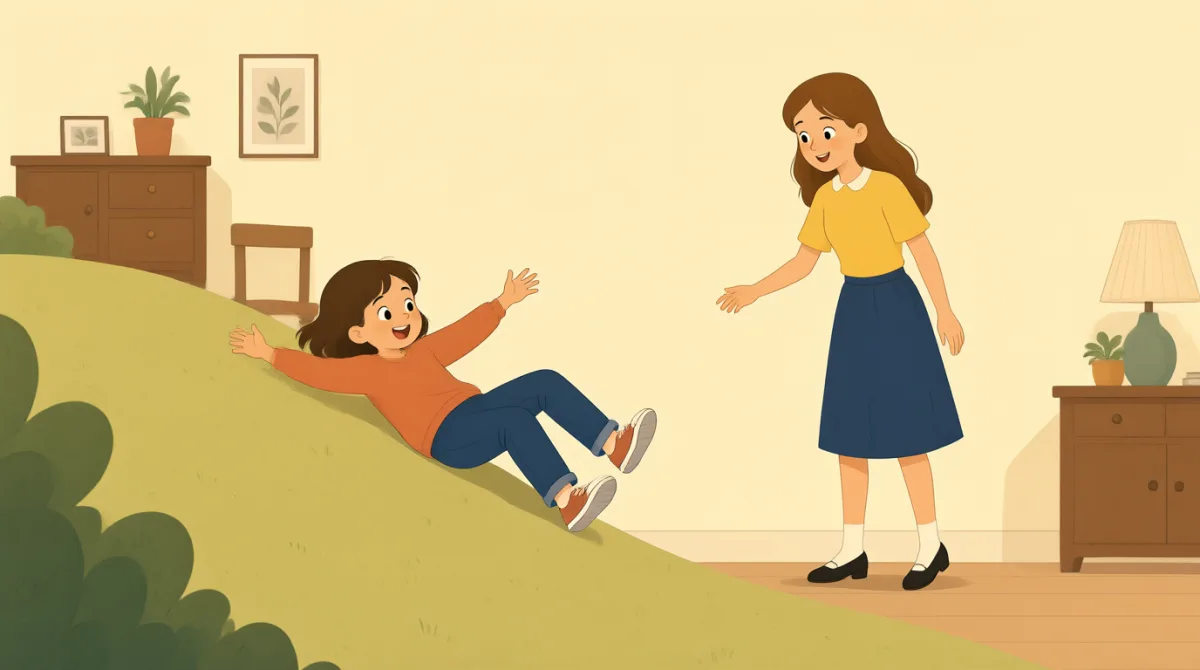

Oh! I fell down. I can't get up with my skis on.
ओह! मैं गिर गई। स्की पहने हुए मैं उठ नहीं पा रही हूँ।

It's okay, Emma. Stay calm. We'll get you back up.
कोई बात नहीं, एमा। शांत रहो। मैं तुम्हें उठने में मदद करूँगी।
Should I take my skis off first?
क्या मुझे पहले अपनी स्की उतार देनी चाहिए?
No, keep them on. Turn onto your side and point your skis across the slope.
नहीं, उन्हें पहने रखो। करवट लो और अपनी स्की ढलान के आर-पार रखो।
All right. My legs feel a little tangled.
ठीक है। मेरे पैर थोड़े उलझे हुए लग रहे हैं।
Move your skis apart. Put your hands in the snow, then push yourself up.
अपनी स्की अलग-अलग करो। हाथ बर्फ पर रखो, फिर हाथों के सहारे खुद को ऊपर उठाओ।
I did it! That was harder than I thought.
मैंने कर दिखाया! यह मेरी सोच से ज़्यादा मुश्किल था।
You did great. Take a breath, then try the slope again when you're ready.
तुमने बहुत अच्छा किया। एक गहरी साँस लो, फिर जब तैयार हो तो ढलान पर दोबारा कोशिश करना।
शब्दावली7
- fell downगिर गई
This means you dropped to the ground. Use it to describe a fall that happened in the past.
“fell down” का मतलब है ज़मीन पर गिर जाना। इसका इस्तेमाल बीते समय में हुई गिरने की घटना बताने के लिए करो।
- get upउठना
This means to move from the ground to a standing position. You can use it after a fall or when you wake up.
“get up” का मतलब है ज़मीन से उठकर खड़े होना। गिरने के बाद या नींद से जागने पर इसका इस्तेमाल कर सकते हो।
- stay calmशांत रहना
This means to remain relaxed and not panic. It is useful advice in a difficult or surprising situation.
“stay calm” का मतलब है शांत रहना और घबराना नहीं। किसी मुश्किल या अचानक आई स्थिति में यह सलाह काम आती है।
- turn onto your sideकरवट लेना
This means to roll your body so that one side faces the ground. It is a simple instruction for changing your position.
“turn onto your side” का मतलब है शरीर को इस तरह घुमाना कि उसका एक हिस्सा ज़मीन की ओर हो जाए। अपनी मुद्रा बदलने का यह एक आसान निर्देश है।
- across the slopeढलान के आर-पार
This means from one side of the hill to the other, rather than straight down. It describes the direction to point your skis.
“across the slope” का मतलब है पहाड़ी के एक किनारे से दूसरे किनारे की ओर, सीधे नीचे की तरफ़ नहीं। यह बताता है कि स्की किस दिशा में रखनी हैं।
- push yourself upहाथों के सहारे खुद को ऊपर उठाना
This means to use your arms and body to rise from the ground. You can use it when you need to stand up after falling.
“push yourself up” का मतलब है हाथों और शरीर का सहारा लेकर ज़मीन से उठना। गिरने के बाद खड़े होने के लिए इसका इस्तेमाल कर सकते हो।
- when you're readyजब तुम तैयार हो
This means when you feel prepared to do something. It is a gentle way to let someone choose when to begin.
“when you're ready” का मतलब है जब तुम्हें लगे कि तुम कुछ करने के लिए तैयार हो। यह किसी को अपनी सुविधा से शुरुआत करने देने का सहज तरीका है।
मुख्य वाक्य7
- 1
I can't get up with my skis on.
स्की पहने हुए मैं उठ नहीं पा रही हूँ।
Use this to explain that you cannot stand while wearing or carrying something. Replace “my skis” with another item to describe your situation.
“I can't get up with my skis on.” का इस्तेमाल यह बताने के लिए करो कि कोई चीज़ पहने या साथ लिए हुए तुम खड़े नहीं हो पा रहे हो। अपनी स्थिति बताने के लिए “my skis” की जगह किसी दूसरी चीज़ का नाम रखो।
- 2
Stay calm.
शांत रहो।
This is a short way to tell someone not to panic. You can use it to comfort someone in a stressful moment.
“Stay calm.” किसी को घबराने से रोकने का छोटा-सा तरीका है। तनावपूर्ण पल में किसी को ढाढ़स बँधाने के लिए इसका इस्तेमाल कर सकते हो।
- 3
Should I take my skis off first?
क्या मुझे पहले अपनी स्की उतार देनी चाहिए?
Use “Should I...?” to ask for advice about what to do. Replace “take my skis off” with another action to ask about the best next step.
“Should I...?” का इस्तेमाल यह पूछने के लिए करो कि तुम्हें क्या करना चाहिए। अगला सही कदम पूछने के लिए “take my skis off” की जगह कोई दूसरी क्रिया रखो।
- 4
Turn onto your side and point your skis across the slope.
करवट लो और अपनी स्की ढलान के आर-पार रखो।
This sentence gives two clear instructions. You can use “Turn onto...” and “point...” to explain how to move or position something.
यह वाक्य दो साफ़ निर्देश देता है। किसी चीज़ को कैसे हिलाना या किस स्थिति में रखना है, यह बताने के लिए “Turn onto...” और “point...” का इस्तेमाल कर सकते हो।
- 5
Put your hands in the snow, then push yourself up.
हाथ बर्फ पर रखो, फिर हाथों के सहारे खुद को ऊपर उठाओ।
Use “Put..., then...” to give steps in order. You can replace “your hands” and “the snow” with other body parts and places.
कदमों का क्रम बताने के लिए “Put..., then...” का इस्तेमाल करो। तुम “your hands” और “the snow” की जगह शरीर के दूसरे अंगों और जगहों के नाम रख सकते हो।
- 6
I did it!
मैंने कर दिखाया!
This is a happy way to say you completed something difficult. Use it after finishing a task or trying something new.
“I did it!” कोई मुश्किल काम पूरा करने की खुशी जताने का तरीका है। कोई काम पूरा करने या कुछ नया आज़माने के बाद इसका इस्तेमाल करो।
- 7
Take a breath, then try the slope again when you're ready.
एक गहरी साँस लो, फिर जब तुम तैयार हो तो ढलान पर दोबारा कोशिश करो।
This gives gentle advice to pause before trying again. You can use “Take a breath, then...” to encourage someone to continue at their own pace.
यह फिर से कोशिश करने से पहले थोड़ा रुकने की सहज सलाह देता है। किसी को अपनी गति से आगे बढ़ने के लिए प्रोत्साहित करने हेतु “Take a breath, then...” का इस्तेमाल कर सकते हो।