Finding The Old Card
Encontrando o cartão antigo
Emma finds her old card in a coat pocket. She tells Mia, but the card is already blocked and cannot be used.
Emma encontra seu cartão antigo no bolso de um casaco. Ela conta a Mia, mas o cartão já está bloqueado e não pode ser usado.
Diálogo8
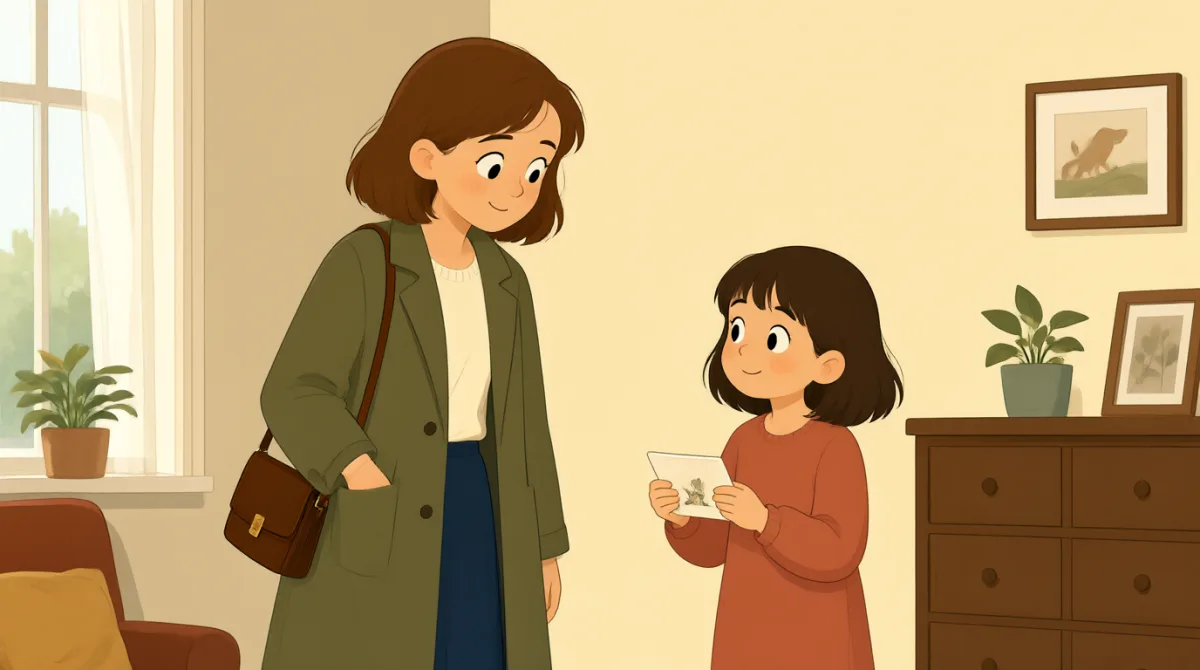

Mia, I found my bank card in the pocket of my blue coat.
Mia, encontrei meu cartão do banco no bolso do meu casaco azul.

Oh, good! You must feel relieved. When did you find it?
Ah, que bom! Você deve estar aliviada. Quando encontrou?
Just now. I wore that coat yesterday and forgot to check the pockets.
Agora mesmo. Usei aquele casaco ontem e esqueci de olhar os bolsos.
But you already called the bank and asked them to block it, right?
Mas você já ligou para o banco e pediu para bloquearem o cartão, né?
Yes, they blocked it this morning, so I can't use it now.
Sim, bloquearam hoje de manhã, então não posso usar o cartão agora.
That's okay. Keep the old card somewhere safe until you get the new one.
Tudo bem. Guarde o cartão antigo em um lugar seguro até receber o novo.
I will. I ordered a new card, and it should arrive next week.
Vou fazer isso. Pedi um cartão novo, e ele deve chegar na semana que vem.
Great. Don't try to pay with the old one by mistake!
Ótimo. Não tente pagar com o antigo por engano!
Vocabulário7
- bank cardcartão do banco
A card you use to pay for things or get money from a bank. Here, Emma found her bank card in her coat pocket.
Um cartão que você usa para pagar coisas ou sacar dinheiro do banco. Aqui, Emma encontrou o cartão do banco no bolso do casaco.
- feel relievedficar aliviado
To feel less worried because a problem is over or has improved. You can use this phrase to ask how someone feels after a stressful event.
Ficar menos preocupado porque um problema acabou ou melhorou. Você pode usar essa expressão para perguntar como alguém está se sentindo depois de uma situação estressante.
- check the pocketsolhar os bolsos
To look inside the pockets of your clothes for something. Use this phrase when you want to make sure you have not left anything behind.
Procurar algo nos bolsos das suas roupas. Use essa expressão quando quiser ter certeza de que não deixou nada para trás.
- block itbloquear o cartão
To stop a bank card from being used. You can ask a bank to block a card if it is lost or stolen.
Impedir que um cartão do banco seja usado. Você pode pedir ao banco que bloqueie um cartão se ele for perdido ou roubado.
- somewhere safeem um lugar seguro
In a place where something will not get lost, damaged, or taken. Use this phrase when giving advice about where to keep an important item.
Em um lugar onde algo não vai se perder, ser danificado ou levado. Use essa expressão para dar um conselho sobre onde guardar um objeto importante.
- get the new onereceber o novo
To receive or obtain a replacement. Here, “the new one” means Emma’s new bank card.
Receber ou obter um substituto. Aqui, “the new one” significa o novo cartão do banco de Emma.
- by mistakepor engano
Without meaning to do something. Use this phrase when someone might do something accidentally.
Sem querer fazer algo. Use essa expressão quando alguém pode fazer algo acidentalmente.
Frases-chave8
- 1
I found my bank card in the pocket of my blue coat.
Encontrei meu cartão do banco no bolso do meu casaco azul.
Use this sentence to say where you found something. You can change “my bank card” and “my blue coat” to name other items and places.
Use esta frase para dizer onde você encontrou algo. Você pode trocar “my bank card” e “my blue coat” por outros objetos e lugares.
- 2
You must feel relieved.
Você deve estar aliviada.
This is a way to show understanding when someone is less worried. You can say “You must feel [feeling]” to make a friendly guess about how they feel.
Esta é uma forma de demonstrar compreensão quando alguém está menos preocupado. Você pode dizer “You must feel [feeling]” para fazer uma suposição amigável sobre como a pessoa está se sentindo.
- 3
I wore that coat yesterday and forgot to check the pockets.
Usei aquele casaco ontem e esqueci de olhar os bolsos.
Use this sentence to explain how you may have left something behind. “Forgot to check” is useful for describing something you did not remember to do.
Use esta frase para explicar como você pode ter deixado algo para trás. “Forgot to check” é útil para descrever algo que você não se lembrou de fazer.
- 4
But you already called the bank and asked them to block it, right?
Mas você já ligou para o banco e pediu para bloquearem o cartão, né?
This is a way to check that someone has already taken an important step. Add “right?” at the end to ask for confirmation.
Esta é uma forma de confirmar se alguém já tomou uma medida importante. Acrescente “right?” no final para pedir confirmação.
- 5
They blocked it this morning, so I can't use it now.
Eles bloquearam o cartão hoje de manhã, então não posso usá-lo agora.
Use “so” to explain the result of an action. You can change the time and the reason to talk about other situations.
Use “so” para explicar o resultado de uma ação. Você pode mudar o horário e o motivo para falar de outras situações.
- 6
Keep the old card somewhere safe until you get the new one.
Guarde o cartão antigo em um lugar seguro até receber o novo.
This sentence gives simple advice and explains how long to follow it. Use “Keep [item] somewhere safe until…” when someone is waiting for a replacement.
Esta frase dá um conselho simples e explica por quanto tempo segui-lo. Use “Keep [item] somewhere safe until…” quando alguém estiver esperando por um substituto.
- 7
I ordered a new card, and it should arrive next week.
Pedi um cartão novo, e ele deve chegar na semana que vem.
Use this sentence to say you requested something and when you expect it to come. You can replace “a new card” and “next week” with other items and times.
Use esta frase para dizer que você pediu algo e quando espera que chegue. Você pode substituir “a new card” e “next week” por outros objetos e momentos.
- 8
Don't try to pay with the old one by mistake!
Não tente pagar com o antigo por engano!
This is a friendly warning about doing something accidentally. Use “Don't try to [action] by mistake” to warn someone about a possible error.
Este é um aviso amigável sobre fazer algo acidentalmente. Use “Don't try to [action] by mistake” para alertar alguém sobre um possível erro.