Finding The Old Card
Encontrar la tarjeta antigua
Emma finds her old card in a coat pocket. She tells Mia, but the card is already blocked and cannot be used.
Emma encuentra su tarjeta antigua en el bolsillo de un abrigo. Se lo cuenta a Mia, pero la tarjeta ya está bloqueada y no se puede usar.
Diálogo8
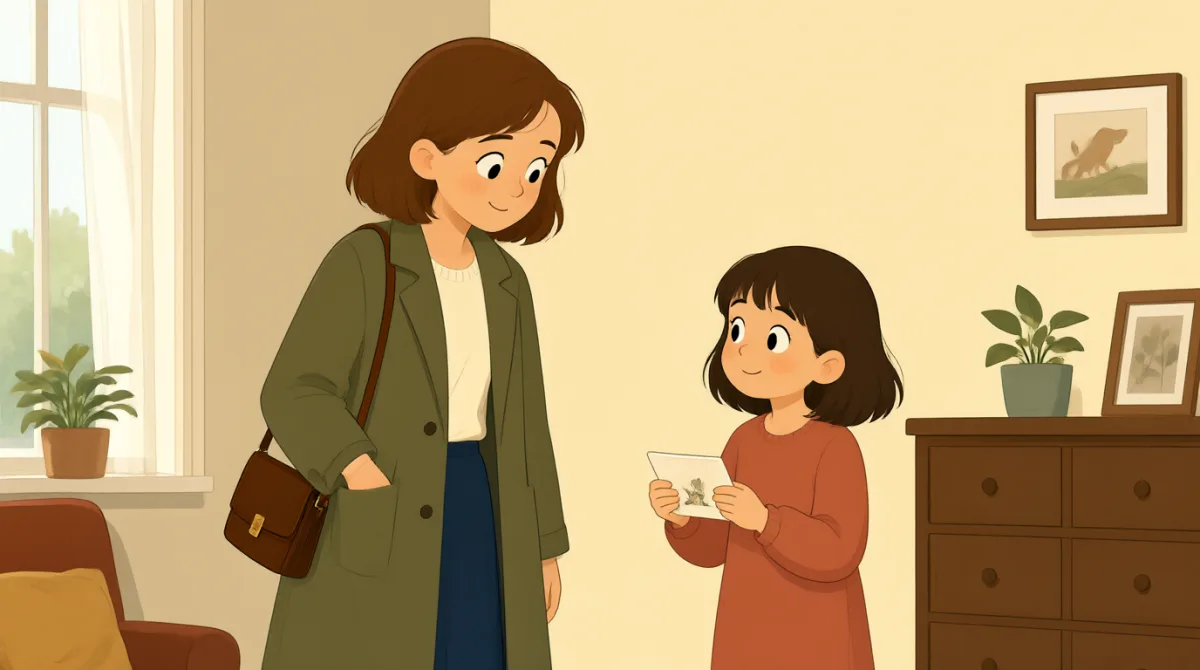

Mia, I found my bank card in the pocket of my blue coat.
Mia, encontré mi tarjeta bancaria en el bolsillo de mi abrigo azul.

Oh, good! You must feel relieved. When did you find it?
¡Ah, qué bien! Debes de sentirte aliviada. ¿Cuándo la encontraste?
Just now. I wore that coat yesterday and forgot to check the pockets.
Hace un momento. Ayer me puse ese abrigo y se me olvidó revisar los bolsillos.
But you already called the bank and asked them to block it, right?
Pero ya llamaste al banco y les pediste que la bloquearan, ¿verdad?
Yes, they blocked it this morning, so I can't use it now.
Sí, la bloquearon esta mañana, así que ahora no puedo usarla.
That's okay. Keep the old card somewhere safe until you get the new one.
No pasa nada. Guarda la tarjeta antigua en un lugar seguro hasta que te llegue la nueva.
I will. I ordered a new card, and it should arrive next week.
Lo haré. Pedí una tarjeta nueva y debería llegar la semana que viene.
Great. Don't try to pay with the old one by mistake!
¡Genial! ¡No vayas a intentar pagar por accidente con la antigua!
Vocabulario7
- bank cardtarjeta bancaria
A card you use to pay for things or get money from a bank. Here, Emma found her bank card in her coat pocket.
Una tarjeta que usas para pagar cosas o sacar dinero del banco. En este caso, Emma encontró su tarjeta bancaria en el bolsillo de su abrigo.
- feel relievedsentirse aliviado/a
To feel less worried because a problem is over or has improved. You can use this phrase to ask how someone feels after a stressful event.
Sentirse menos preocupado porque un problema se ha resuelto o ha mejorado. Puedes usar esta expresión para preguntarle a alguien cómo se siente después de una situación estresante.
- check the pocketsrevisar los bolsillos
To look inside the pockets of your clothes for something. Use this phrase when you want to make sure you have not left anything behind.
Mirar dentro de los bolsillos de la ropa para buscar algo. Usa esta expresión cuando quieras asegurarte de no haberte dejado nada.
- block itbloquearla
To stop a bank card from being used. You can ask a bank to block a card if it is lost or stolen.
Impedir que se pueda usar una tarjeta bancaria. Puedes pedirle al banco que bloquee una tarjeta si la has perdido o te la han robado.
- somewhere safeen un lugar seguro
In a place where something will not get lost, damaged, or taken. Use this phrase when giving advice about where to keep an important item.
En un sitio donde algo no se pierda, se dañe ni se lo lleven. Usa esta expresión para aconsejar dónde guardar algo importante.
- get the new onerecibir la nueva
To receive or obtain a replacement. Here, “the new one” means Emma’s new bank card.
Recibir u obtener un reemplazo. Aquí, “la nueva” se refiere a la nueva tarjeta bancaria de Emma.
- by mistakepor accidente
Without meaning to do something. Use this phrase when someone might do something accidentally.
Sin tener la intención de hacer algo. Usa esta expresión cuando alguien podría hacer algo sin querer.
Frases clave8
- 1
I found my bank card in the pocket of my blue coat.
Encontré mi tarjeta bancaria en el bolsillo de mi abrigo azul.
Use this sentence to say where you found something. You can change “my bank card” and “my blue coat” to name other items and places.
Usa esta frase para decir dónde encontraste algo. Puedes cambiar “my bank card” y “my blue coat” por otros objetos y lugares.
- 2
You must feel relieved.
Debes de sentirte aliviada.
This is a way to show understanding when someone is less worried. You can say “You must feel [feeling]” to make a friendly guess about how they feel.
Esta es una forma de mostrar comprensión cuando alguien está menos preocupado. Puedes decir “You must feel [feeling]” para hacer una suposición amable sobre cómo se siente esa persona.
- 3
I wore that coat yesterday and forgot to check the pockets.
Ayer me puse ese abrigo y se me olvidó revisar los bolsillos.
Use this sentence to explain how you may have left something behind. “Forgot to check” is useful for describing something you did not remember to do.
Usa esta frase para explicar cómo es posible que te hayas dejado algo. “Forgot to check” sirve para describir algo que no recordaste hacer.
- 4
But you already called the bank and asked them to block it, right?
Pero ya llamaste al banco y les pediste que la bloquearan, ¿verdad?
This is a way to check that someone has already taken an important step. Add “right?” at the end to ask for confirmation.
Esta es una forma de comprobar si alguien ya ha dado un paso importante. Añade “right?” al final para pedir confirmación.
- 5
They blocked it this morning, so I can't use it now.
La bloquearon esta mañana, así que ahora no puedo usarla.
Use “so” to explain the result of an action. You can change the time and the reason to talk about other situations.
Usa “so” para explicar el resultado de una acción. Puedes cambiar la hora y el motivo para hablar de otras situaciones.
- 6
Keep the old card somewhere safe until you get the new one.
Guarda la tarjeta antigua en un lugar seguro hasta que te llegue la nueva.
This sentence gives simple advice and explains how long to follow it. Use “Keep [item] somewhere safe until…” when someone is waiting for a replacement.
Esta frase da un consejo sencillo y explica durante cuánto tiempo hay que seguirlo. Usa “Keep [item] somewhere safe until…” cuando alguien esté esperando un reemplazo.
- 7
I ordered a new card, and it should arrive next week.
Pedí una tarjeta nueva y debería llegar la semana que viene.
Use this sentence to say you requested something and when you expect it to come. You can replace “a new card” and “next week” with other items and times.
Usa esta frase para decir que has solicitado algo y cuándo esperas que llegue. Puedes sustituir “a new card” y “next week” por otros objetos y fechas.
- 8
Don't try to pay with the old one by mistake!
¡No vayas a intentar pagar por accidente con la antigua!
This is a friendly warning about doing something accidentally. Use “Don't try to [action] by mistake” to warn someone about a possible error.
Esta es una advertencia amistosa sobre hacer algo sin querer. Usa “Don't try to [action] by mistake” para advertir a alguien de un posible error.