Finding the Bike Gone
A bicicleta sumiu
Leo returns to the bike rack and finds his bike is gone. He calls his friend Emma and tells her what happened.
Leo volta ao bicicletário e percebe que sua bicicleta sumiu. Ele liga para a amiga Emma e conta o que aconteceu.
Diálogo8
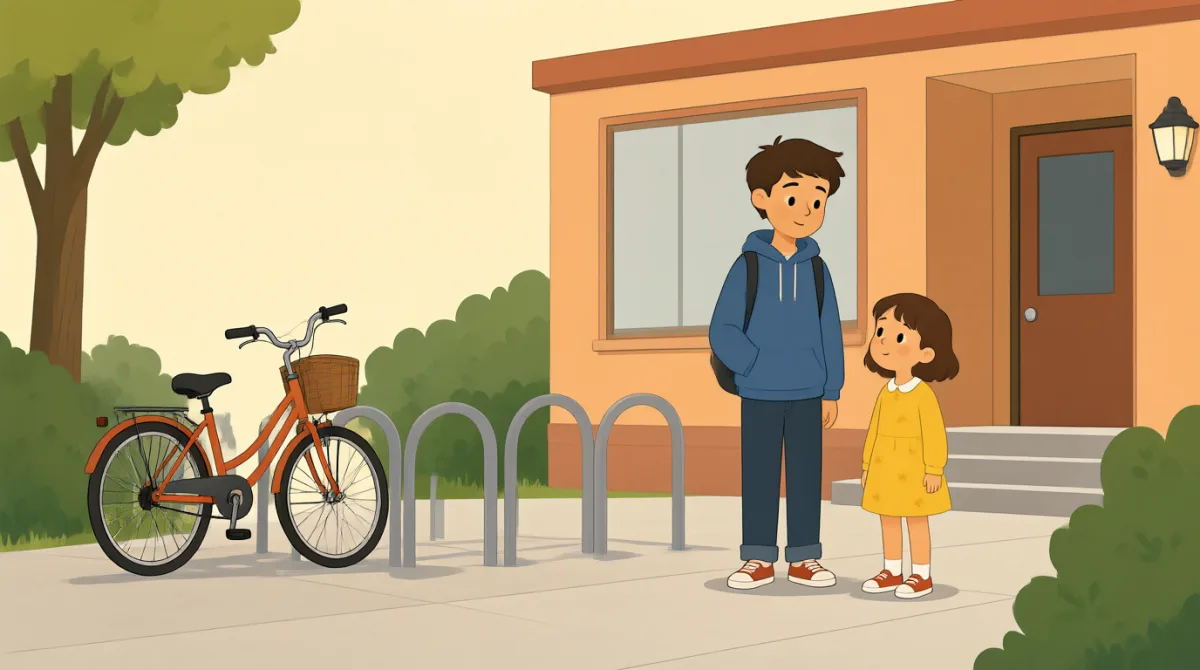

Emma, are you free? I just got back to the bike rack.
Emma, você está livre? Acabei de voltar ao bicicletário.

Sure. What's up? Are you still at the station?
Claro. O que foi? Você ainda está na estação?
Yes, but my bike is gone. I left it here this morning.
Sim, mas minha bicicleta sumiu. Deixei ela aqui hoje de manhã.
Oh no! Did you lock it before you went inside?
Ah, não! Você prendeu a bicicleta antes de entrar?
Yes, I locked it to the rack. The lock is gone too.
Sim, prendi ela no suporte. O cadeado também sumiu.
I'm sorry, Leo. Did you look around the whole rack?
Sinto muito, Leo. Você procurou em todo o bicicletário?
I did. I checked both sides, but I can't find it.
Procurei. Olhei dos dois lados, mas não consigo encontrar.
Let's meet there. We can ask people nearby if they saw it.
Vamos nos encontrar lá. Podemos perguntar às pessoas por perto se viram a bicicleta.
Vocabulário6
- What's up?O que foi?
This is a casual way to ask what is happening or why someone is calling. You can use it to start a conversation with a friend.
Essa é uma maneira informal de perguntar o que está acontecendo ou por que alguém está ligando. Você pode usá-la para começar uma conversa com um amigo.
- gonesumiu
Here, “gone” means the bike is no longer where Leo left it. You can say something is gone when it has disappeared or is missing.
Aqui, “gone” significa que a bicicleta não está mais onde Leo a deixou. Você pode dizer que algo “sumiu” quando desapareceu ou não está onde deveria estar.
- left it heredeixei aqui
This means Leo put his bike here and went away. Use “left it” to say where you put something before leaving.
Isso significa que Leo deixou a bicicleta aqui e foi embora. Use “left it” para dizer onde você deixou algo antes de sair.
- look aroundprocurar por perto
This means to search by checking different places nearby. You can use it when you are trying to find something.
Isso significa procurar verificando vários lugares próximos. Você pode usar essa expressão quando estiver tentando encontrar alguma coisa.
- checked both sidesolhei dos dois lados
This means Leo looked at the two sides of the rack. Use “check” to say you looked carefully at a place or thing.
Isso significa que Leo olhou os dois lados do suporte. Use “check” para dizer que você examinou um lugar ou objeto com atenção.
- nearbypor perto
This means close to the place where you are. You can ask people nearby for help or information.
Isso significa perto do lugar onde você está. Você pode pedir ajuda ou informações às pessoas que estão por perto.
Frases-chave7
- 1
I just got back to the bike rack.
Acabei de voltar ao bicicletário.
This tells someone you have returned to a place. Use “I just got back to…” to say you returned a short time ago.
Essa frase conta a alguém que você voltou a um lugar. Use “I just got back to…” para dizer que voltou há pouco.
- 2
I left it here this morning.
Deixei ela aqui hoje de manhã.
This explains where and when Leo last had his bike. You can use “I left it…” to say where you put something.
Essa frase explica onde e quando Leo esteve com a bicicleta pela última vez. Use “I left it…” para dizer onde você deixou algo.
- 3
Did you lock it before you went inside?
Você prendeu a bicicleta antes de entrar?
This is a simple way to ask whether someone secured something before doing another action. You can change “lock it” to another action, such as “close the door.”
Essa é uma maneira simples de perguntar se alguém protegeu algo antes de fazer outra coisa. Você pode substituir “lock it” por outra ação, como “close the door”.
- 4
I locked it to the rack.
Prendi ela no suporte.
This explains how Leo secured his bike. Use “I locked it to…” to describe attaching something with a lock.
Essa frase explica como Leo prendeu a bicicleta. Use “I locked it to…” para descrever que você prendeu algo com um cadeado.
- 5
Did you look around the whole rack?
Você procurou em todo o bicicletário?
This asks whether someone searched all of a specific area. You can use “Did you look around…?” when helping someone find something.
Essa pergunta verifica se alguém procurou em toda uma área específica. Você pode usar “Did you look around…?” quando estiver ajudando alguém a encontrar alguma coisa.
- 6
I checked both sides, but I can't find it.
Olhei dos dois lados, mas não consigo encontrar.
This says what Leo searched and explains that the bike is still missing. Use “I checked…, but I can’t find it” when you have looked for something without success.
Essa frase diz onde Leo procurou e explica que a bicicleta continua desaparecida. Use “I checked…, but I can’t find it” quando tiver procurado algo sem sucesso.
- 7
We can ask people nearby if they saw it.
Podemos perguntar às pessoas por perto se viram a bicicleta.
This suggests a practical next step and asks whether nearby people noticed the bike. Use “We can ask…” to suggest doing something together.
Essa frase sugere um próximo passo prático e pergunta se as pessoas próximas viram a bicicleta. Use “We can ask…” para sugerir que façam algo juntos.