Finding the Ticket
Encontrando a multa
Emma finds a parking ticket on her car and asks Jack why she got it. They check the time and place on the ticket.
Emma encontra uma multa de estacionamento no carro e pergunta a Jack por que a recebeu. Eles conferem o horário e o local indicados na multa.
Diálogo8
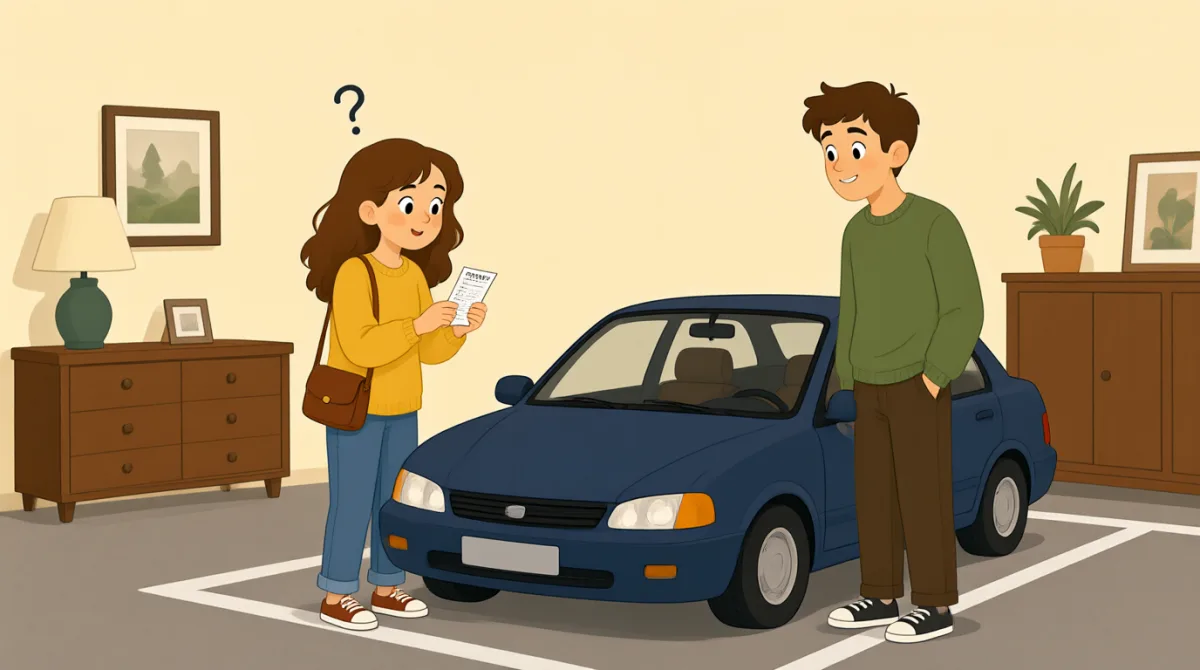

Jack, there’s a parking ticket on my car. Why did I get one?
Jack, tem uma multa de estacionamento no meu carro. Por que será que levei uma?

Let’s take a look. Where did you park?
Vamos dar uma olhada. Onde você estacionou?
On Pine Street, near the coffee shop. I parked there this morning.
Na Rua Pine, perto da cafeteria. Estacionei lá hoje de manhã.
The ticket says Pine Street, but let’s check the time.
A multa diz Rua Pine, mas vamos conferir o horário.
It says 10:15 a.m. I thought parking was allowed there.
Diz 10h15. Achei que podia estacionar lá.
It says your car was there during street cleaning hours.
Diz que seu carro estava lá durante o horário de limpeza da rua.
Oh, I didn’t see that. Is there a date on the ticket?
Ah, não vi isso. Tem uma data na multa?
Yes, it was issued today. The time and place are both listed here.
Sim, ela foi emitida hoje. O horário e o local estão indicados aqui.
Vocabulário8
- parking ticketmulta de estacionamento
A parking ticket is a notice you get for parking against the rules. Here, Emma finds one on her car.
Uma multa de estacionamento é um aviso que você recebe por estacionar de forma irregular. Aqui, Emma encontra uma no carro.
- take a lookdar uma olhada
This means to look at something. You can say, “Let’s take a look” when you want to check something together.
Significa olhar para alguma coisa. Você pode dizer “Let’s take a look” (Vamos dar uma olhada) quando quiser conferir algo junto com alguém.
- Where did you park?Onde você estacionou?
This question asks about the place where someone left their car. You can use it to ask where someone parked.
Essa pergunta é sobre o lugar onde alguém deixou o carro. Você pode usá-la para perguntar onde a pessoa estacionou.
- near the coffee shopperto da cafeteria
This phrase describes a place that is close to the coffee shop. Use “near” to say that one place is close to another.
Essa expressão descreve um lugar que fica próximo à cafeteria. Use “near” (perto de) para dizer que um lugar fica próximo de outro.
- check the timeconferir o horário
This means to look at what time something happened. You can use it when you want to confirm a time.
Significa verificar a que horas algo aconteceu. Você pode usar essa expressão quando quiser confirmar um horário.
- parking was allowedera permitido estacionar
This means it was okay to leave a car there. Use “was allowed” to talk about a past rule or permission.
Significa que era permitido deixar o carro ali. Use “was allowed” para falar de uma regra ou permissão no passado.
- street cleaning hourshorário de limpeza da rua
These are the times when a street is cleaned, and parking may not be allowed. You might see these hours on a parking sign.
É o horário em que a rua é limpa e, por isso, talvez não seja permitido estacionar. Você pode ver esses horários em uma placa de estacionamento.
- issued todayemitida hoje
This means the ticket was given or created today. Use “issued” to say when an official notice or document was given.
Significa que a multa foi aplicada ou emitida hoje. Use “issued” para indicar quando um aviso ou documento oficial foi emitido.
Frases-chave8
- 1
Why did I get one?
Por que será que levei uma?
Use this question to ask why something happened to you. “One” refers to a parking ticket mentioned just before.
Use essa pergunta para saber por que algo aconteceu com você. “One” se refere a uma multa de estacionamento mencionada pouco antes.
- 2
Where did you park?
Onde você estacionou?
This is a simple way to ask where someone left their car. Replace “park” with another verb to ask about a past action.
Esta é uma forma simples de perguntar onde alguém deixou o carro. Substitua “park” por outro verbo para perguntar sobre uma ação passada.
- 3
I parked there this morning.
Estacionei lá hoje de manhã.
Use this sentence to say where and when you left your car. You can change “there” and “this morning” to give different details.
Use esta frase para dizer onde e quando você deixou o carro. Você pode trocar “there” e “this morning” para dar outros detalhes.
- 4
The ticket says Pine Street, but let’s check the time.
A multa diz Rua Pine, mas vamos conferir o horário.
This sentence shares one detail and suggests checking another. Use “The [document] says…” to report information written on a document.
Esta frase informa um detalhe e sugere conferir outro. Use “The [document] says…” para relatar uma informação escrita em um documento.
- 5
I thought parking was allowed there.
Achei que podia estacionar lá.
Use this sentence to explain what you believed was okay. “I thought…” is useful for talking about a past belief that may have been wrong.
Use esta frase para explicar o que você achava que era permitido. “I thought…” é útil para falar de uma ideia que você tinha no passado e que talvez estivesse errada.
- 6
Oh, I didn’t see that.
Ah, não vi isso.
This is a natural way to say you did not notice something. You can use it when someone points out information you missed.
Esta é uma forma natural de dizer que você não percebeu algo. Você pode usá-la quando alguém aponta uma informação que passou despercebida.
- 7
Is there a date on the ticket?
Tem uma data na multa?
Use this question to ask whether a document shows a date. Replace “the ticket” with another document or item.
Use esta pergunta para saber se um documento mostra uma data. Substitua “the ticket” por outro documento ou item.
- 8
The time and place are both listed here.
O horário e o local estão indicados aqui.
This sentence explains that two details are written on the document. Use “both” to emphasize that two things are included.
Esta frase explica que dois detalhes estão escritos no documento. Use “both” para destacar que as duas informações estão incluídas.