Finding the Ticket
หาบัตรจอดรถ
Emma finds a parking ticket on her car and asks Jack why she got it. They check the time and place on the ticket.
เอ็มมาพบบัตรปรับจอดรถอยู่บนรถของเธอ และถามแจ็กว่าทำไมเธอถึงได้บัตรนี้ ทั้งคู่ตรวจสอบเวลาและสถานที่บนบัตร
บทสนทนา8
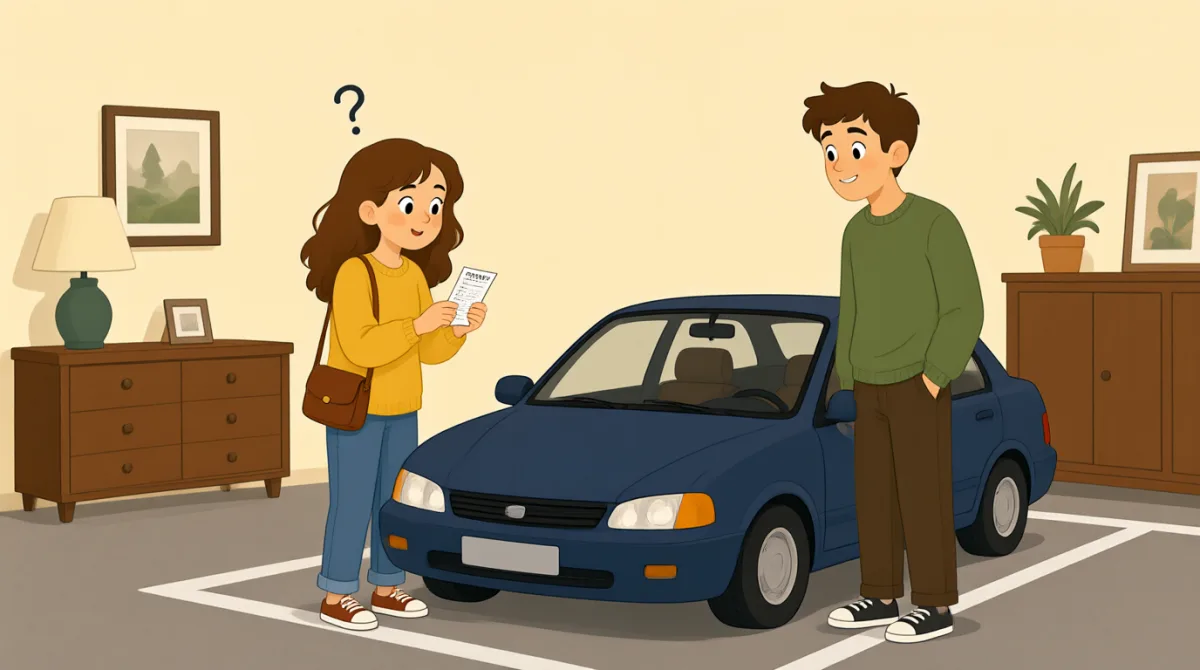

Jack, there’s a parking ticket on my car. Why did I get one?
แจ็ก มีบัตรปรับจอดรถอยู่บนรถฉัน ฉันได้บัตรนี้เพราะอะไรเหรอ

Let’s take a look. Where did you park?
มาดูกันหน่อย เธอจอดรถไว้ที่ไหน
On Pine Street, near the coffee shop. I parked there this morning.
บนถนนไพน์ ใกล้ร้านกาแฟ ฉันจอดไว้ที่นั่นเมื่อเช้านี้
The ticket says Pine Street, but let’s check the time.
ในบัตรเขียนว่าถนนไพน์ แต่มาเช็กเวลากันหน่อย
It says 10:15 a.m. I thought parking was allowed there.
เขียนว่า 10:15 น. ฉันนึกว่าจอดรถตรงนั้นได้ซะอีก
It says your car was there during street cleaning hours.
ในบัตรบอกว่ารถของเธอจอดอยู่ที่นั่นในช่วงเวลาทำความสะอาดถนน
Oh, I didn’t see that. Is there a date on the ticket?
อ๋อ ฉันไม่เห็นตรงนั้นเลย ในบัตรมีวันที่ไหม
Yes, it was issued today. The time and place are both listed here.
มี ออกให้วันนี้ เวลาและสถานที่ระบุไว้ตรงนี้ทั้งคู่เลย
คำศัพท์8
- parking ticketบัตรปรับจอดรถ
A parking ticket is a notice you get for parking against the rules. Here, Emma finds one on her car.
บัตรปรับจอดรถคือใบแจ้งที่ได้รับเมื่อจอดรถผิดกฎ ในเรื่องนี้ เอ็มมาพบบัตรหนึ่งใบอยู่บนรถของเธอ
- take a lookมาดูกันหน่อย
This means to look at something. You can say, “Let’s take a look” when you want to check something together.
คำนี้หมายถึงการดูบางสิ่งบางอย่าง คุณสามารถพูดว่า “Let’s take a look” เมื่อต้องการตรวจสอบบางอย่างด้วยกัน
- Where did you park?คุณจอดรถไว้ที่ไหน
This question asks about the place where someone left their car. You can use it to ask where someone parked.
คำถามนี้ถามถึงสถานที่ที่ใครบางคนจอดรถทิ้งไว้ ใช้ถามได้ว่าคนอื่นจอดรถไว้ที่ไหน
- near the coffee shopใกล้ร้านกาแฟ
This phrase describes a place that is close to the coffee shop. Use “near” to say that one place is close to another.
วลีนี้ใช้บอกสถานที่ที่อยู่ใกล้ร้านกาแฟ ใช้ “near” เพื่อบอกว่าสถานที่หนึ่งอยู่ใกล้อีกสถานที่หนึ่ง
- check the timeเช็กเวลา
This means to look at what time something happened. You can use it when you want to confirm a time.
คำนี้หมายถึงการดูว่าเหตุการณ์บางอย่างเกิดขึ้นเวลาใด ใช้เมื่อคุณต้องการยืนยันเวลา
- parking was allowedจอดรถได้
This means it was okay to leave a car there. Use “was allowed” to talk about a past rule or permission.
คำนี้หมายถึงการที่สามารถจอดรถทิ้งไว้ตรงนั้นได้ ใช้ “was allowed” เพื่อพูดถึงกฎหรือการอนุญาตในอดีต
- street cleaning hoursช่วงเวลาทำความสะอาดถนน
These are the times when a street is cleaned, and parking may not be allowed. You might see these hours on a parking sign.
ช่วงเวลาเหล่านี้คือเวลาที่มีการทำความสะอาดถนน ซึ่งอาจไม่อนุญาตให้จอดรถ คุณอาจเห็นช่วงเวลาเหล่านี้บนป้ายจอดรถ
- issued todayออกให้วันนี้
This means the ticket was given or created today. Use “issued” to say when an official notice or document was given.
คำนี้หมายถึงบัตรปรับถูกออกหรือจัดทำขึ้นในวันนี้ ใช้ “issued” เพื่อบอกว่าเอกสารหรือใบแจ้งอย่างเป็นทางการถูกออกให้เมื่อใด
ประโยคสำคัญ8
- 1
Why did I get one?
ฉันได้บัตรนี้เพราะอะไร
Use this question to ask why something happened to you. “One” refers to a parking ticket mentioned just before.
ใช้คำถามนี้เพื่อถามว่าทำไมบางสิ่งบางอย่างจึงเกิดขึ้นกับคุณ “One” หมายถึงบัตรปรับจอดรถที่เพิ่งพูดถึงก่อนหน้านี้
- 2
Where did you park?
คุณจอดรถไว้ที่ไหน
This is a simple way to ask where someone left their car. Replace “park” with another verb to ask about a past action.
นี่เป็นวิธีง่าย ๆ ในการถามว่าคนอื่นจอดรถทิ้งไว้ที่ไหน คุณสามารถแทนที่ “park” ด้วยคำกริยาอื่นเพื่อถามเกี่ยวกับการกระทำในอดีต
- 3
I parked there this morning.
ฉันจอดไว้ที่นั่นเมื่อเช้านี้
Use this sentence to say where and when you left your car. You can change “there” and “this morning” to give different details.
ใช้ประโยคนี้เพื่อบอกว่าคุณจอดรถไว้ที่ไหนและเมื่อไร คุณสามารถเปลี่ยน “there” และ “this morning” เพื่อให้รายละเอียดแตกต่างกันได้
- 4
The ticket says Pine Street, but let’s check the time.
ในบัตรเขียนว่าถนนไพน์ แต่มาเช็กเวลากันหน่อย
This sentence shares one detail and suggests checking another. Use “The [document] says…” to report information written on a document.
ประโยคนี้บอกข้อมูลหนึ่งอย่างและเสนอให้ตรวจสอบอีกอย่างหนึ่ง ใช้ “The [document] says…” เพื่อรายงานข้อมูลที่เขียนอยู่ในเอกสาร
- 5
I thought parking was allowed there.
ฉันนึกว่าจอดรถตรงนั้นได้ซะอีก
Use this sentence to explain what you believed was okay. “I thought…” is useful for talking about a past belief that may have been wrong.
ใช้ประโยคนี้เพื่ออธิบายสิ่งที่คุณคิดว่าสามารถทำได้ “I thought…” มีประโยชน์เมื่อพูดถึงความเชื่อในอดีตที่อาจไม่ถูกต้อง
- 6
Oh, I didn’t see that.
อ๋อ ฉันไม่เห็นตรงนั้นเลย
This is a natural way to say you did not notice something. You can use it when someone points out information you missed.
นี่เป็นวิธีพูดอย่างเป็นธรรมชาติเพื่อบอกว่าคุณไม่ได้สังเกตเห็นบางสิ่ง ใช้ได้เมื่อมีคนชี้ข้อมูลที่คุณพลาดไป
- 7
Is there a date on the ticket?
ในบัตรมีวันที่ไหม
Use this question to ask whether a document shows a date. Replace “the ticket” with another document or item.
ใช้คำถามนี้เพื่อถามว่าเอกสารแสดงวันที่ไว้หรือไม่ คุณสามารถแทนที่ “the ticket” ด้วยเอกสารหรือสิ่งของอย่างอื่นได้
- 8
The time and place are both listed here.
เวลาและสถานที่ระบุไว้ตรงนี้ทั้งคู่เลย
This sentence explains that two details are written on the document. Use “both” to emphasize that two things are included.
ประโยคนี้อธิบายว่ารายละเอียดสองอย่างเขียนอยู่ในเอกสาร ใช้ “both” เพื่อเน้นว่ามีข้อมูลทั้งสองอย่าง