Finding the Ticket
駐車違反の切符を見つける
Emma finds a parking ticket on her car and asks Jack why she got it. They check the time and place on the ticket.
エマは車に駐車違反の切符が貼られているのを見つけ、なぜ切符を切られたのかジャックに尋ねます。二人は切符に記載された時間と場所を確認します。
会話8
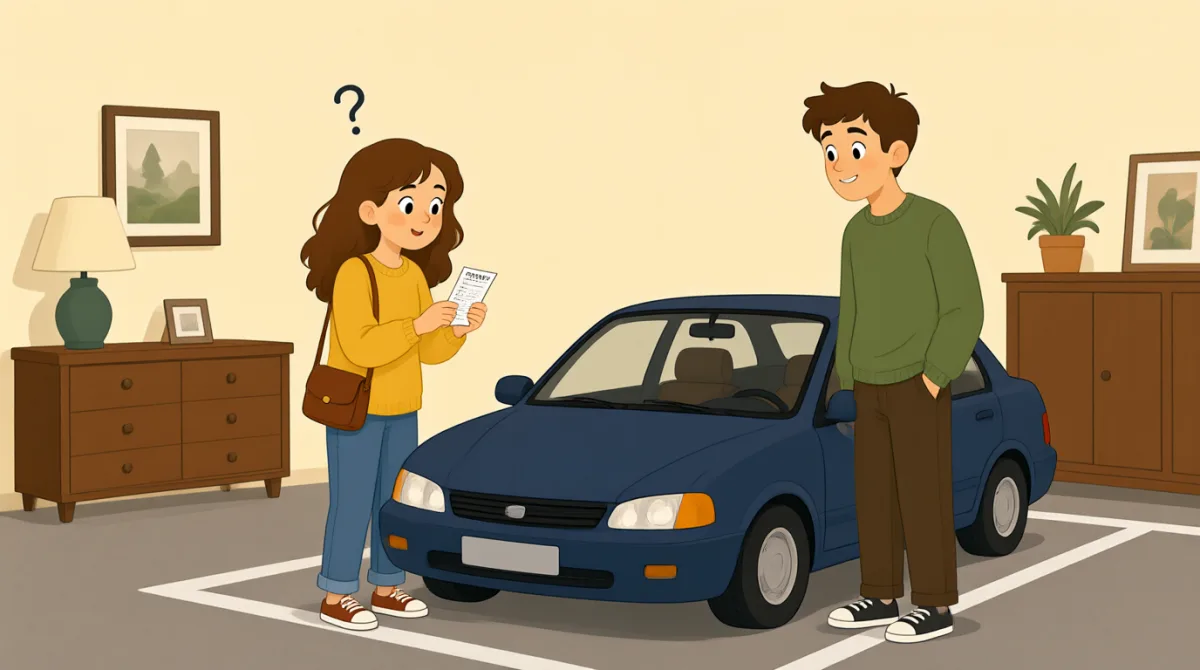

Jack, there’s a parking ticket on my car. Why did I get one?
ジャック、車に駐車違反の切符が貼られてる。なんで切られたんだろう?

Let’s take a look. Where did you park?
ちょっと見てみよう。どこに駐車したの?
On Pine Street, near the coffee shop. I parked there this morning.
パイン通りのコーヒーショップの近くだよ。今朝そこに駐車したんだ。
The ticket says Pine Street, but let’s check the time.
切符にはパイン通りって書いてあるね。時間も確認しよう。
It says 10:15 a.m. I thought parking was allowed there.
午前10時15分って書いてある。そこは駐車してもいいと思ってたんだけど。
It says your car was there during street cleaning hours.
道路清掃の時間帯に車がそこにあったって書いてあるよ。
Oh, I didn’t see that. Is there a date on the ticket?
あ、気づかなかった。切符に日付は書いてある?
Yes, it was issued today. The time and place are both listed here.
うん、今日発行されたみたい。時間と場所はここに両方書いてあるよ。
語彙8
- parking ticket駐車違反の切符
A parking ticket is a notice you get for parking against the rules. Here, Emma finds one on her car.
「parking ticket」は、駐車ルールに違反したときに渡される通知のことです。この場面では、エマが車に貼られた切符を見つけます。
- take a looktake a look(見てみる)
This means to look at something. You can say, “Let’s take a look” when you want to check something together.
「take a look」は「見る」という意味です。何かを一緒に確認したいときに、“Let’s take a look”(ちょっと見てみよう)と言えます。
- Where did you park?Where did you park?(どこに駐車したの?)
This question asks about the place where someone left their car. You can use it to ask where someone parked.
この質問は、車をどこに停めたかを尋ねる表現です。誰かが駐車した場所を聞くときに使えます。
- near the coffee shopnear the coffee shop(コーヒーショップの近く)
This phrase describes a place that is close to the coffee shop. Use “near” to say that one place is close to another.
この表現は、コーヒーショップから近い場所を表します。「near」は、ある場所が別の場所の近くにあると言うときに使います。
- check the timecheck the time(時間を確認する)
This means to look at what time something happened. You can use it when you want to confirm a time.
「check the time」は、何かが起きた時間を調べるという意味です。時間を確かめたいときに使えます。
- parking was allowedparking was allowed(駐車が許可されていた)
This means it was okay to leave a car there. Use “was allowed” to talk about a past rule or permission.
「parking was allowed」は、そこに車を停めてもよかったという意味です。「was allowed」は、過去のルールや許可について話すときに使います。
- street cleaning hoursstreet cleaning hours(道路清掃の時間帯)
These are the times when a street is cleaned, and parking may not be allowed. You might see these hours on a parking sign.
道路を清掃する時間帯のことです。その時間は駐車が禁止されている場合があります。駐車標識にこの時間帯が書かれていることもあります。
- issued todayissued today(今日発行された)
This means the ticket was given or created today. Use “issued” to say when an official notice or document was given.
「issued today」は、切符が今日渡された、または発行されたという意味です。「issued」は、公式な通知や書類がいつ発行されたかを伝えるときに使います。
重要な文8
- 1
Why did I get one?
なんで切られたんだろう?
Use this question to ask why something happened to you. “One” refers to a parking ticket mentioned just before.
自分に何が起きたのか、その理由を尋ねるときに使う質問です。「one」は、直前に出てきた駐車違反の切符を指しています。
- 2
Where did you park?
どこに駐車したの?
This is a simple way to ask where someone left their car. Replace “park” with another verb to ask about a past action.
車をどこに停めたかを尋ねるシンプルな表現です。「park」を別の動詞に置き換えると、過去にした別の行動について尋ねられます。
- 3
I parked there this morning.
今朝、そこに駐車したんだ。
Use this sentence to say where and when you left your car. You can change “there” and “this morning” to give different details.
車をどこに、いつ停めたかを伝える文です。「there」と「this morning」を変えれば、別の場所や時間を伝えられます。
- 4
The ticket says Pine Street, but let’s check the time.
切符にはパイン通りって書いてあるね。時間も確認しよう。
This sentence shares one detail and suggests checking another. Use “The [document] says…” to report information written on a document.
一つの情報を伝えたあと、別の情報も確認しようと提案する文です。「The [document] says…」は、書類に書かれている情報を伝えるときに使えます。
- 5
I thought parking was allowed there.
そこは駐車してもいいと思ってたんだけど。
Use this sentence to explain what you believed was okay. “I thought…” is useful for talking about a past belief that may have been wrong.
何が大丈夫だと思っていたかを説明する文です。「I thought…」は、間違っていたかもしれない過去の思い込みについて話すときに便利です。
- 6
Oh, I didn’t see that.
あ、気づかなかった。
This is a natural way to say you did not notice something. You can use it when someone points out information you missed.
何かに気づかなかったと自然に伝える表現です。見落としていた情報を誰かに指摘されたときに使えます。
- 7
Is there a date on the ticket?
切符に日付は書いてある?
Use this question to ask whether a document shows a date. Replace “the ticket” with another document or item.
書類に日付が記載されているか尋ねる質問です。「the ticket」を別の書類や物に置き換えて使えます。
- 8
The time and place are both listed here.
時間と場所はここに両方書いてあるよ。
This sentence explains that two details are written on the document. Use “both” to emphasize that two things are included.
二つの情報が書類に記載されていることを伝える文です。「both」は、二つとも含まれていることを強調するときに使います。