Finding the Ticket
العثور على المخالفة
Emma finds a parking ticket on her car and asks Jack why she got it. They check the time and place on the ticket.
تعثر إيما على مخالفة وقوف على سيارتها، وتسأل جاك عن سبب تحريرها. ويتحققان من الوقت والمكان المذكورين في المخالفة.
حوار8
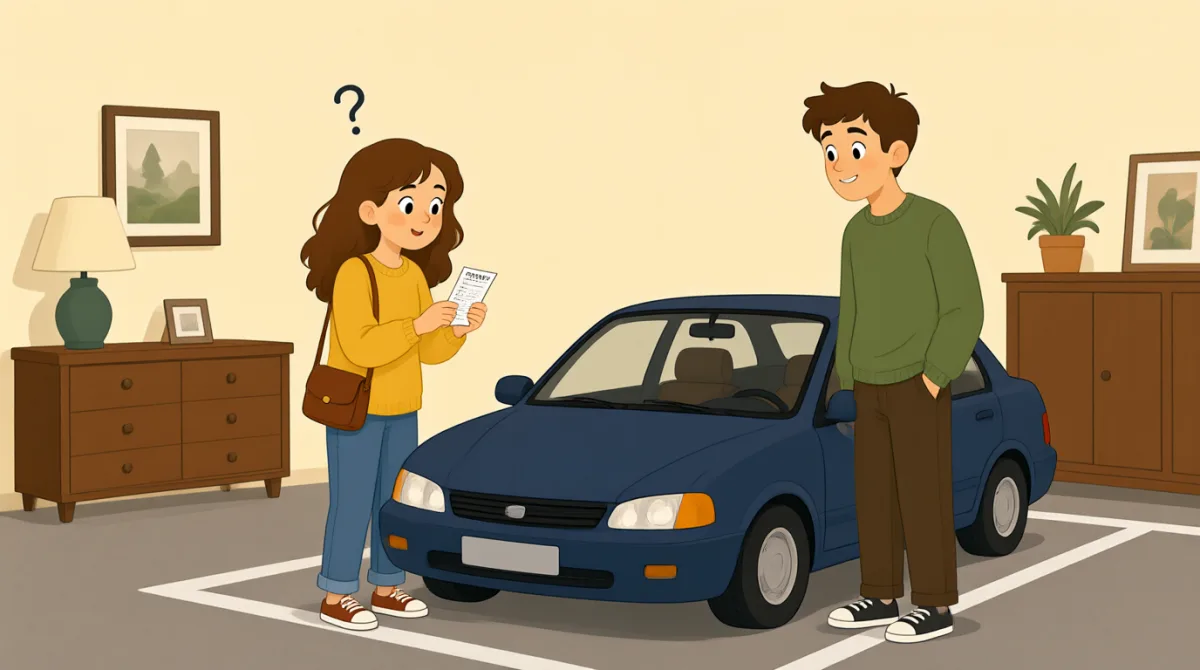

Jack, there’s a parking ticket on my car. Why did I get one?
جاك، هناك مخالفة وقوف على سيارتي. لماذا حصلت عليها؟

Let’s take a look. Where did you park?
دعينا نلقي نظرة. أين أوقفتِ السيارة؟
On Pine Street, near the coffee shop. I parked there this morning.
في شارع باين، قرب المقهى. أوقفتها هناك هذا الصباح.
The ticket says Pine Street, but let’s check the time.
المخالفة تذكر شارع باين، لكن دعينا نتحقق من الوقت.
It says 10:15 a.m. I thought parking was allowed there.
مذكور فيها الساعة 10:15 صباحًا. ظننت أن الوقوف مسموح هناك.
It says your car was there during street cleaning hours.
مذكور فيها أن سيارتك كانت هناك خلال ساعات تنظيف الشارع.
Oh, I didn’t see that. Is there a date on the ticket?
أوه، لم أنتبه إلى ذلك. هل يوجد تاريخ على المخالفة؟
Yes, it was issued today. The time and place are both listed here.
نعم، حُررت اليوم. الوقت والمكان مذكوران هنا.
المفردات8
- parking ticketمخالفة وقوف
A parking ticket is a notice you get for parking against the rules. Here, Emma finds one on her car.
مخالفة الوقوف إشعار تتلقاه عندما تركن سيارتك على نحو يخالف القواعد. في هذا السياق، تعثر إيما على واحدة منها على سيارتها.
- take a lookيلقي نظرة
This means to look at something. You can say, “Let’s take a look” when you want to check something together.
تعني هذه العبارة النظر إلى شيء ما. يمكنك قول “Let’s take a look” (دعينا نلقي نظرة) عندما تريد التحقق من شيء مع شخص آخر.
- Where did you park?أين أوقفت السيارة؟
This question asks about the place where someone left their car. You can use it to ask where someone parked.
يُطرح هذا السؤال لمعرفة المكان الذي ترك فيه شخص سيارته. يمكنك استخدام “Where did you park?” للسؤال عن مكان إيقاف السيارة.
- near the coffee shopبالقرب من المقهى
This phrase describes a place that is close to the coffee shop. Use “near” to say that one place is close to another.
تصف هذه العبارة مكانًا قريبًا من المقهى. استخدم “near” لتقول إن مكانًا قريب من مكان آخر.
- check the timeالتحقق من الوقت
This means to look at what time something happened. You can use it when you want to confirm a time.
تعني هذه العبارة معرفة الوقت الذي حدث فيه شيء ما. يمكنك استخدامها عندما تريد التأكد من وقتٍ معين.
- parking was allowedكان الوقوف مسموحًا
This means it was okay to leave a car there. Use “was allowed” to talk about a past rule or permission.
تعني هذه العبارة أن ترك السيارة في ذلك المكان كان مقبولًا. استخدم “was allowed” للحديث عن قاعدة أو إذن في الماضي.
- street cleaning hoursساعات تنظيف الشارع
These are the times when a street is cleaned, and parking may not be allowed. You might see these hours on a parking sign.
هي الأوقات التي يجري فيها تنظيف الشارع، وقد لا يُسمح بالوقوف خلالها. قد تجد هذه الساعات على لافتة للوقوف.
- issued todayحُررت اليوم
This means the ticket was given or created today. Use “issued” to say when an official notice or document was given.
تعني هذه العبارة أن المخالفة صدرت أو أُنشئت اليوم. استخدم “issued” لتوضيح وقت إصدار إشعار أو وثيقة رسمية.
الجمل الأساسية8
- 1
Why did I get one?
لماذا حصلت عليها؟
Use this question to ask why something happened to you. “One” refers to a parking ticket mentioned just before.
استخدم هذا السؤال للاستفسار عن سبب حدوث شيء لك. تشير “One” إلى مخالفة الوقوف التي ذُكرت قبل ذلك مباشرة.
- 2
Where did you park?
أين أوقفت السيارة؟
This is a simple way to ask where someone left their car. Replace “park” with another verb to ask about a past action.
هذه طريقة بسيطة للسؤال عن المكان الذي ترك فيه شخص سيارته. استبدل “park” بفعل آخر لتسأل عن تصرف حدث في الماضي.
- 3
I parked there this morning.
أوقفتها هناك هذا الصباح.
Use this sentence to say where and when you left your car. You can change “there” and “this morning” to give different details.
استخدم هذه الجملة لتقول أين ومتى تركت سيارتك. يمكنك تغيير “there” و“this morning” لإضافة تفاصيل مختلفة.
- 4
The ticket says Pine Street, but let’s check the time.
المخالفة تذكر شارع باين، لكن دعينا نتحقق من الوقت.
This sentence shares one detail and suggests checking another. Use “The [document] says…” to report information written on a document.
تذكر هذه الجملة تفصيلًا وتقترح التحقق من تفصيل آخر. استخدم “The [document] says…” لنقل معلومات مكتوبة في وثيقة.
- 5
I thought parking was allowed there.
ظننت أن الوقوف مسموح هناك.
Use this sentence to explain what you believed was okay. “I thought…” is useful for talking about a past belief that may have been wrong.
استخدم هذه الجملة لتوضيح ما كنت تعتقد أنه مسموح. تفيدك “I thought…” عند الحديث عن اعتقاد في الماضي ربما لم يكن صحيحًا.
- 6
Oh, I didn’t see that.
أوه، لم أنتبه إلى ذلك.
This is a natural way to say you did not notice something. You can use it when someone points out information you missed.
هذه طريقة طبيعية للقول إنك لم تلاحظ شيئًا. يمكنك استخدامها عندما يلفت أحدهم انتباهك إلى معلومة فاتتك.
- 7
Is there a date on the ticket?
هل يوجد تاريخ على المخالفة؟
Use this question to ask whether a document shows a date. Replace “the ticket” with another document or item.
استخدم هذا السؤال لتستفسر عما إذا كانت وثيقة ما تتضمن تاريخًا. استبدل “the ticket” بوثيقة أو غرض آخر.
- 8
The time and place are both listed here.
الوقت والمكان مذكوران كلاهما هنا.
This sentence explains that two details are written on the document. Use “both” to emphasize that two things are included.
توضح هذه الجملة أن تفصيلين مكتوبان في الوثيقة. استخدم “both” للتأكيد على أن كليهما وارد فيها.