The Plumber Explains the Problem
O encanador explica o problema
David checks the sink and explains that a loose pipe is causing the leak. He tells Jack what he needs to do and how long the repair will take.
David verifica a pia e explica que um cano solto está causando o vazamento. Ele conta a Jack o que precisa fazer e quanto tempo o conserto vai levar.
Diálogo8
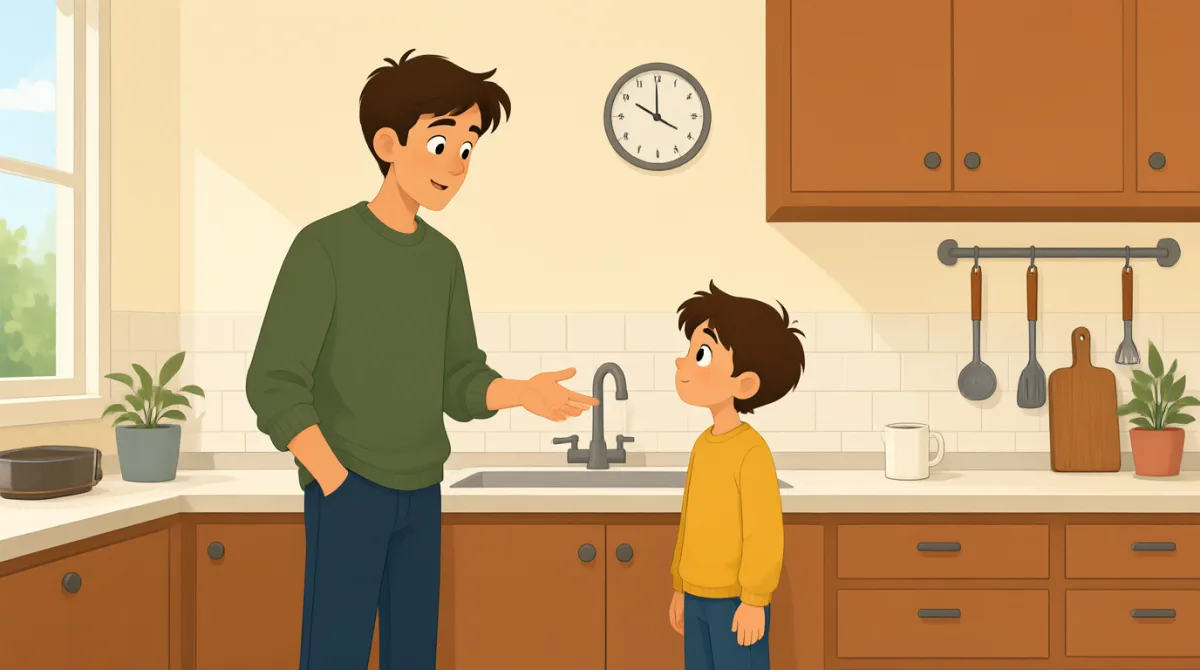

I found the problem. This pipe under the sink is loose.
Encontrei o problema. Este cano embaixo da pia está solto.

Is that why water was coming out onto the floor?
É por isso que a água estava escorrendo para o chão?
Yes. Water leaks out when you turn on the tap.
Sim. A água vaza quando você abre a torneira.
Can you fix it today? I don’t want more water on the floor.
Você consegue consertar hoje? Não quero mais água no chão.
Sure. I’ll tighten the pipe and check the other connections.
Claro. Vou apertar o cano e verificar as outras conexões.
How long will the repair take?
Quanto tempo vai levar o conserto?
About thirty minutes, if nothing else is damaged.
Uns trinta minutos, se não houver mais nada danificado.
Great. Please tell me if you find another problem.
Ótimo. Por favor, me avise se encontrar outro problema.
Vocabulário8
- under the sinkembaixo da pia
This means below the sink. Use it to say where a pipe or another object is located.
Significa abaixo da pia. Use essa expressão para dizer onde fica um cano ou outro objeto.
- loosesolto
Here, loose means not tight or firmly attached. A loose pipe can let water leak out.
Aqui, loose significa que algo não está apertado nem bem preso. Um cano solto pode deixar a água vazar.
- coming out onto the floorescorrendo para o chão
This describes water moving from somewhere and spilling onto the floor. You can use “coming out” to describe something escaping from a container or pipe.
Essa expressão descreve a água saindo de algum lugar e se espalhando pelo chão. Você pode usar “coming out” para falar de algo que está escapando de um recipiente ou cano.
- turn on the tapabrir a torneira
This means to start the flow of water by opening the tap. You can also say “turn on” for lights or machines.
Significa começar a deixar a água correr, abrindo a torneira. Você também pode dizer “turn on” para acender luzes ou ligar aparelhos.
- fix it todayconsertar hoje
This means repair it today. Use “fix” to talk about repairing something that is broken or not working properly.
Significa reparar hoje. Use “fix” para falar de consertar algo que está quebrado ou não está funcionando direito.
- tighten the pipeapertar o cano
This means make the pipe tight and secure. You can use “tighten” when something needs to be turned or fastened more firmly.
Significa deixar o cano bem apertado e firme. Você pode usar “tighten” quando algo precisa ser girado ou preso com mais firmeza.
- check the other connectionsverificar as outras conexões
This means look at the other places where parts are joined to make sure they are secure. “Check” is a useful everyday verb for inspecting something.
Significa examinar os outros pontos onde as peças estão unidas para garantir que estejam firmes. “Check” é um verbo muito útil no dia a dia para falar de verificar algo.
- if nothing else is damagedse não houver mais nada danificado
This means the repair will take about thirty minutes as long as no other part is broken. Use “if” to explain a condition.
Significa que o conserto vai levar cerca de trinta minutos, desde que nenhuma outra peça esteja quebrada. Use “if” para explicar uma condição.
Frases-chave8
- 1
I found the problem.
Encontrei o problema.
This is a simple way to tell someone that you discovered what is wrong. You can reuse it when reporting the result of checking or investigating something.
Essa é uma maneira simples de dizer a alguém que você descobriu o que está errado. Você pode usá-la novamente para contar o resultado de uma verificação ou investigação.
- 2
This pipe under the sink is loose.
Este cano embaixo da pia está solto.
This sentence describes a problem and says where it is. Use “This [thing] is loose” to explain that something is not firmly attached.
Essa frase descreve um problema e diz onde ele está. Use “This [thing] is loose” para explicar que algo não está bem preso.
- 3
Is that why water was coming out onto the floor?
É por isso que a água estava escorrendo para o chão?
Use this question to ask if one problem caused another. You can replace “water” and “coming out” with other things and actions.
Use essa pergunta para saber se um problema causou outro. Você pode substituir “water” e “coming out” por outras coisas e ações.
- 4
Water leaks out when you turn on the tap.
A água vaza quando você abre a torneira.
This explains when the leak happens. Use “when you…” to describe what causes an event or when it occurs.
Essa frase explica quando o vazamento acontece. Use “when you…” para descrever o que causa um acontecimento ou quando ele ocorre.
- 5
Can you fix it today?
Você consegue consertar hoje?
This is a polite way to ask if someone can repair something today. You can replace “fix” with another task, such as “check” or “paint.”
Essa é uma maneira educada de perguntar se alguém consegue consertar algo hoje. Você pode substituir “fix” por outra tarefa, como “check” ou “paint”.
- 6
I’ll tighten the pipe and check the other connections.
Vou apertar o cano e verificar as outras conexões.
This sentence explains what someone plans to do. Use “I’ll” followed by actions to describe a future plan or offer.
Essa frase explica o que alguém pretende fazer. Use “I’ll” seguido de ações para descrever um plano futuro ou se oferecer para fazer algo.
- 7
About thirty minutes, if nothing else is damaged.
Uns trinta minutos, se não houver mais nada danificado.
This gives an approximate time and explains the condition that could affect it. You can use “About [time], if…” when estimating how long a task will take.
Essa frase dá um tempo aproximado e explica uma condição que pode afetá-lo. Você pode usar “About [time], if…” para estimar quanto tempo uma tarefa vai levar.
- 8
Please tell me if you find another problem.
Por favor, me avise se encontrar outro problema.
This is a polite way to ask someone to keep you informed. Use “Please tell me if…” to request an update when something happens.
Essa é uma maneira educada de pedir que alguém mantenha você informado. Use “Please tell me if…” para pedir uma atualização caso algo aconteça.