The Plumber Explains the Problem
Hydraulik wyjaśnia problem
David checks the sink and explains that a loose pipe is causing the leak. He tells Jack what he needs to do and how long the repair will take.
David sprawdza zlew i wyjaśnia, że przyczyną przecieku jest poluzowana rura. Mówi Jackowi, co musi zrobić i ile potrwa naprawa.
Dialog8
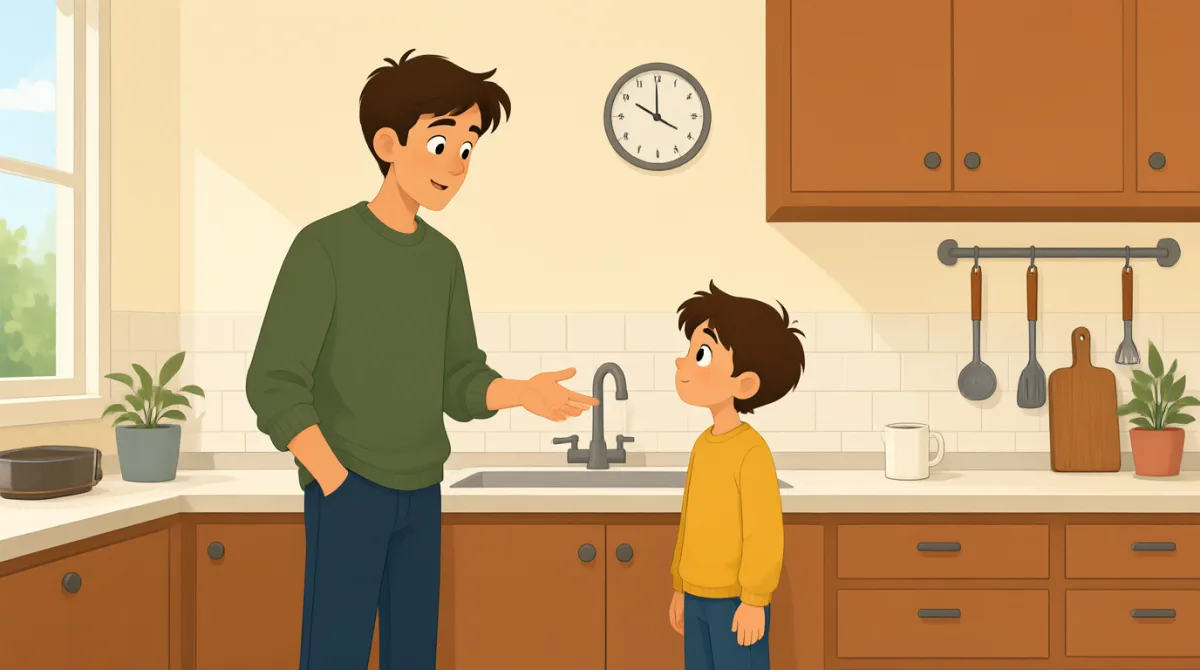

I found the problem. This pipe under the sink is loose.
Znalazłem problem. Ta rura pod zlewem jest poluzowana.

Is that why water was coming out onto the floor?
Czy dlatego woda lała się na podłogę?
Yes. Water leaks out when you turn on the tap.
Tak. Woda wycieka, kiedy odkręca Pan kran.
Can you fix it today? I don’t want more water on the floor.
Czy może Pan naprawić to dzisiaj? Nie chcę, żeby na podłodze było więcej wody.
Sure. I’ll tighten the pipe and check the other connections.
Oczywiście. Dokręcę rurę i sprawdzę pozostałe połączenia.
How long will the repair take?
Ile potrwa naprawa?
About thirty minutes, if nothing else is damaged.
Około trzydziestu minut, jeśli nic innego nie jest uszkodzone.
Great. Please tell me if you find another problem.
Świetnie. Proszę mi powiedzieć, jeśli znajdzie Pan jeszcze jakiś problem.
Słownictwo8
- under the sinkpod zlewem
This means below the sink. Use it to say where a pipe or another object is located.
To znaczy „poniżej zlewu”. Użyj tego wyrażenia, żeby powiedzieć, gdzie znajduje się rura lub inny przedmiot.
- loosepoluzowany
Here, loose means not tight or firmly attached. A loose pipe can let water leak out.
W tym kontekście loose oznacza, że coś nie jest mocno dokręcone ani przymocowane. Przez poluzowaną rurę może wyciekać woda.
- coming out onto the floorwylewająca się na podłogę
This describes water moving from somewhere and spilling onto the floor. You can use “coming out” to describe something escaping from a container or pipe.
To wyrażenie opisuje wodę, która wypływa z jakiegoś miejsca i rozlewa się na podłodze. Możesz użyć “coming out”, żeby opisać coś wydostającego się z pojemnika lub rury.
- turn on the tapodkręcić kran
This means to start the flow of water by opening the tap. You can also say “turn on” for lights or machines.
To znaczy odkręcić kran, żeby zaczęła płynąć woda. “Turn on” można też powiedzieć o włączaniu światła lub urządzenia.
- fix it todaynaprawić to dzisiaj
This means repair it today. Use “fix” to talk about repairing something that is broken or not working properly.
To znaczy naprawić to jeszcze dzisiaj. Używaj “fix”, mówiąc o naprawianiu czegoś zepsutego lub niedziałającego prawidłowo.
- tighten the pipedokręcić rurę
This means make the pipe tight and secure. You can use “tighten” when something needs to be turned or fastened more firmly.
To znaczy dokręcić rurę, żeby była dobrze zamocowana. “Tighten” przydaje się, gdy coś trzeba mocniej dokręcić lub przymocować.
- check the other connectionssprawdzić pozostałe połączenia
This means look at the other places where parts are joined to make sure they are secure. “Check” is a useful everyday verb for inspecting something.
To znaczy sprawdzić pozostałe miejsca, w których łączą się części, i upewnić się, że są dobrze zamocowane. “Check” to przydatny, codzienny czasownik oznaczający sprawdzanie czegoś.
- if nothing else is damagedjeśli nic innego nie jest uszkodzone
This means the repair will take about thirty minutes as long as no other part is broken. Use “if” to explain a condition.
To znaczy, że naprawa potrwa około trzydziestu minut, pod warunkiem że żadna inna część nie jest zepsuta. Użyj “if”, żeby opisać warunek.
Kluczowe zdania8
- 1
I found the problem.
Znalazłem problem.
This is a simple way to tell someone that you discovered what is wrong. You can reuse it when reporting the result of checking or investigating something.
To prosty sposób, by powiedzieć komuś, że udało Ci się ustalić, co jest nie tak. Możesz użyć tego zdania, gdy informujesz o wyniku sprawdzania lub dochodzenia.
- 2
This pipe under the sink is loose.
Ta rura pod zlewem jest poluzowana.
This sentence describes a problem and says where it is. Use “This [thing] is loose” to explain that something is not firmly attached.
To zdanie opisuje problem i mówi, gdzie on występuje. Użyj wzoru “This [thing] is loose”, żeby wyjaśnić, że coś nie jest dobrze przymocowane.
- 3
Is that why water was coming out onto the floor?
Czy dlatego woda lała się na podłogę?
Use this question to ask if one problem caused another. You can replace “water” and “coming out” with other things and actions.
Zadaj to pytanie, żeby sprawdzić, czy jeden problem spowodował inny. Możesz zastąpić “water” i “coming out” innymi rzeczami i czynnościami.
- 4
Water leaks out when you turn on the tap.
Woda wycieka, kiedy odkręca Pan kran.
This explains when the leak happens. Use “when you…” to describe what causes an event or when it occurs.
To zdanie wyjaśnia, kiedy dochodzi do wycieku. Użyj “when you…”, żeby opisać, co wywołuje jakieś zdarzenie lub kiedy ono następuje.
- 5
Can you fix it today?
Czy może Pan naprawić to dzisiaj?
This is a polite way to ask if someone can repair something today. You can replace “fix” with another task, such as “check” or “paint.”
To uprzejmy sposób, by zapytać, czy ktoś może coś dzisiaj naprawić. Możesz zastąpić “fix” inną czynnością, na przykład “check” lub “paint.”
- 6
I’ll tighten the pipe and check the other connections.
Dokręcę rurę i sprawdzę pozostałe połączenia.
This sentence explains what someone plans to do. Use “I’ll” followed by actions to describe a future plan or offer.
To zdanie wyjaśnia, co ktoś planuje zrobić. Użyj “I’ll” przed nazwami czynności, by opisać przyszły plan lub zaproponować, że coś zrobisz.
- 7
About thirty minutes, if nothing else is damaged.
Około trzydziestu minut, jeśli nic innego nie jest uszkodzone.
This gives an approximate time and explains the condition that could affect it. You can use “About [time], if…” when estimating how long a task will take.
To przybliżony czas, wraz z wyjaśnieniem warunku, który może mieć na niego wpływ. Użyj “About [time], if…”, gdy szacujesz, ile potrwa zadanie.
- 8
Please tell me if you find another problem.
Proszę mi powiedzieć, jeśli znajdzie Pan jeszcze jakiś problem.
This is a polite way to ask someone to keep you informed. Use “Please tell me if…” to request an update when something happens.
To uprzejmy sposób, by poprosić kogoś o informowanie Cię na bieżąco. Użyj “Please tell me if…”, aby poprosić o wiadomość, gdy coś się wydarzy.