The Plumber Explains the Problem
El plomero explica el problema
David checks the sink and explains that a loose pipe is causing the leak. He tells Jack what he needs to do and how long the repair will take.
David revisa el fregadero y explica que una tubería floja está causando la fuga. Le dice a Jack qué tiene que hacer y cuánto tardará la reparación.
Diálogo8
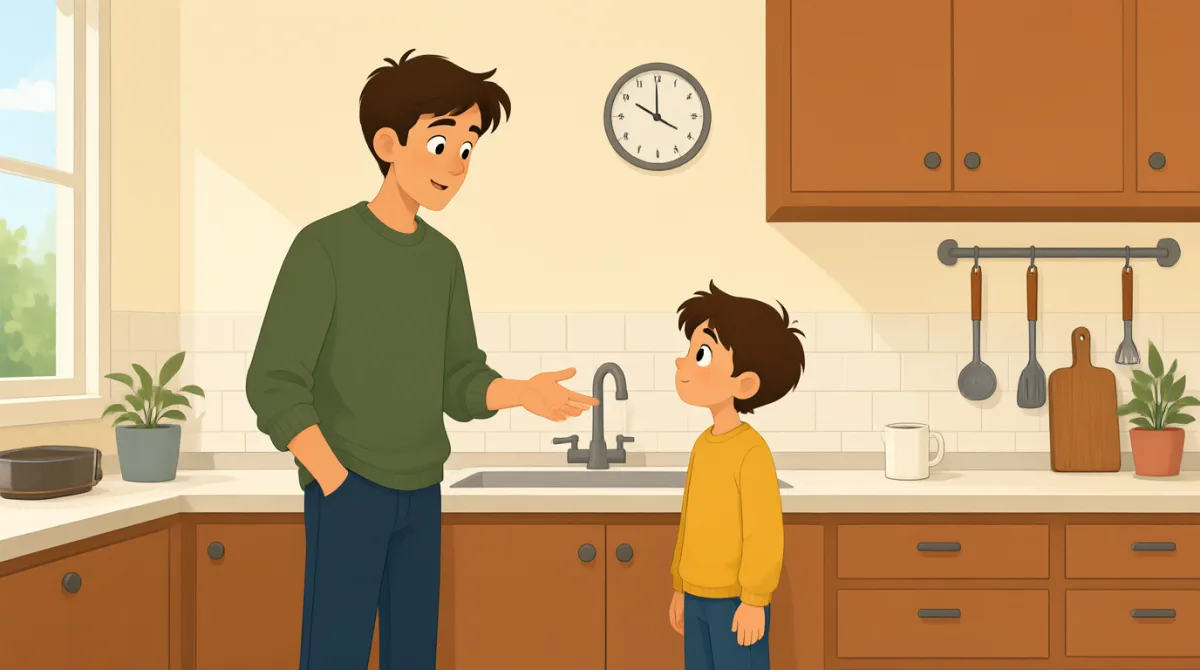

I found the problem. This pipe under the sink is loose.
Ya encontré el problema. Esta tubería debajo del fregadero está floja.

Is that why water was coming out onto the floor?
¿Por eso salía agua y caía al suelo?
Yes. Water leaks out when you turn on the tap.
Sí. El agua se sale cuando abres el grifo.
Can you fix it today? I don’t want more water on the floor.
¿Puedes arreglarla hoy? No quiero que caiga más agua al suelo.
Sure. I’ll tighten the pipe and check the other connections.
Claro. Voy a apretar la tubería y revisar las otras conexiones.
How long will the repair take?
¿Cuánto tardará la reparación?
About thirty minutes, if nothing else is damaged.
Unos treinta minutos, si no hay nada más dañado.
Great. Please tell me if you find another problem.
Perfecto. Por favor, avísame si encuentras otro problema.
Vocabulario8
- under the sinkdebajo del fregadero
This means below the sink. Use it to say where a pipe or another object is located.
Significa que algo está abajo del fregadero. Se usa para indicar dónde está una tubería u otro objeto.
- looseflojo/a
Here, loose means not tight or firmly attached. A loose pipe can let water leak out.
Aquí, “loose” significa que algo no está bien apretado ni sujeto. Una tubería floja puede dejar escapar agua.
- coming out onto the floorsalía agua y caía al suelo
This describes water moving from somewhere and spilling onto the floor. You can use “coming out” to describe something escaping from a container or pipe.
Esta expresión describe cómo el agua sale de algún sitio y cae al suelo. Puedes usar “coming out” para hablar de algo que se escapa de un recipiente o una tubería.
- turn on the tapabrir el grifo
This means to start the flow of water by opening the tap. You can also say “turn on” for lights or machines.
Significa dejar que empiece a correr el agua al abrir el grifo. También puedes usar “turn on” para hablar de encender luces o máquinas.
- fix it todayarreglarlo hoy
This means repair it today. Use “fix” to talk about repairing something that is broken or not working properly.
Significa repararlo hoy. Usa “fix” para hablar de reparar algo que está roto o no funciona bien.
- tighten the pipeapretar la tubería
This means make the pipe tight and secure. You can use “tighten” when something needs to be turned or fastened more firmly.
Significa dejar la tubería bien apretada y sujeta. Puedes usar “tighten” cuando hay que girar o sujetar algo con más firmeza.
- check the other connectionsrevisar las otras conexiones
This means look at the other places where parts are joined to make sure they are secure. “Check” is a useful everyday verb for inspecting something.
Significa revisar los otros puntos donde se unen las piezas para asegurarse de que estén bien sujetos. “Check” es un verbo muy útil en la conversación diaria para hablar de revisar algo.
- if nothing else is damagedsi no hay nada más dañado
This means the repair will take about thirty minutes as long as no other part is broken. Use “if” to explain a condition.
Significa que la reparación tardará unos treinta minutos siempre que no haya otra pieza rota. Usa “if” para explicar una condición.
Frases clave8
- 1
I found the problem.
Ya encontré el problema.
This is a simple way to tell someone that you discovered what is wrong. You can reuse it when reporting the result of checking or investigating something.
Esta es una forma sencilla de decirle a alguien que descubriste qué está mal. Puedes volver a usarla para comunicar el resultado de una revisión o investigación.
- 2
This pipe under the sink is loose.
Esta tubería debajo del fregadero está floja.
This sentence describes a problem and says where it is. Use “This [thing] is loose” to explain that something is not firmly attached.
Esta frase describe un problema e indica dónde está. Usa “This [thing] is loose” para explicar que algo no está bien sujeto.
- 3
Is that why water was coming out onto the floor?
¿Por eso salía agua y caía al suelo?
Use this question to ask if one problem caused another. You can replace “water” and “coming out” with other things and actions.
Usa esta pregunta para saber si un problema causó otro. Puedes sustituir “water” y “coming out” por otras cosas y acciones.
- 4
Water leaks out when you turn on the tap.
El agua se sale cuando abres el grifo.
This explains when the leak happens. Use “when you…” to describe what causes an event or when it occurs.
Esta frase explica cuándo ocurre la fuga. Usa “when you…” para describir qué causa un suceso o cuándo ocurre.
- 5
Can you fix it today?
¿Puedes arreglarla hoy?
This is a polite way to ask if someone can repair something today. You can replace “fix” with another task, such as “check” or “paint.”
Esta es una forma educada de preguntar si alguien puede reparar algo hoy. Puedes sustituir “fix” por otra tarea, como “check” o “paint”.
- 6
I’ll tighten the pipe and check the other connections.
Voy a apretar la tubería y revisar las otras conexiones.
This sentence explains what someone plans to do. Use “I’ll” followed by actions to describe a future plan or offer.
Esta frase explica lo que alguien piensa hacer. Usa “I’ll” seguido de acciones para hablar de un plan o un ofrecimiento futuro.
- 7
About thirty minutes, if nothing else is damaged.
Unos treinta minutos, si no hay nada más dañado.
This gives an approximate time and explains the condition that could affect it. You can use “About [time], if…” when estimating how long a task will take.
Esta frase da un tiempo aproximado y explica qué condición podría afectarlo. Puedes usar “About [time], if…” para calcular cuánto tardará una tarea.
- 8
Please tell me if you find another problem.
Por favor, avísame si encuentras otro problema.
This is a polite way to ask someone to keep you informed. Use “Please tell me if…” to request an update when something happens.
Esta es una forma educada de pedirle a alguien que te mantenga al tanto. Usa “Please tell me if…” para pedir que te informe cuando ocurra algo.