The Plumber Explains the Problem
配管工が問題を説明する
David checks the sink and explains that a loose pipe is causing the leak. He tells Jack what he needs to do and how long the repair will take.
デイビッドはシンクを調べ、パイプの緩みが水漏れの原因だと説明します。修理に必要な作業と、どのくらい時間がかかるかをジャックに伝えます。
会話8
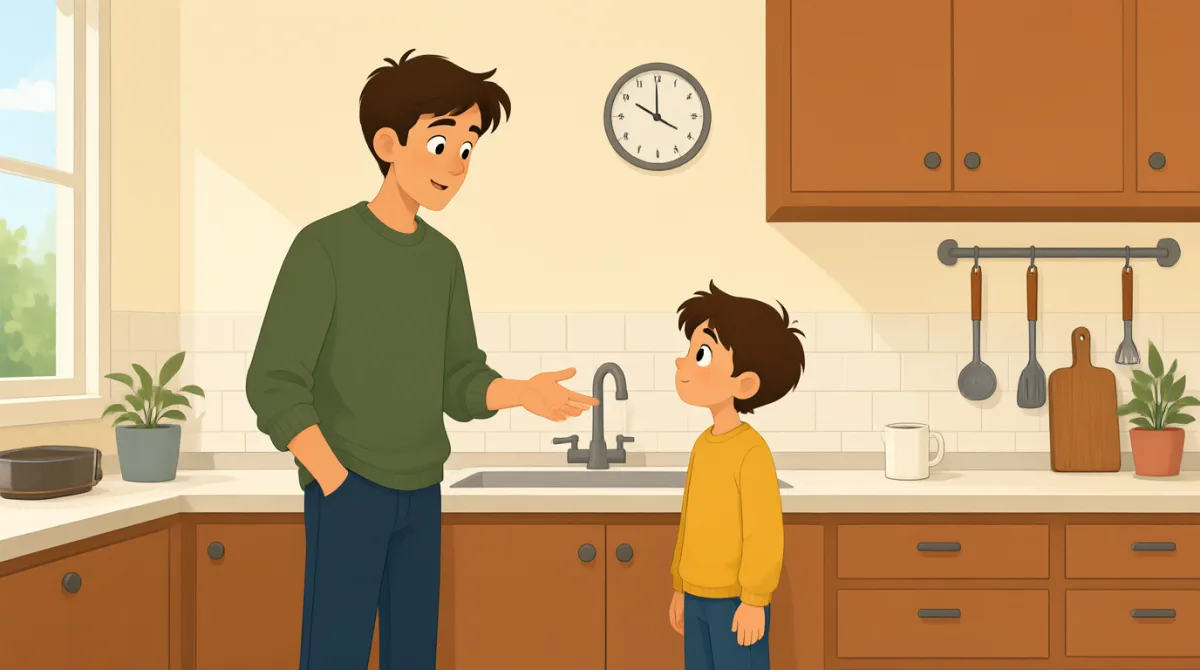

I found the problem. This pipe under the sink is loose.
原因がわかりました。シンクの下のこのパイプが緩んでいます。

Is that why water was coming out onto the floor?
だから水が床に漏れていたんですか?
Yes. Water leaks out when you turn on the tap.
はい。蛇口をひねると水が漏れます。
Can you fix it today? I don’t want more water on the floor.
今日直せますか?これ以上床に水が漏れるのは困るので。
Sure. I’ll tighten the pipe and check the other connections.
もちろんです。パイプを締めて、ほかの接続部分も確認します。
How long will the repair take?
修理にはどのくらいかかりますか?
About thirty minutes, if nothing else is damaged.
ほかに壊れているところがなければ、30分くらいです。
Great. Please tell me if you find another problem.
よかったです。ほかにも問題が見つかったら教えてください。
語彙8
- under the sinkシンクの下
This means below the sink. Use it to say where a pipe or another object is located.
「under the sink」は「シンクの下」という意味です。パイプなどがどこにあるかを伝えるときに使います。
- loose緩んだ
Here, loose means not tight or firmly attached. A loose pipe can let water leak out.
ここでの「loose」は、きつく締まっていない、またはしっかり固定されていないという意味です。パイプが緩んでいると、水が漏れることがあります。
- coming out onto the floor床に流れ出る
This describes water moving from somewhere and spilling onto the floor. You can use “coming out” to describe something escaping from a container or pipe.
「coming out onto the floor」は、水がどこかから出て床にこぼれる様子を表します。「coming out」は、容器やパイプから何かが漏れ出たり出てきたりするときにも使えます。
- turn on the tap蛇口をひねる
This means to start the flow of water by opening the tap. You can also say “turn on” for lights or machines.
「turn on the tap」は、蛇口を開けて水を出すという意味です。照明や機械をつけるときにも「turn on」を使えます。
- fix it today今日直す
This means repair it today. Use “fix” to talk about repairing something that is broken or not working properly.
「fix it today」は「今日それを修理する」という意味です。「fix」は、壊れているものや正常に動かないものを直すときに使います。
- tighten the pipeパイプを締める
This means make the pipe tight and secure. You can use “tighten” when something needs to be turned or fastened more firmly.
「tighten the pipe」は、パイプをしっかり締めて固定するという意味です。何かを回したり、よりしっかり留めたりするときに「tighten」を使います。
- check the other connectionsほかの接続部分を確認する
This means look at the other places where parts are joined to make sure they are secure. “Check” is a useful everyday verb for inspecting something.
「check the other connections」は、部品同士がつながっているほかの箇所を見て、しっかり固定されているか確認するという意味です。「check」は何かを調べるときに使える、日常的で便利な動詞です。
- if nothing else is damagedほかに壊れているところがなければ
This means the repair will take about thirty minutes as long as no other part is broken. Use “if” to explain a condition.
「if nothing else is damaged」は、ほかの部分が壊れていなければ修理に約30分かかる、という意味です。「if」は条件を説明するときに使います。
重要な文8
- 1
I found the problem.
原因がわかりました。
This is a simple way to tell someone that you discovered what is wrong. You can reuse it when reporting the result of checking or investigating something.
何が問題なのか突き止めたと伝える、簡潔な言い方です。何かを調べたり確認したりした結果を報告するときにも使えます。
- 2
This pipe under the sink is loose.
シンクの下のこのパイプが緩んでいます。
This sentence describes a problem and says where it is. Use “This [thing] is loose” to explain that something is not firmly attached.
この文は、問題の内容と場所を説明しています。「This [thing] is loose」を使うと、何かがしっかり固定されていないことを伝えられます。
- 3
Is that why water was coming out onto the floor?
だから水が床に漏れていたんですか?
Use this question to ask if one problem caused another. You can replace “water” and “coming out” with other things and actions.
ある問題が別の問題を引き起こしたのか尋ねるときに使います。「water」や「coming out」を別のものや動作に置き換えて使うこともできます。
- 4
Water leaks out when you turn on the tap.
蛇口をひねると水が漏れます。
This explains when the leak happens. Use “when you…” to describe what causes an event or when it occurs.
水漏れがいつ起きるかを説明する文です。「when you…」を使うと、何かが起きるきっかけや、起きるタイミングを説明できます。
- 5
Can you fix it today?
今日直せますか?
This is a polite way to ask if someone can repair something today. You can replace “fix” with another task, such as “check” or “paint.”
相手に今日修理できるか丁寧に尋ねる言い方です。「fix」を「check」や「paint」など、ほかの作業に置き換えることもできます。
- 6
I’ll tighten the pipe and check the other connections.
パイプを締めて、ほかの接続部分も確認します。
This sentence explains what someone plans to do. Use “I’ll” followed by actions to describe a future plan or offer.
これから何をする予定か説明する文です。「I’ll」の後に行動を続けると、今後の予定や申し出を伝えられます。
- 7
About thirty minutes, if nothing else is damaged.
ほかに壊れているところがなければ、30分くらいです。
This gives an approximate time and explains the condition that could affect it. You can use “About [time], if…” when estimating how long a task will take.
おおよその所要時間と、それに影響する条件を伝えています。作業にどのくらいかかるか見積もるときは、「About [time], if…」を使えます。
- 8
Please tell me if you find another problem.
ほかにも問題が見つかったら教えてください。
This is a polite way to ask someone to keep you informed. Use “Please tell me if…” to request an update when something happens.
相手に状況を知らせてもらうための丁寧な言い方です。「Please tell me if…」を使うと、何かあったときに連絡してほしいと頼めます。