Finding an Ingredient You’re Allergic To
Znalezienie składnika, na który jesteś uczulona
While checking another dish, Jack spots an ingredient that Mia is allergic to. They alert the server and ask for a safe replacement.
Sprawdzając inne danie, Jack zauważa składnik, na który uczulona jest Mia. Informują kelnera i proszą o bezpieczną zamianę.
Dialog10
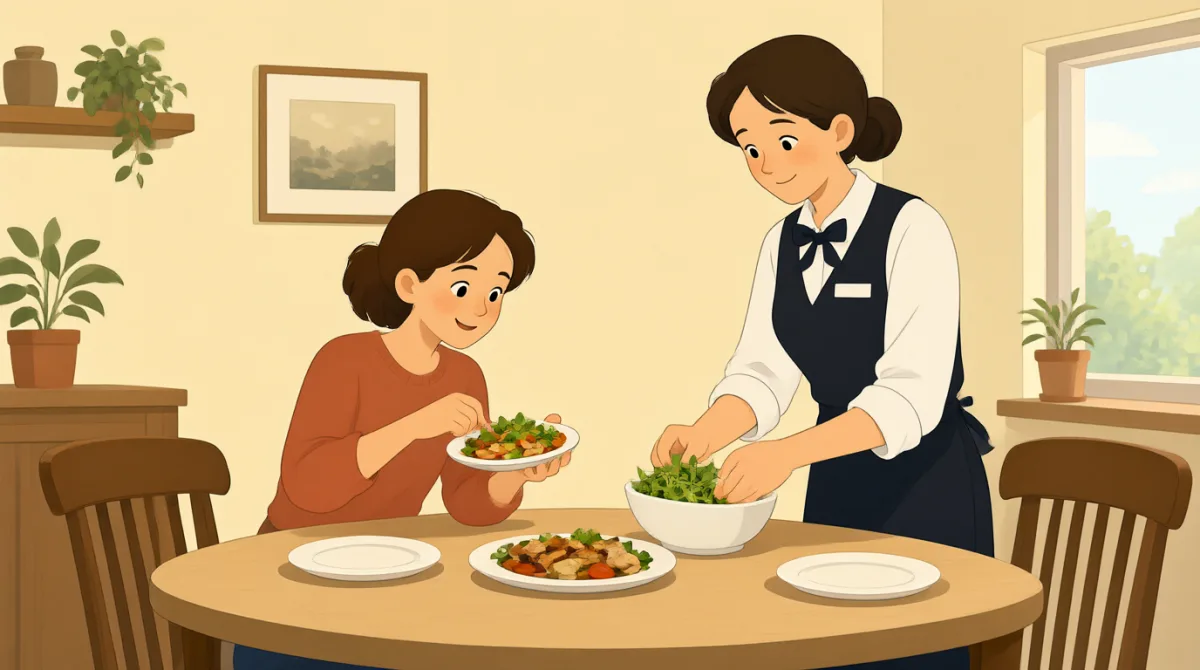

Excuse me, Jack. I just noticed there are peanuts in this dish, and I’m severely allergic to them.
Przepraszam, Jack. Właśnie zauważyłam, że to danie zawiera orzeszki ziemne, a mam na nie silną alergię.

I’m so sorry. Thank you for catching that. Please don’t eat any more of it, and I’ll check with the kitchen.
Bardzo przepraszam. Dziękuję, że to zauważyłaś. Proszę, już tego nie jedz, a ja sprawdzę to z kuchnią.
I haven’t touched it, but I’m worried the sauce may have peanuts in it too. Could you find out for sure?
Nie tknęłam tego, ale martwię się, że sos też może zawierać orzeszki ziemne. Czy możesz to dokładnie sprawdzić?
Of course. I’ll ask the kitchen to check every ingredient and how the dish was prepared. We want to be absolutely sure.
Oczywiście. Poproszę kuchnię, żeby sprawdziła wszystkie składniki i sposób przygotowania dania. Chcemy mieć całkowitą pewność.
Thanks. If the sauce contains peanuts, could I get something safe instead? Maybe the grilled chicken without the sauce.
Dziękuję. Jeśli sos zawiera orzeszki ziemne, czy mogłabym dostać coś bezpiecznego w zamian? Może grillowanego kurczaka bez sosu.
I’ve checked with the chef. The sauce does contain peanuts, so we’ll take this dish away and make fresh grilled chicken.
Sprawdziłem to z szefem kuchni. Sos zawiera orzeszki ziemne, więc zabierzemy to danie i przygotujemy świeżego grillowanego kurczaka.
I appreciate that. Could you make sure they use clean utensils and a clean pan, so there’s no cross-contact?
Bardzo to doceniam. Czy możesz dopilnować, żeby użyli czystych sztućców i czystej patelni, żeby nie doszło do kontaktu krzyżowego?
Absolutely. I’ll make a note of your allergy and ask them to prepare it separately. There won’t be any extra charge.
Oczywiście. Zapiszę informację o twojej alergii i poproszę ich, żeby przygotowali danie osobno. Nie będzie żadnej dodatkowej opłaty.
That sounds good. Thanks for taking it seriously and checking with the kitchen before making a replacement.
Świetnie. Dziękuję, że traktujesz to poważnie i sprawdzasz wszystko w kuchni, zanim przygotujesz zamiennik.
You’re welcome. I’ll bring the new dish as soon as it’s ready, and please let me know if you have any concerns.
Nie ma za co. Przyniosę nowe danie, gdy tylko będzie gotowe. Daj mi znać, jeśli będziesz mieć jakieś obawy.
Słownictwo8
- severely allergicmieć silną alergię
This means having a very serious allergic reaction to something. Use it to clearly tell someone about an important health risk.
To znaczy mieć bardzo silną reakcję alergiczną na coś. Użyj tego wyrażenia, żeby jasno poinformować kogoś o poważnym zagrożeniu dla zdrowia.
- catching thatzauważyć to
Here, it means noticing the peanuts before eating the dish. You can use “Thanks for catching that” to thank someone for spotting a problem.
Tutaj chodzi o zauważenie orzeszków ziemnych, zanim ktoś zje danie. Możesz powiedzieć “Thanks for catching that” (Dziękuję, że to zauważyłaś), żeby podziękować komuś za dostrzeżenie problemu.
- check with the kitchensprawdzić to z kuchnią
This means asking the kitchen staff to confirm something about the food. It’s useful when you need reliable information about ingredients or preparation.
To znaczy poprosić personel kuchni o potwierdzenie informacji dotyczącej jedzenia. Przydaje się, gdy potrzebujesz wiarygodnych informacji o składnikach lub sposobie przygotowania.
- find out for suredokładnie sprawdzić
This means get definite information rather than guess. Use it when you need someone to confirm a detail.
To znaczy uzyskać pewną informację zamiast zgadywać. Użyj tego, gdy chcesz, żeby ktoś potwierdził szczegół.
- contains peanutszawierać orzeszki ziemne
This means has peanuts as an ingredient. You can replace “peanuts” with another ingredient when asking about food.
To znaczy mieć orzeszki ziemne wśród składników. Pytając o jedzenie, możesz zastąpić “peanuts” nazwą innego składnika.
- cross-contactkontakt krzyżowy
This is when an allergen accidentally gets onto food through shared utensils or cooking equipment. It’s an important term to use when explaining allergy precautions.
Do kontaktu krzyżowego dochodzi, gdy alergen przypadkowo dostaje się do jedzenia przez użycie tych samych sztućców lub sprzętu kuchennego. To ważne określenie, gdy mówisz o środkach ostrożności związanych z alergią.
- prepare it separatelyprzygotować osobno
This means make the food apart from other dishes, using care to avoid contact with allergens. It’s a useful request for someone with a food allergy.
To znaczy przygotować jedzenie oddzielnie od innych dań i uważać, żeby nie miało kontaktu z alergenami. To przydatna prośba dla osoby z alergią pokarmową.
- There won’t be any extra charge.Nie będzie żadnej dodatkowej opłaty.
This means you will not have to pay more for the replacement. It’s a helpful phrase when a service worker explains a change to your order.
To znaczy, że nie trzeba będzie dopłacać za zamiennik. To przydatne wyrażenie, gdy pracownik obsługi informuje o zmianie w zamówieniu.
Kluczowe zdania8
- 1
I’m severely allergic to them.
Mam na nie silną alergię.
This is a direct way to explain a serious allergy. You can replace “them” with the name of the food or ingredient.
To bezpośredni sposób, by poinformować o poważnej alergii. Zamiast “them” możesz podać nazwę produktu lub składnika.
- 2
Please don’t eat any more of it, and I’ll check with the kitchen.
Proszę, już tego nie jedz, a ja sprawdzę to z kuchnią.
This combines an immediate safety instruction with a plan to confirm details. Reuse the structure “Please don’t… and I’ll…” when responding to a problem.
To zdanie łączy natychmiastowe zalecenie dotyczące bezpieczeństwa z planem sprawdzenia szczegółów. W podobnej sytuacji możesz użyć konstrukcji “Please don’t… and I’ll…” (Proszę, nie… a ja…).
- 3
Could you find out for sure?
Czy możesz to dokładnie sprawdzić?
This is a polite way to ask someone to confirm information. It works when you need a definite answer before making a decision.
To uprzejmy sposób, by poprosić kogoś o potwierdzenie informacji. Przydaje się, gdy przed podjęciem decyzji potrzebujesz pewnej odpowiedzi.
- 4
If the sauce contains peanuts, could I get something safe instead?
Jeśli sos zawiera orzeszki ziemne, czy mogłabym dostać coś bezpiecznego w zamian?
This politely explains a condition and asks for an alternative. You can replace “the sauce contains peanuts” with another concern and “something safe” with a specific option.
To uprzejmy sposób na określenie warunku i poproszenie o inną opcję. Możesz zastąpić “the sauce contains peanuts” inną obawą, a “something safe” konkretną propozycją.
- 5
Could you make sure they use clean utensils and a clean pan, so there’s no cross-contact?
Czy możesz dopilnować, żeby użyli czystych sztućców i czystej patelni, żeby nie doszło do kontaktu krzyżowego?
This asks for specific steps to prevent an allergen from reaching the food. The pattern “Could you make sure…?” is useful for careful service requests.
To prośba o konkretne działania, które zapobiegną przedostaniu się alergenu do jedzenia. Konstrukcja “Could you make sure…?” przydaje się przy precyzyjnych prośbach dotyczących obsługi.
- 6
I’ll make a note of your allergy and ask them to prepare it separately.
Zapiszę informację o twojej alergii i poproszę ich, żeby przygotowali danie osobno.
This reassures someone that their allergy will be remembered and handled carefully. Reuse “I’ll make a note of…” when promising to record an important request.
To zapewnienie, że ktoś zapamięta informację o alergii i odpowiednio się nią zajmie. Użyj “I’ll make a note of…” (Zapiszę…)”, gdy obiecujesz zanotować ważną prośbę.
- 7
Thanks for taking it seriously and checking with the kitchen before making a replacement.
Dziękuję, że traktujesz to poważnie i sprawdzasz wszystko w kuchni, zanim przygotujesz zamiennik.
This is a polite way to thank someone for handling a concern carefully. You can use “Thanks for taking it seriously” for other important service or safety issues.
To uprzejmy sposób, by podziękować komuś za uważne zajęcie się problemem. “Thanks for taking it seriously” (Dziękuję, że traktujesz to poważnie) możesz powiedzieć w przypadku innych ważnych kwestii związanych z obsługą lub bezpieczeństwem.
- 8
I’ll bring the new dish as soon as it’s ready, and please let me know if you have any concerns.
Przyniosę nowe danie, gdy tylko będzie gotowe. Daj mi znać, jeśli będziesz mieć jakieś obawy.
This gives an update and invites the customer to speak up. It’s a useful way to reassure someone while they wait for a replacement.
To informacja o tym, co będzie dalej, i zachęta, by klient powiedział o swoich obawach. To przydatny sposób, by uspokoić kogoś, kto czeka na zamiennik.