Finding an Ingredient You’re Allergic To
While checking another dish, Jack spots an ingredient that Mia is allergic to. They alert the server and ask for a safe replacement.
Dialogue10
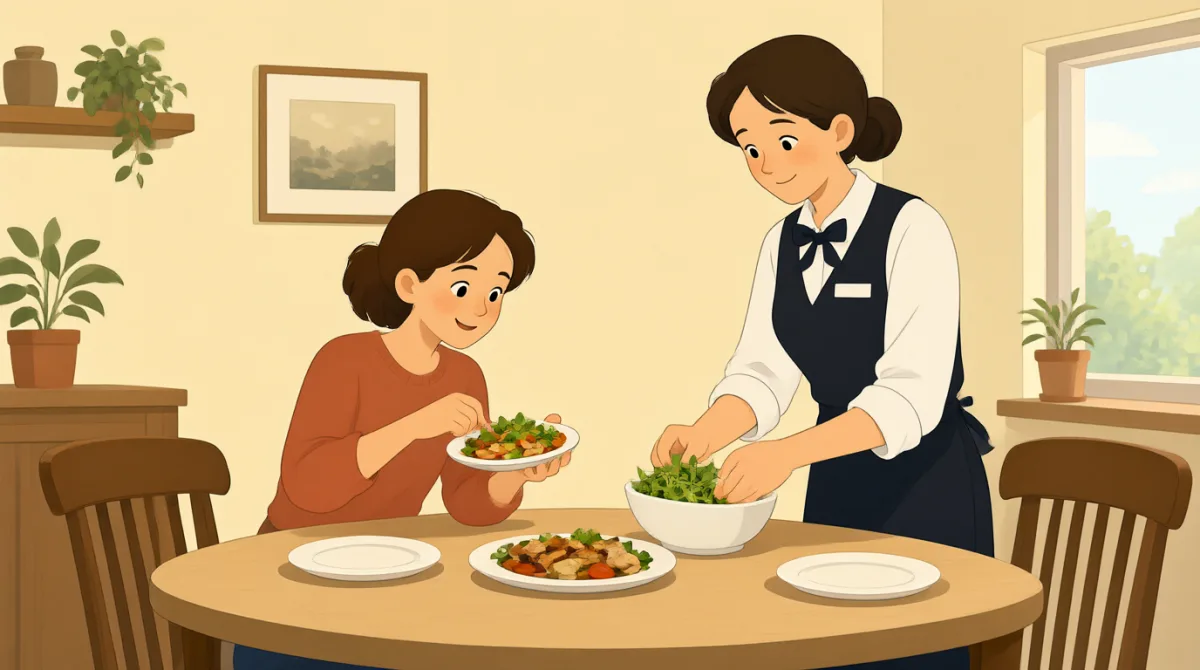

Excuse me, Jack. I just noticed there are peanuts in this dish, and I’m severely allergic to them.

I’m so sorry. Thank you for catching that. Please don’t eat any more of it, and I’ll check with the kitchen.
I haven’t touched it, but I’m worried the sauce may have peanuts in it too. Could you find out for sure?
Of course. I’ll ask the kitchen to check every ingredient and how the dish was prepared. We want to be absolutely sure.
Thanks. If the sauce contains peanuts, could I get something safe instead? Maybe the grilled chicken without the sauce.
I’ve checked with the chef. The sauce does contain peanuts, so we’ll take this dish away and make fresh grilled chicken.
I appreciate that. Could you make sure they use clean utensils and a clean pan, so there’s no cross-contact?
Absolutely. I’ll make a note of your allergy and ask them to prepare it separately. There won’t be any extra charge.
That sounds good. Thanks for taking it seriously and checking with the kitchen before making a replacement.
You’re welcome. I’ll bring the new dish as soon as it’s ready, and please let me know if you have any concerns.
Vocabulary8
- severely allergic
This means having a very serious allergic reaction to something. Use it to clearly tell someone about an important health risk.
- catching that
Here, it means noticing the peanuts before eating the dish. You can use “Thanks for catching that” to thank someone for spotting a problem.
- check with the kitchen
This means asking the kitchen staff to confirm something about the food. It’s useful when you need reliable information about ingredients or preparation.
- find out for sure
This means get definite information rather than guess. Use it when you need someone to confirm a detail.
- contains peanuts
This means has peanuts as an ingredient. You can replace “peanuts” with another ingredient when asking about food.
- cross-contact
This is when an allergen accidentally gets onto food through shared utensils or cooking equipment. It’s an important term to use when explaining allergy precautions.
- prepare it separately
This means make the food apart from other dishes, using care to avoid contact with allergens. It’s a useful request for someone with a food allergy.
- There won’t be any extra charge.
This means you will not have to pay more for the replacement. It’s a helpful phrase when a service worker explains a change to your order.
Key Sentences8
- 1
I’m severely allergic to them.
This is a direct way to explain a serious allergy. You can replace “them” with the name of the food or ingredient.
- 2
Please don’t eat any more of it, and I’ll check with the kitchen.
This combines an immediate safety instruction with a plan to confirm details. Reuse the structure “Please don’t… and I’ll…” when responding to a problem.
- 3
Could you find out for sure?
This is a polite way to ask someone to confirm information. It works when you need a definite answer before making a decision.
- 4
If the sauce contains peanuts, could I get something safe instead?
This politely explains a condition and asks for an alternative. You can replace “the sauce contains peanuts” with another concern and “something safe” with a specific option.
- 5
Could you make sure they use clean utensils and a clean pan, so there’s no cross-contact?
This asks for specific steps to prevent an allergen from reaching the food. The pattern “Could you make sure…?” is useful for careful service requests.
- 6
I’ll make a note of your allergy and ask them to prepare it separately.
This reassures someone that their allergy will be remembered and handled carefully. Reuse “I’ll make a note of…” when promising to record an important request.
- 7
Thanks for taking it seriously and checking with the kitchen before making a replacement.
This is a polite way to thank someone for handling a concern carefully. You can use “Thanks for taking it seriously” for other important service or safety issues.
- 8
I’ll bring the new dish as soon as it’s ready, and please let me know if you have any concerns.
This gives an update and invites the customer to speak up. It’s a useful way to reassure someone while they wait for a replacement.